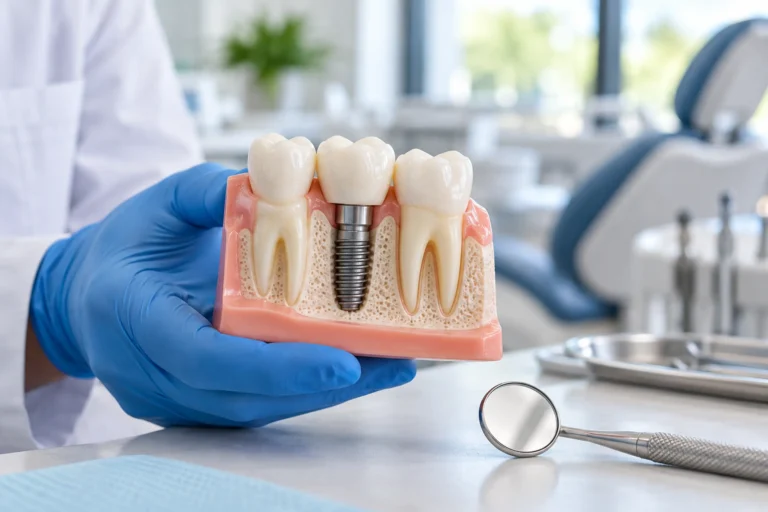
Endosteal implants, placed in the jawbone, are the most common type of dental implant. Subperiosteal and zygomatic implants are other options used in selected circumstances. Single-stage and two-stage refer to surgical approaches, not separate implant categories. At Bloom Dental of Arlington, we offer consultations for dental implants in Arlington alongside our cosmetic dentistry services.
Dental implants come in all different shapes and sizes, but two main types of implants rely on the procedure used: single-stage or two-stage.
Table of Contents
Types of Dental Implants by Placement
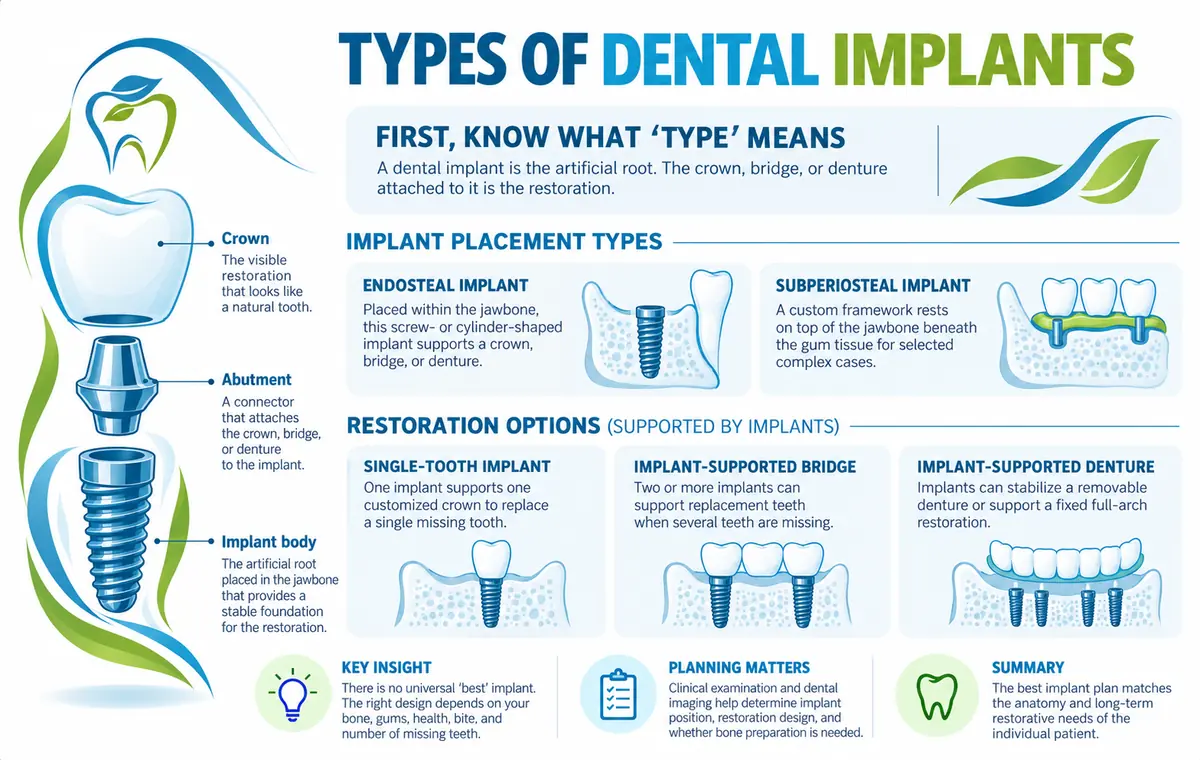
The different types of dental implants can be described by where they are anchored. The American Academy of Periodontology distinguishes endosteal and subperiosteal implants. Zygomatic implants are a specialized option for selected upper-jaw cases.
| Implant type | Where it is anchored | Main consideration |
|---|---|---|
| Endosteal | Within the jawbone | The most common type; bone support is assessed before treatment. |
| Subperiosteal | On the jawbone, beneath the gum | Considered in selected cases when conventional implants are unsuitable. |
| Zygomatic | In the cheekbone to support upper-jaw replacement teeth | A complex option for selected cases with substantial upper-jaw bone deficiency. |
Types of Dental Implants rely on the procedure used
Single-Stage:In a single-stage procedure, the implant is placed in the jawbone and a healing component remains visible through the gum. This usually avoids a separate operation to uncover the implant. The ITI describes this as non-submerged healing.
Two-Stage:In a two-stage procedure, the gum is closed over the implant during initial healing. A later procedure exposes the implant so a healing component can be attached. The ITI explains that covered healing can also protect bone augmentation material when it is part of the treatment.
Which Dental Implant Is Best?
here is no single best type of dental implant for everyone. Your dentist considers the missing teeth, available bone, gum health, bite, and medical history when planning implant treatment. Ask why the proposed option suits your situation and what alternatives are reasonable.
Titanium and zirconia describe implant materials, not where an implant is placed. The FDA identifies both among commonly used implant materials. Our guide to what dental implants are made of explains that distinction in more detail.
What Is the Alternative to Dental Implants?
Dental implants are not the only solution to replace missing or damaged teeth. Alternatives include removable appliances such as partial dentures, or a fixed device like a bridge that uses the adjacent teeth to anchor it.
Implants for One, Several, or All Missing Teeth
An implant can support a single crown, while several implants may support a bridge or a full set of replacement teeth. Some implant-supported dentures are removable for cleaning; others are fixed and removed by a dental professional. The FDA notes that implants can help limit jawbone shrinkage, but they still need ongoing care. Our guide explains what an arch means in dental implants.
Who Is a Candidate for Dental Implants?
Since implants are connected with the gum tissues and bone structure in the mouth, ideal candidates have good oral health and gum tissue. Having good quality bone in regards to shape, width, and height is very essential in determining if you are a good candidate for an implant. At Bloom Dental of Arlington, by using the latest technology, including a very low dose CT Scan machine, we measure the amount of bone you have and let you know if you are a candidate for implants or you would benefit from doing bone grafting.
Patients should be committed to good oral hygiene and regular dental visits. Heavy smokers or patients who suffer from chronic diseases like diabetes or heart disease need to be evaluated on an individual basis. If you are considering implants or any alternatives, consult a dental professional to assess what options are best for you.
Can I Get Implants if I Have Periodontal Disease?
Periodontal disease is the leading cause of tooth loss and decay in adults. It can range from gum inflammation to major damage to tissue and bone that support the teeth. Dental implants can help reinvigorate oral health and restore your smile.
Improve Your Oral Health With Dental Implants
For more information regarding dental implants, dental cleaning services in the Fairfax area, or how our family practice can help your overall dental health, contact Bloom Dental of Arlington today.
Frequently Asked Questions
Is a one-piece implant the same as a single-stage procedure?
No. One-piece describes an implant with an integrated abutment. Single-stage describes a surgical approach in which a healing component remains exposed through the gum.
Is All-on-4 a separate implant material?
No. All-on-4 describes a treatment approach that uses four implants to support replacement teeth in one jaw. It does not identify the material used to make the implants.
Does single-stage surgery mean I get my final teeth the same day?
No. Single-stage refers to how the implant heals through the gum. The timing of temporary or final replacement teeth is a separate decision based on stability, healing, and the treatment plan.
What implant information should I keep after treatment?
Keep the implant brand and model, placement date, and any implant identification documents your dentist provides. These details can help another dental team plan future maintenance or repairs.
Can I have an MRI if I have dental implants?
Tell the imaging team that you have dental implants and provide the implant details if available. They will check the relevant safety information. Implants can also affect image quality near the mouth.