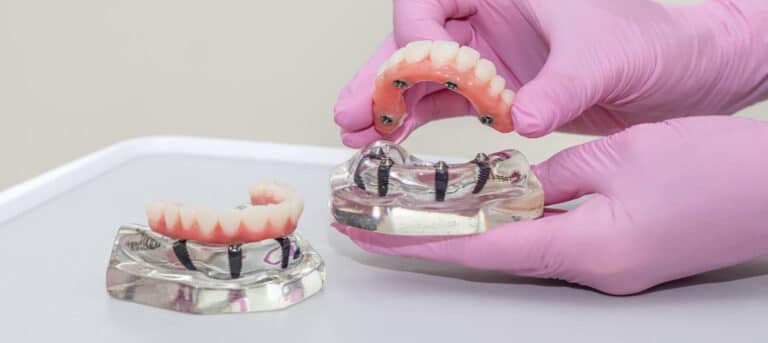
For patients dealing with missing teeth, modern dentistry continues to evolve with solutions designed to improve comfort, aesthetics, and long-term outcomes. Among the most notable recent developments in implant dentistry are screwless dental implants: an approach that eliminates many of the functional and cosmetic concerns associated with traditional implants.
Understanding how screwless systems differ from traditional screw-retained implants is a meaningful first step for any patient exploring their tooth replacement options. Patients who are missing a tooth often ask whether you can get a crown without a tooth, but in most cases a dental implant is needed to support the restoration.
Table of Contents
What Are Screwless Dental Implants?
Traditional dental implants consist of a titanium implant placed into the jawbone, an implant post, and a final crown attached with a small screw. While traditional screw-retained implants remain highly effective, the screw mechanism can leave a visible screw hole, a particular concern when replacing front teeth, where appearance is of the highest importance.
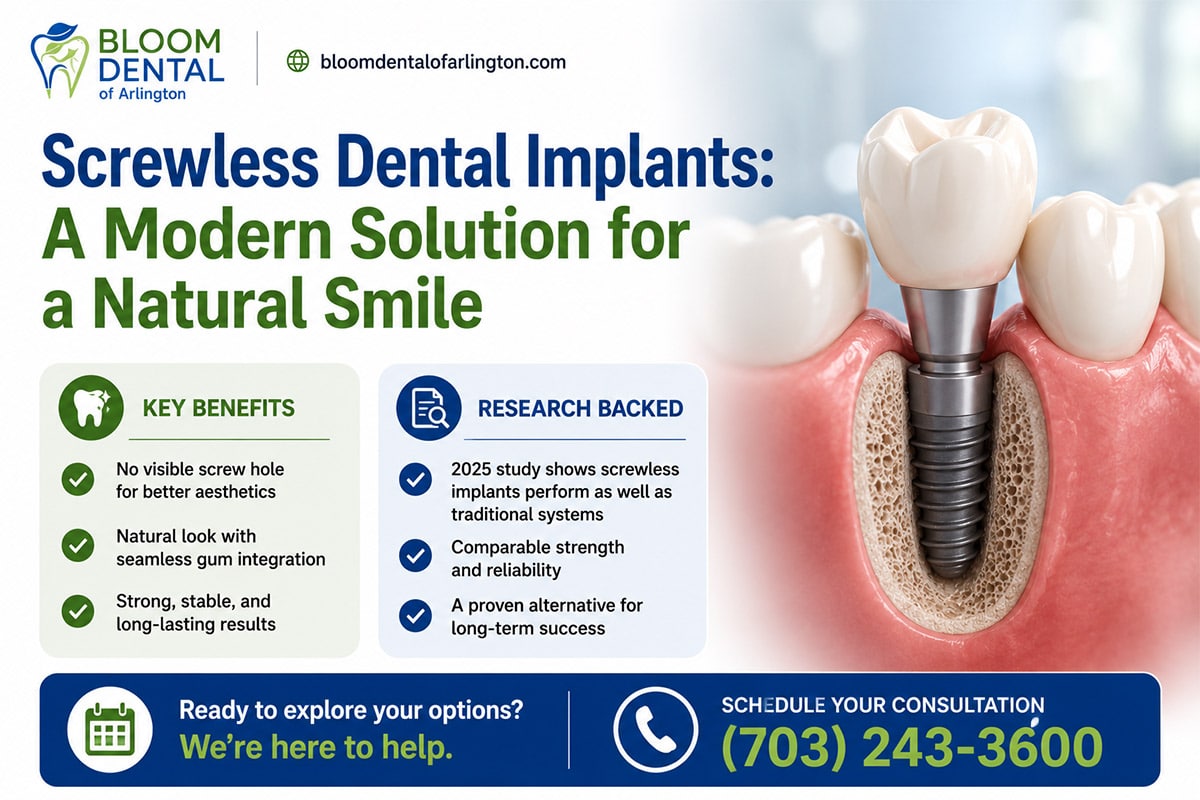
Screwless designs use alternative attachment methods to secure the restoration without relying on a screw channel. Many screwless implants also incorporate cement-retained crowns, in which the cemented crown is secured with strong dental cement rather than metal hardware. This approach eliminates the visible screw access hole while creating a more natural look and a seamless appearance at the gum line.
The main difference between screwless systems and screw-retained crowns is therefore the attachment method itself. Traditional screw-retained systems allow dentists to remove the restoration easily during long-term maintenance, but the screw implant design may affect overall aesthetics. Screwless designs address this by prioritizing a more natural look and cleaner integration with surrounding gum tissue.
Benefits of Screwless Dental Implants
One of the primary advantages of screwless dental implants is improved aesthetics. Because there is no visible screw access channel, patients enjoy natural aesthetics and a natural-looking solution—especially where front teeth are involved. For many patients, this dental restoration represents a good option when appearance is a top priority alongside long-term stability. This is one reason why screwless systems are especially popular for front tooth crowns, where cosmetic results matter most.
advantages and disadvantages of screwless implants
Like any dental restoration, screwless dental implants have both advantages and limitations. While they offer excellent aesthetics and a seamless appearance, the right choice ultimately depends on your oral health, the location of the implant, and your long-term treatment needs.
Understanding the advantages and disadvantages of screwless implants can help you have a more informed discussion with your dentist when comparing treatment options.
| Advantages of Screwless Implants | Disadvantages of Screwless Implants |
|---|---|
| No visible screw access hole for a more natural appearance | Some systems may be more difficult to retrieve if the restoration needs repair |
| Excellent aesthetics, especially for front teeth | Long-term clinical data are still emerging for some newer designs |
| Smooth crown surface with no screw opening | May not be suitable for every clinical situation |
| High patient satisfaction with cosmetic results | Treatment options vary depending on the implant system used |
| Comparable stability to traditional systems in appropriate cases | Case selection is important for long-term success |
For many patients, the advantages of screwless implants outweigh the limitations, particularly when replacing front teeth where appearance is a primary concern. However, traditional screw-retained implants continue to offer excellent long-term outcomes and may be preferred when easier maintenance or future retrieval of the crown is anticipated. Your implant dentist will recommend the option that best matches your clinical needs and aesthetic goals.
Do Screwless Dental Implants Work? What the Research Shows
The evidence supporting screwless implants continues to grow.
A 2025 comparative study published in the Journal of Functional Biomaterials used three-dimensional finite element analysis to evaluate three implant restoration systems: a screw-and-cement-retained prosthetic system, a cementless screw-retained prosthetic system, and a novel screwless hook-retained prosthetic system. The results demonstrated that “the performance of the HRP system was comparable to that of a conventional SRP system under the same conditions,” and confirmed that “the novel screwless HRP system presents a viable alternative implant prosthodontic system to the conventional SCRP system.” This means the new screwless design held the implant crown just as safely and effectively as the usual screw-held option in the lab tests.
While long-term data on some newer screwless designs is still emerging, early clinical results have been highly encouraging, and the framework for validating these treatment approaches is well established within implant dentistry.
Screwless vs. Screw-Retained Dental Implants
When comparing screwless dental implants with traditional screw-retained dental implants, it’s important to understand that both options are designed to replace missing teeth successfully. The biggest difference is not the implant itself, but how the final crown is attached.
With a traditional screw-retained implant, the crown is secured using a small screw that passes through the restoration into the implant. Although highly reliable, this design leaves a screw access hole that is later covered with filling material. In contrast, screwless dental implants use alternative retention methods to secure the crown without a visible screw channel, creating a smoother and more natural-looking restoration.
Neither approach is universally better. Patients replacing highly visible front teeth often prefer screwless dental implants because they provide superior aesthetics, while screw-retained restorations may be preferred in situations where easier retrieval and long-term maintenance are priorities. Your dentist will recommend the most appropriate option based on the location of the implant, your bite, cosmetic goals, and overall oral health.
| Feature | Screwless Dental Implants | Screw-Retained Dental Implants |
|---|---|---|
| Crown attachment | Alternative retention system without a visible screw | Crown secured with a fixation screw |
| Visible screw access hole | No | Yes (covered after placement) |
| Appearance | Excellent, especially for front teeth | Very good |
| Maintenance | May require more involved retrieval if the crown needs removal | Easier for dentists to remove and service |
| Long-term clinical evidence | Growing evidence with promising results | Extensive long-term clinical evidence |
| Best suited for | Patients prioritizing aesthetics and a seamless smile | Patients who may require easier future maintenance |
| Overall success | High when properly planned and placed | High when properly planned and placed |
The best choice depends on your individual situation rather than one system being better than the other. If your primary concern is achieving the most natural-looking smile, particularly for a front tooth, screwless dental implants may be an excellent option. If long-term retrievability and maintenance are more important, a traditional screw-retained restoration may be recommended. An experienced implant dentist can help determine which approach offers the best balance of function, aesthetics, and long-term success for your smile.
Maintenance Challenges and Important Considerations
Like all forms of dental restoration, screwless dental implants require proper care and good oral hygiene to maximize long-term stability and reduce the risk of implant failure. Regular dental care visits, professional cleanings, and consistent implant care at home are essential. Patients should follow all guidance provided during and after the placement process to support the best possible dental implant treatment outcome.
Why Choose Bloom Dental of Arlington
At Bloom Dental of Arlington, our team brings specialized expertise in restorative and implant dentistry to every patient consultation. We take the time to understand each patient’s oral health, aesthetic goals, and long-term expectations before recommending a dental treatment approach.
If you have questions about screwless dental implants or would like to explore your options for replacing missing teeth, we welcome you to schedule a consultation with our Arlington dental team.
You can also learn more about our full range of dental implant services. Informed decisions about your smile begin with the right conversation, and we are here to guide you every step of the way.
FAQs About Screwless Dental Implants
What are screwless dental implants?
Are screwless dental implants as strong as traditional implants?
How long do screwless dental implants last?