

Dental implant surgery is one of the most reliable ways to replace a missing tooth, but the days that follow call for a thoughtful approach to eating. While most patients naturally focus on medication and oral hygiene during implant recovery, diet plays an equally important role in supporting the healing process around the surgical site. Choosing soft foods in the first days after dental surgery reduces unnecessary pressure on the area, supports comfort, and helps the body take in the calorie intake and protein intake it needs to heal well.
Table of Contents
What to Eat After Dental Implant Surgery
After dental implant surgery, begin with cool or lukewarm foods that are soft enough to eat with little or no chewing. Good options include yogurt, applesauce, mashed potatoes, scrambled eggs, oatmeal, cottage cheese, blended soups, avocado, soft pasta, and flaky fish.
During the first few days, avoid foods that are hard, crunchy, sticky, spicy, acidic, or very hot. As pain and swelling improve, you can gradually return to firmer foods according to your comfort level and your dentist’s instructions.
| Time After Surgery | Recommended Foods | Foods to Avoid |
|---|---|---|
| First few hours | Water and approved cool liquids once your dentist says eating is safe | Hot drinks, chewing while still numb |
| First 24–48 hours | Yogurt, applesauce, pudding, mashed banana, cooled blended soup, smoothies without hard pieces | Hot, spicy, acidic, crunchy, sticky foods |
| Days 3–7 | Scrambled eggs, oatmeal, mashed potatoes, avocado, cottage cheese, soft pasta, flaky fish | Chips, popcorn, nuts, seeds, crusty bread |
| Week 2 | Soft rice, tender chicken, cooked vegetables, soft bread, beans and lentils if comfortable | Foods that require forceful chewing near the implant |
| After 2 weeks | Gradual return to a normal diet if healing is progressing well | Continue avoiding anything that causes pain or pressures the implant site |
This timeline is a general guide. Bone grafting, multiple implants, immediate-load restorations, or other surgical factors may require a longer modified diet.
Why Diet Matters During Post-Operative Care
Soft food does not simply mean easy to bite. It means foods that are mashable, spoonable, or tender enough to require very little chewing. Cool or lukewarm temperatures often feel more comfortable than hot foods during the first 24 to 48 hours after surgery, and acidic or spicy foods can irritate a healing surgical site.
Maintaining adequate protein intake supports tissue repair, so eggs, yogurt, cottage cheese, tofu, and soft fish are worth prioritizing even when appetite is limited. Smaller, more frequent meals are often easier to manage than three large ones in the days following dental implant surgery, and staying hydrated throughout the day supports both comfort and nutrition support during healing.
A Stage-by-Stage Eating Guide for Implant Recovery
Healing timelines vary from patient to patient, but most people gradually move from liquids and very soft foods toward more tender meals before easing back into a normal diet. A 2021 study in Medicina followed 40 patients who received 98 dental implants and found that 75 percent reported difficulty eating on the first day after surgery, a figure that fell drastically by day four, which helps explain why a gradual, comfort-based return to regular food is the right approach.
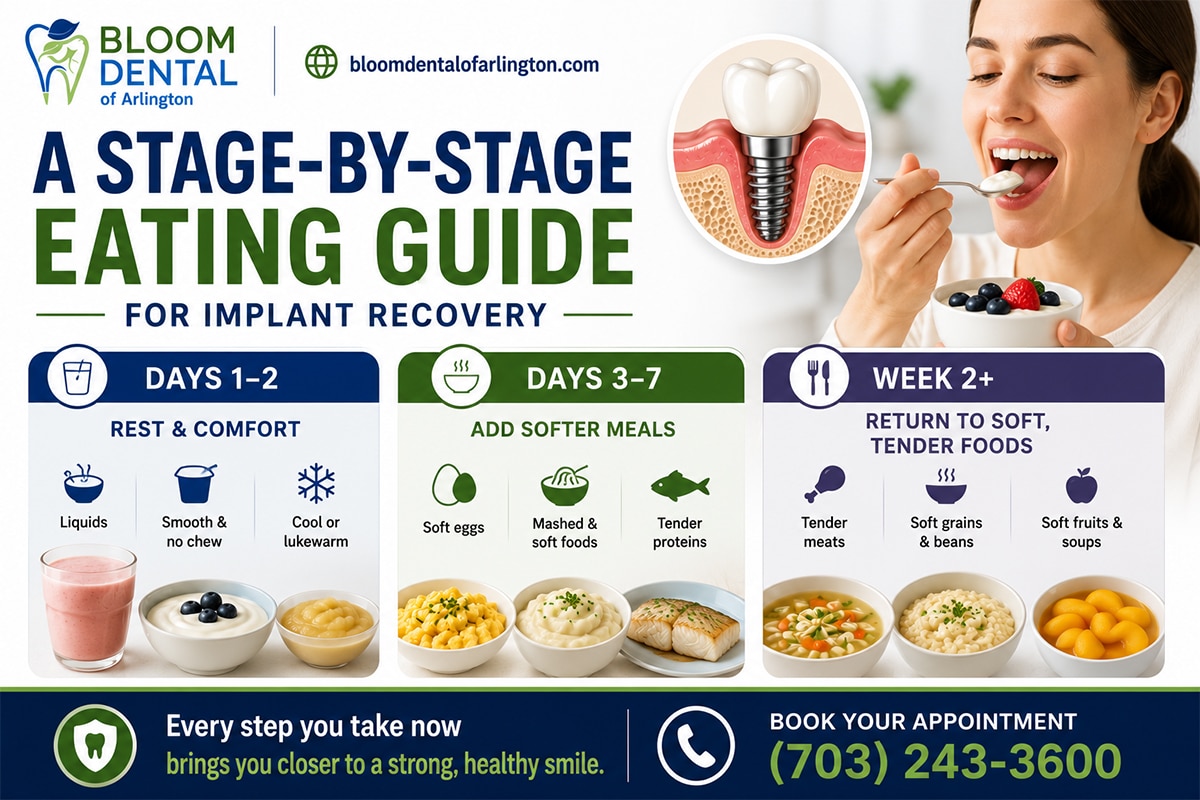
During the first 48 hours, cool or lukewarm foods that require virtually no chewing tend to work best. Smoothies, plain yogurt or Greek yogurt, applesauce, pudding, a smoothie bowl without crunchy toppings, and blended soup served cooled all fit well here, along with mashed banana, avocado, and soft melon.
As comfort improves between days three and seven, patients can typically add scrambled eggs or a soft omelet, poached eggs, cottage cheese, ricotta or cream cheese, oatmeal, cream of wheat, overnight oats, mashed potatoes, mashed sweet potato, mashed cauliflower, steamed carrots, soft pasta, mac and cheese, and flaky fish.
By the second week and beyond, assuming healing is progressing normally, tender shredded chicken, meatloaf, risotto, polenta, grits, congee, soft-cooked lentils, black beans, refried beans, baked beans, hummus, egg salad, tuna salad, tomato soup, butternut squash soup, chicken noodle soup, and miso soup often become manageable again. Canned peaches, canned pears, baked apples, and pumpkin puree round out a soft-food diet nicely, and pudding or ice cream without hard mix-ins can serve as a gentle treat along the way.
Continue chewing away from the surgical site if your oral surgeon or dentist has advised it, and remember that these same chewing restrictions apply just as much after a tooth extraction as they do after implant placement, since both procedures involve a healing surgical site. Patients recovering from an extraction can follow a similar guide to foods to eat after tooth extraction while the area heals.
How Long After Dental Implant Surgery Can I Eat?
Many patients wonder how long after dental implant surgery they can eat. The answer depends partly on the anesthesia used and the extent of the procedure. Your dentist may ask you to wait for a short period immediately after surgery before eating. Once you are cleared to eat, start with cool liquids and very soft foods. Avoid chewing until the numbness has worn off so you do not accidentally bite your cheek, lip, or tongue.
Most patients can begin eating soft foods on the day of surgery and gradually add more texture over the following one to two weeks. Always follow the instructions provided by your implant dentist, especially if you also received a bone graft or multiple implants.
Foods and Habits to Avoid While Healing
Crunchy foods, seeds, nuts, chips, popcorn, and sticky foods can all disturb a healing surgical site and should generally be avoided during early recovery, along with very hot, spicy, or acidic foods that may cause discomfort. Straw use is often discouraged in the first days as well, since the suction involved can interfere with the clot protecting the surgical site.
Contact your dentist or oral surgeon if you notice worsening pain, increasing swelling, persistent bleeding, fever, or difficulty swallowing. It is also important to recognize dental implant infection signs, especially when pain or swelling becomes worse instead of gradually improving. These symptoms call for prompt pain management and evaluation rather than a wait-and-see approach, and your provider can help you adjust your post-op diet as healing continues.
Why Choose Bloom Dental of Arlington
Recovering from dental implant surgery is less about restricting your diet than about choosing foods that support comfort while your mouth heals. At Bloom Dental of Arlington, our team guides patients through every stage of the dental implant process, from the initial consultation through full recovery, with clear, personalized aftercare guidance at each step.
If you are considering dental implants or want to learn more about what recovery involves, we invite you to book an appointment and start the conversation with our team.
FAQs About Soft Foods After Dental Implant Surgery
Can you eat rice after dental implant surgery?
Can I eat bread after a dental implant?
When can I eat popcorn after a dental implant?
What are the best foods to eat after dental implant surgery?