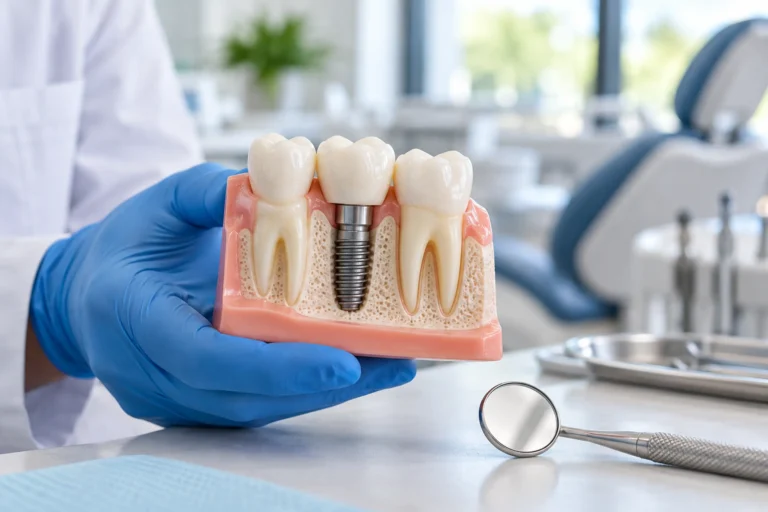
it can occur when the implant does not properly integrate with the surrounding bone or lacks adequate stability during the early healing period. Infection or inflammation around the implant, limited bone quantity or poor bone quality at the treatment site, and smoking or other tobacco exposure can also compromise long-term success. Healing may be further affected by uncontrolled systemic health conditions, while excessive bite forces from clenching or grinding can place damaging stress on the implant. In some cases, failure is linked to prosthetic complications involving the crown, abutment, or retaining screws.
Pain alone does not prove failure: the source may be the fixture, surrounding tissue, or a repairable crown or screw problem. New mobility, drainage, or worsening pain should be assessed promptly.
According to the Journal of Applied Oral Science, a loose dental implant crown or retaining screw does not necessarily mean that the implant fixture anchored in the jawbone has failed. However, movement of the fixture (the portion anchored in the jawbone) is a more serious sign and warrants prompt professional evaluation.
Table of Contents
Recognizing the Key Warning Signs
Early detection of dental implant problems is crucial for successful intervention and to ensure proper care. Severe or intense pain at the implant site that persists beyond the initial healing period should never be ignored. Some soreness can be expected during the early stages of dental implant recovery, but pain that becomes more severe or does not gradually improve should be evaluated.
Redness, bleeding, persistent swelling, drainage, or a bad taste may be dental implant infection signs and should be assessed before the condition progresses. If you notice your implant or artificial tooth beginning to move or feel loose, this is a clear indication that the integration process has not gone as planned. Difficulty chewing or discomfort while eating can also signal implant complications. Furthermore, if gum recession exposes the implant surface, or if you experience a bad taste or any signs of infection at the implant area, you should schedule an appointment with your dental office right away.
| What You Notice | What It May Involve | What to Do |
|---|---|---|
| The crown feels loose, but the implant post does not move | Loose crown, abutment, cement, or retaining screw | Avoid chewing on that side and schedule a dental examination |
| The implant fixture itself moves | Loss of stability or failure of osseointegration | Contact a dentist promptly |
| Redness, bleeding, swelling, or drainage | Inflammation or infection around the implant | Arrange an evaluation before symptoms worsen |
| Persistent or increasing pain | Infection, excess bite pressure, tissue irritation, or another implant complication | Have the source of the pain professionally assessed |
| Gum recession or a newly visible implant surface | Changes in the surrounding gum or bone | Schedule an examination and imaging if recommended |
| A sudden change in the bite | Loose restoration, damaged component, or shifting implant | Avoid repeatedly testing the implant and contact your dentist |
Failure Rate and Long-Term Outlook
There is no single universal implant-failure rate because studies use different definitions of failure, patient populations, implant types, and follow-up periods. In a 2026 systematic review and meta-analysis of prospective studies with at least 20 years of follow-up, researchers estimated a 20-year implant survival rate of 93.0%.
“Survival” generally means the implant remained in place over the study period; it does not necessarily mean that no biological, mechanical, or prosthetic complications occurred. Outcomes varied across the included studies, so this is a long-term research estimate, not a guarantee for any individual implant. Still, these findings suggest that dental implants have a strong capacity to remain functional over the long term when they heal properly and receive appropriate care and maintenance.
Key Factors Behind Implant Complications
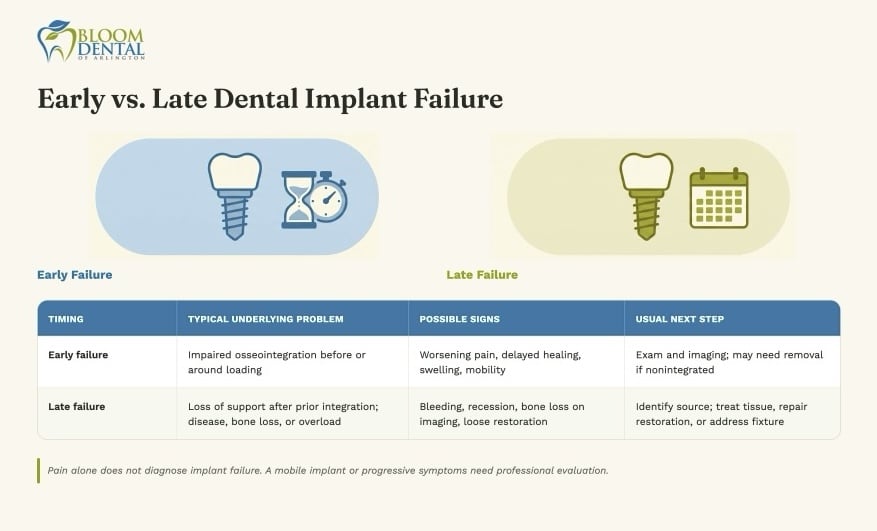
Several factors can contribute to the early failure of dental implants. Improper placement or alignment during dental implant surgery can compromise the stability and success of the implant. Issues with the jawbone or surrounding bone, such as bone loss, may prevent proper osseointegration—the process by which the implant fuses with your natural bone tissue.
Gum disease or soft tissue infections pose significant risks to implant success, as do various health issues like autoimmune disease or diabetic conditions. Some patients may experience allergic reactions to titanium implants or reject them as foreign objects. Additionally, complications in the sinus cavity or nerve damage can occur during the placement procedure, particularly when working with upper jaw implants.
How Dentists Diagnose a Failing Implant
Dentists evaluate a possible implant problem by reviewing when the implant was placed and when symptoms first appeared. They will assess the stability of the implant fixture, the portion anchored in the jawbone, as well as check whether the crown, abutment, or retaining screw is loose.
The examination also includes the surrounding gum tissue for signs of inflammation, such as redness, bleeding, swelling, recession, or drainage. When appropriate, dental imaging can help evaluate bone levels around the implant. Together, these steps help determine whether the concern involves the fixture itself, the surrounding tissue, or the restoration attached to the implant.
What To Do if You Suspect a Problem
If you think an implant may be failing, avoid chewing on that side until a dentist has evaluated it. Do not wiggle or repeatedly test the implant, crown, or abutment, and do not attempt to tighten any component yourself. Continue cleaning the area gently as part of your usual oral-hygiene routine, and arrange a dental appointment promptly, especially if you notice mobility, swelling, drainage, persistent discomfort, or a change in your bite.
If you are experiencing implant mobility, swelling, drainage, or a change in your bite—or are considering dental implant treatment in Arlington—schedule an evaluation with Bloom Dental of Arlington.
Frequently Asked Questions About Dental Implant Failure
Does pain always mean a dental implant is failing? <>No. Mild soreness can occur during early healing, and pain may also come from the gum, crown, abutment, or bite. Pain that worsens or does not gradually improve should be examined.
Can a failing dental implant be saved?
Sometimes. Inflammation, infection, or a loose restoration may be treatable when identified early. A mobile implant fixture or extensive bone loss may require removal.
Does a loose implant crown mean the implant has failed?
Not necessarily. The crown, abutment, cement, or retaining screw may be loose while the implant fixture remains stable in the bone. A dentist needs to examine each component.
What are the first signs of dental implant failure?
Possible early signs include increasing pain, swelling, bleeding, drainage, gum recession, a change in the bite, or movement of the implant fixture.
Can an infection cause dental implant failure?
Yes. Infection and inflammation around an implant can damage the supporting gum and bone. Early evaluation may help limit further tissue loss.
Can a failed dental implant be replaced?
In some cases, yes. The area may first need time to heal, treatment for infection, or bone grafting. Replacement depends on the amount and condition of the remaining bone.
What should I do if my dental implant feels loose?
Avoid chewing on that side, do not repeatedly test or tighten it, and schedule a dental appointment promptly. The dentist must determine whether the crown or the implant fixture is moving.