

Pain in your mouth can be one of the most uncomfortable experiences, especially when it disrupts your ability to eat food or speak. Our bodies experience random changes, and you might be wondering if your tooth pain is simply a random occurrence or an indicator of something more serious. Tooth infections, at the very least, can make daily routines uncomfortable and, at the very worst, lead to life-threatening conditions. Let’s take a deep dive into tooth infections and what you can do to stop them from getting worse.
Table of Contents
What Are the Signs of a Tooth Infection?
Common signs of a tooth infection include persistent or throbbing tooth pain, sensitivity to hot or cold, pain when biting, swelling around the tooth or gums, a bad taste in the mouth, bad breath, fever, swollen lymph nodes, and a pimple-like bump on the gum.
Some infections cause little or no pain, especially if the nerve inside the tooth has died. For this reason, tooth discoloration, drainage, or swelling should still be evaluated by a dentist even when the tooth does not hurt.
What Is a Tooth Infection?
A tooth infection develops when bacteria enter the inner pulp of a tooth or the tissues surrounding its root. This may happen through untreated decay, a crack or fracture, dental trauma, gum disease, or a damaged restoration.
As the infection progresses, it may form a pocket of pus known as a dental abscess. A periapical abscess develops near the tip of a tooth root, while a periodontal abscess forms in the gum and supporting tissues beside the tooth.
What Is an Abscessed Tooth?
If you don’t care for your teeth, it can lead to deep cavities, chips, cracks, or even a black spot on teeth, which is often an early sign of decay that can eventually lead to infection. A tooth infection is usually referred to as an abscessed tooth. These problems are caused by a bacterial infection that leads to a pocket of pus, either visible on the tip of the root (periapical) or beneath the surface near the gums (periodontal). An abscessed tooth can be very painful and lead to the deterioration of your teeth, mouth, gums, and overall health.
What Causes an Abscessed Tooth?
Poor oral hygiene is the main cause of an abscessed tooth. If you don’t care for your teeth, it will lead to deep cavities, chips, and cracks. The longer these chips and cracks exist, the more likely bacteria will enter the space, resulting in inflammation, infection, and tooth abscesses that bring your mouth pain. Some risk factors for tooth infections also include individuals with a diet containing high amounts of sugar and people who have dry mouth, which can increase the likelihood of tooth decay.
What Are Some Signs That My Tooth Is Infected?
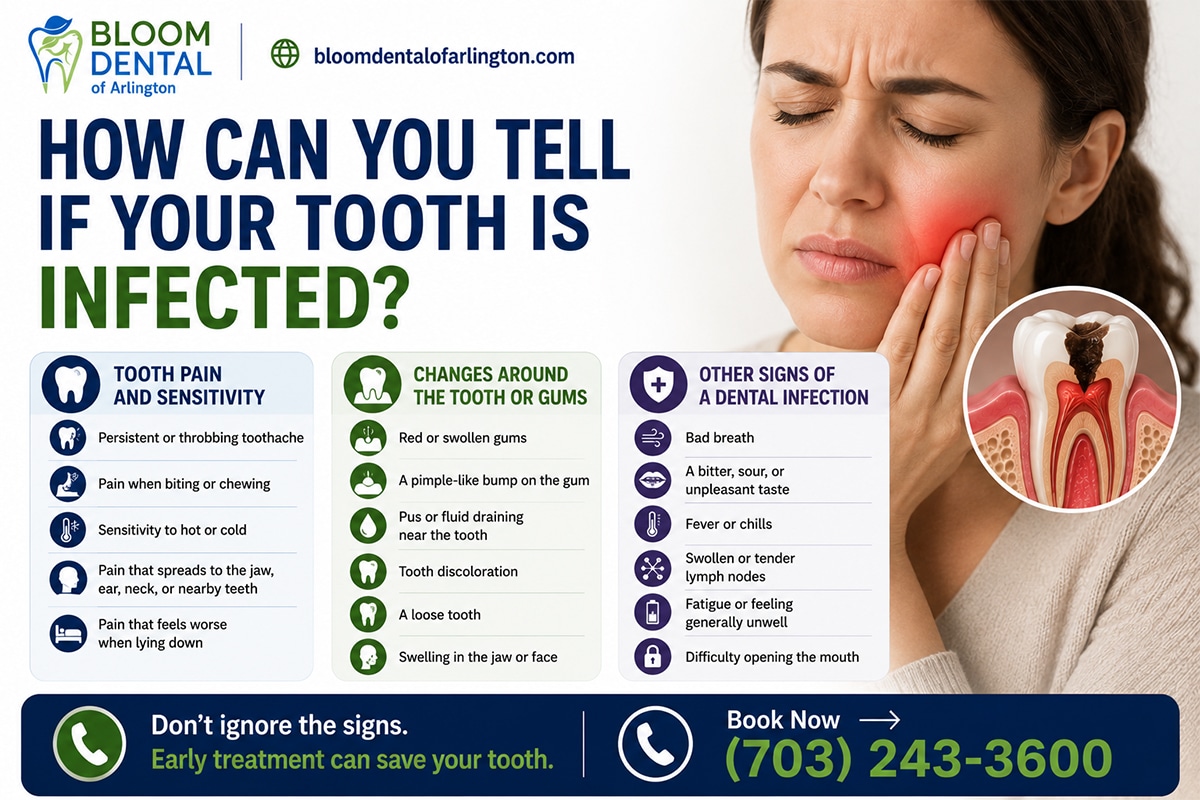
Some people also wonder why does my tooth filling hurt after months, which can sometimes indicate that decay or infection has developed beneath or around the filling. So how can one tell if their tooth is infected? Tooth infections are excruciating and will keep most people up at night with the constant throbbing. The best thing you can do is call your dentist for an appointment, but if you still aren’t sure, keep in mind some of these signs:
-
Tooth Pain and Sensitivity
- Persistent or throbbing toothache
- Pain when biting or chewing
- Sensitivity to hot or cold
- Pain that spreads to the jaw, ear, neck, or nearby teeth
- Pain that feels worse when lying down
Changes Around the Tooth or Gums
- Red or swollen gums
- A pimple-like bump on the gum
- Pus or fluid draining near the tooth
- Tooth discoloration
- A loose tooth
- Swelling in the jaw or face
Other Signs of a Dental Infection
- Bad breath
- A bitter, sour, or unpleasant taste
- Fever or chills
- Swollen or tender lymph nodes
- Fatigue or feeling generally unwell
- Difficulty opening the mouth
Can You Have a Tooth Infection Without Pain?
Yes. A tooth infection does not always cause pain. If the nerve inside the tooth has died, the original toothache may decrease even though bacteria and infection remain. Other signs, such as tooth discoloration, gum swelling, drainage, a bad taste, or a pimple on the gum, may still be present.
A sudden reduction in pain should not be assumed to mean the infection has healed. The tooth should still be evaluated by a dentist.
Will My Tooth Infection Heal on Its Own?
Unfortunately, your tooth infection won’t heal on its own, and you can even worsen it if left untreated. The infection can take over your gums, jawbone, and the rest of your head. You can even develop sepsis and other life-threatening issues. The best thing anyone can do is call their dentist and get a comprehensive tooth evaluation. Root canals and other endodontic therapy treatments can help save your teeth before things get worse.
- Root canal treatment: Removes infected tissue while preserving the tooth when possible.
- Abscess drainage: Releases pus and reduces pressure at the infection site.
- Crown or restoration replacement: May be needed if bacteria entered beneath a damaged filling or crown.
- Periodontal treatment: Used when the infection originates in the gums.
- Tooth extraction: Considered when the tooth cannot be predictably restored.
- Antibiotics: Used selectively when there are signs of spreading or systemic infection.
| Sign or Symptom | What It May Indicate | Recommended Action |
|---|---|---|
| Mild sensitivity | Decay, irritation, or early pulp inflammation | Schedule a dental exam |
| Persistent throbbing pain | Advanced inflammation or infection | Seek prompt dental care |
| Gum bump or drainage | Dental abscess | Contact a dentist promptly |
| Facial or jaw swelling | Spreading infection | Urgent evaluation |
| Fever with swelling | Systemic involvement | Urgent dental or medical care |
| Difficulty swallowing or breathing | Possible airway involvement | Seek emergency care |
Bloom Dental of Arlington Can Help Treat Your Tooth Infection
A tooth infection can be an annoying and painful experience, but the last thing you want to do is let your tooth pain linger for much longer. Why leave your damaged teeth untreated when you have access to quality endodontics in Arlington, VA, from the specialists at Bloom Dental of Arlington? With our help, you can get root canals, an Apicoectomy, or retreatment for your infected teeth. Looking to prevent tooth infections and any drastic measures to save the rest of your chompers? Get top-of-the-line teeth cleaning services from our team, and you won’t have to worry about tooth pain for years in the future!
FAQ About Tooth Infection
What are the most common symptoms of a tooth infection?
Can antibiotics cure a tooth infection?
What are the signs that a dental infection is spreading?