Tooth extraction healing stages begin with a protective blood clot, then new soft tissue that gradually fills the socket, while deeper jawbone healing continues for weeks to months. Most people feel much better within several days, though recovery varies.
Table of Contents
Day-by-Day Tooth Extraction Healing Stages
These ranges are approximate; your dentist’s written instructions take priority.
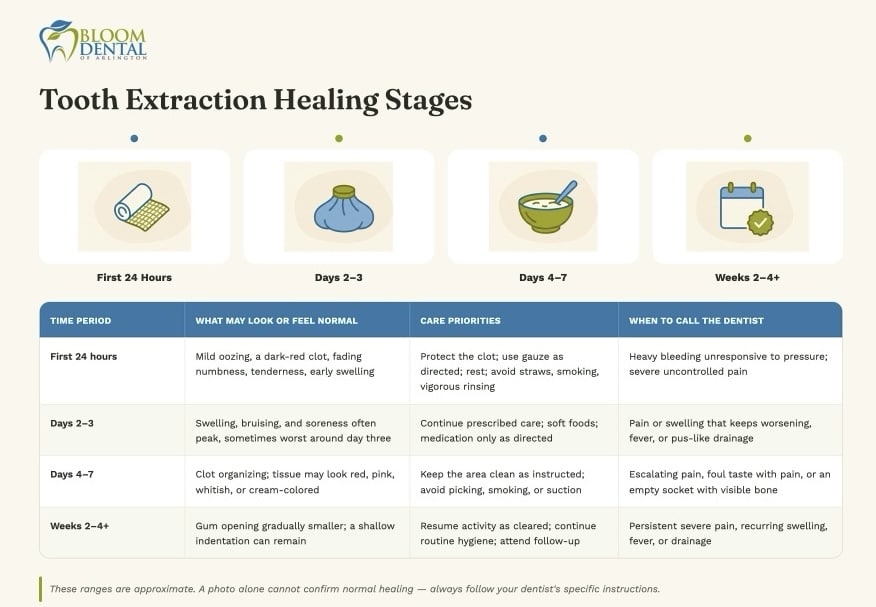
First 24 Hours: Blood Clot Formation
A clot forms to protect the bone and nerves beneath it, often dark red like a scab. Avoid touching it, forceful rinsing, straws, and smoking, which can dislodge it.
For Bloom-specific instructions, see tooth extraction aftercare.
Days 2–3: Swelling and Early Repair
Swelling, tenderness, and bruising can peak, often around day three. The key pattern is improvement after this peak, not worsening.
Days 4–7: New Tissue and Gum Closure
The clot is gradually replaced by tissue that may look red, pink, whitish, or cream-colored; this alone is not a sign of infection. Severe pain, fever, or drainage matter more than color and are indicators of infection.
Weeks 2-4 and Beyond: Deeper Healing
The gum opening usually shrinks, though a shallow indentation can remain while bone healing continues. MedlinePlus notes the socket often closes in one to two weeks, while a larger socket’s bone may take months.
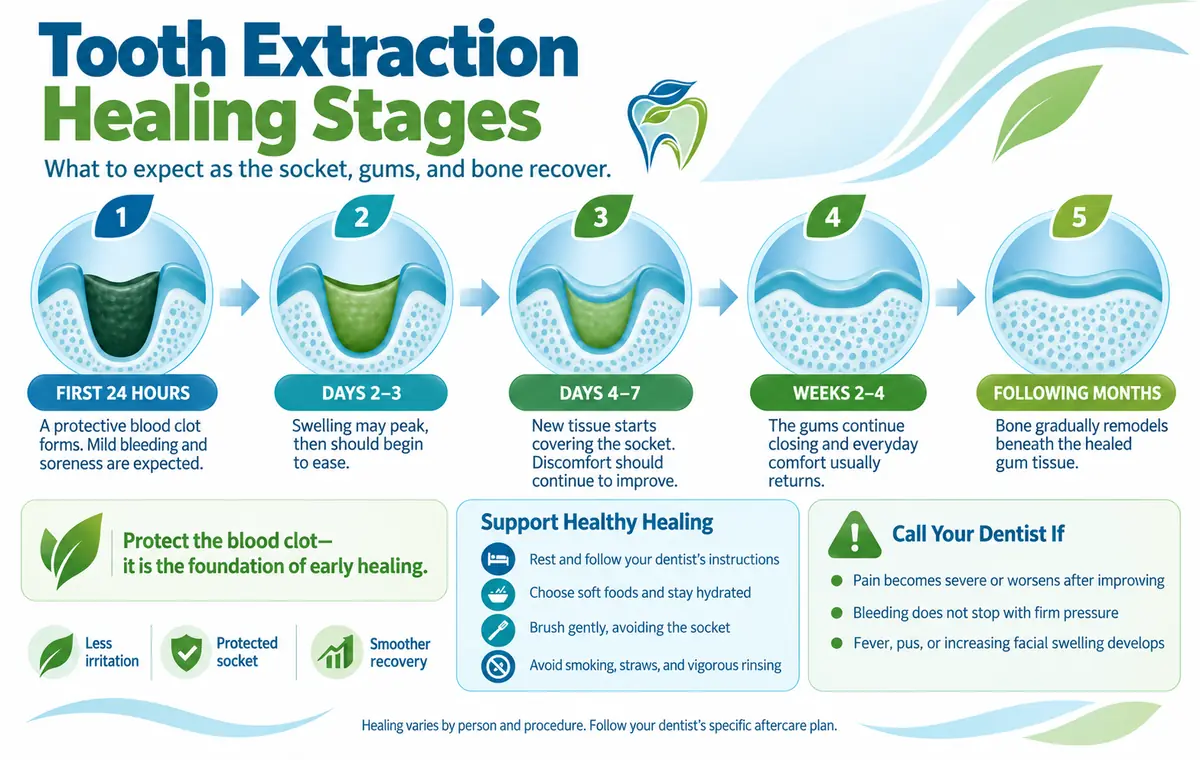
What Do Normal Healing Stages Look Like?
Appearance varies. Common during expected healing:
- Mild oozing during the first day
- A dark clot early on, then mixed red, pink, or whitish tissue
- Tenderness, early swelling, and occasional bruising
- A visible opening that gradually shrinks over weeks
Wisdom Tooth Extraction Healing Stages
Wisdom tooth healing can feel more intense, especially when a tooth is impacted and removal requires an incision, bone removal, or sectioning.
See Bloom Dental’s wisdom teeth removal page for additional details and guidance.
Frequently Asked Questions About Tooth Extraction Healing
How long does a tooth extraction take to heal?
Most people feel noticeably better within several days. The gum usually begins closing within one to two weeks, but deeper bone healing can continue for several weeks or months.
What should a healing tooth extraction look like?
The socket may initially contain a dark blood clot. As healing continues, the area may look red, pink, white, or cream-colored as new tissue develops. Color alone does not usually indicate infection.
When can I eat normally after a tooth extraction?
Many patients begin with soft foods and gradually return to their normal diet as soreness improves. Avoid foods that are hard, sharp, sticky, or likely to become trapped in the socket during early healing.
How do I know if the blood clot has come out?
You may notice that the socket looks empty or that pain suddenly becomes more intense a few days after the extraction. Severe or worsening pain should be assessed by your dentist.
When is dry socket most likely to occur?
Dry socket often develops within the first few days after an extraction. The pain may become severe, spread toward the ear or jaw, and worsen instead of improving.
Is white tissue in the extraction socket normal?
White or cream-colored tissue can be part of normal healing and does not automatically mean there is an infection. Contact your dentist if it occurs with worsening pain, fever, swelling, or pus-like drainage.
When can I brush my teeth after an extraction?
You can usually brush the other teeth carefully, but avoid disturbing the extraction site during early healing. Follow your dentist’s instructions about cleaning near the socket and when to begin gentle rinsing.
Does a wisdom tooth extraction take longer to heal?
It can. Impacted wisdom teeth may require a more involved procedure, so swelling, soreness, and limited jaw movement may last longer than after a simple extraction.
Tooth Extraction Aftercare
Follow your dentist’s instructions first. In general:
- Protect the clot; avoid touching or probing the socket
- Use medications only as directed
- Choose appropriate foods to eat after tooth extraction, starting with soft options and gradually returning to your normal diet as comfort allows
- Avoid smoking, vaping, straws, and vigorous rinsing
Call if pain or swelling worsens instead of improving, fever develops, there is pus-like drainage, bleeding is persistent, or the site does not seem to be progressing. And seek urgent care right away for: trouble breathing or swallowing, rapidly spreading facial or neck swelling, uncontrolled bleeding, or major dental trauma.
If you have questions about healing or are concerned a site isn’t improving as expected, reach out to Bloom Dental today for an appointment.