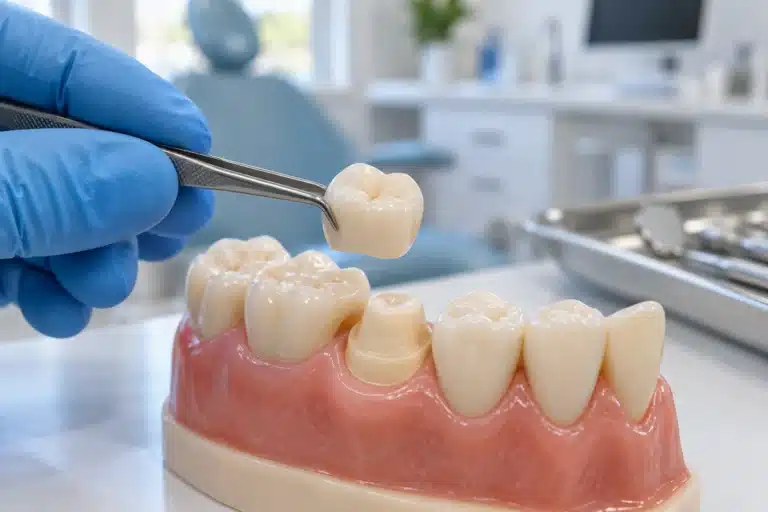
Tooth decay under a crown is more common than many patients realize. Although a dental crown protects a damaged tooth, the underlying natural tooth remains susceptible to further problems. If you’re considering treatment, understanding the difference between a dental cap and a crown can help you make a more informed decision.
Poor oral hygiene and dietary habits are leading risk factors, even with restorations. Without proper care, decay under crowns can develop quietly and lead to serious dental issues if untreated.
Table of Contents
Why Tooth Decay Can Still Develop Around a Crowned Tooth
Even after crown placement, the natural teeth beneath a restoration remain vulnerable, particularly at the gum line and crown margin. The edges of the crown can trap food particles, allowing plaque to accumulate in the affected area. Over time, this bacterial activity may lead to gum disease, gum inflammation, and, eventually, dental infections in the surrounding tissues.
An old crown or a poorly fitted dental restoration significantly increases the risk. This is one reason why many patients ask how long do dental crowns last before they need replacement. When the seal between the crown and the affected tooth deteriorates, bacteria can infiltrate the space beneath, initiating decay from the inside ou, often with no visible surface indication. This is precisely why regular dental checkups and professional cleanings are essential to long-term dental health.
Reducing the Risk of Decay With Proper Care and Regular Visits
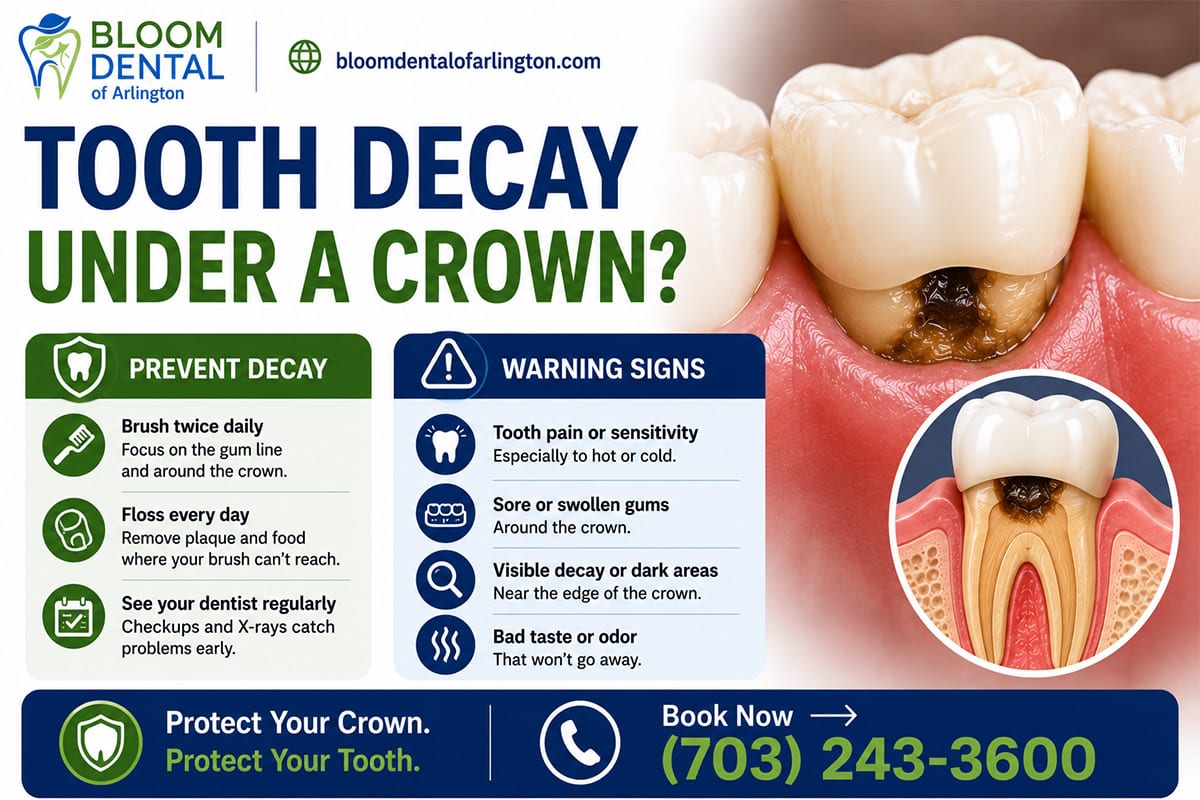
The best way to avoid problems with crowns is to prevent them. Good brushing habits at home are key. Brush well twice a day, paying close attention to where your teeth and gums meet and around the edge of the crown. Floss every day to remove stuck food and plaque from places your toothbrush can’t reach. Not cleaning these areas well can increase the risk of decay over time.
Regular checkups and dental X-rays help your care team detect decay early. Disciplined home care combined with professional oversight offers the best long-term protection for crowned teeth.
Symptoms of Decay Beneath a Crown: What to Watch For
Recognizing the warning signs of tooth decay under crowns early can significantly limit the scope of required treatment. Symptoms of tooth decay may be subtle at first, but they tend to worsen if left untreated. The American Dental Association (ADA) notes that gum recession, combined with gum disease, can expose tooth roots to plaque, making the tooth susceptible to significant damage and heightened tooth sensitivity, particularly to hot and cold temperatures.
Patients should contact their dental office for a regular check or evaluation if they experience any of these symptoms: persistent tooth pain or discomfort; sensitivity to cold or heat; sore or inflamed gums around the crown; visible decay near the crown’s edge; or an unpleasant or foul taste in the mouth.
These symptoms may indicate that dental problems are developing beneath the restoration, making prompt intervention important to prevent tooth loss. Some patients first search for how to relieve tooth pain under crown, but pain relief alone will not treat the underlying decay.
Treatment Options for Tooth Decay Under Crowns
If decay is detected early, the dentist may remove the crown, clean the tooth, and restore it with a filling or composite before placing a new crown, preserving the natural tooth and preventing further issues.
In more severe cases, root canal treatment—also called root canal therapy—may be necessary if the decay has reached the inner pulp of the tooth. If the damage is too extensive to restore, tooth extraction may be the only remaining option. After an extraction, patients often have questions about recovery and diet, such as can I eat scrambled eggs after tooth extraction, since soft foods are typically recommended during the healing process. In such cases, dental implants are often recommended as a long-term solution within restorative dentistry. Crown replacement or crown lengthening may also be considered to ensure a more secure fit and reduce the likelihood of future complications in the affected area.
Why Choose Bloom Dental of Arlington
At Bloom Dental of Arlington, we are dedicated to patient-centered dental care for every stage. Whether you need a routine check-up, crown evaluation, or restorative procedure, our experienced team can help.
If you recognize any of these symptoms or want proactive dental care, call Bloom Dental of Arlington today to schedule your appointment. Protect your smile.