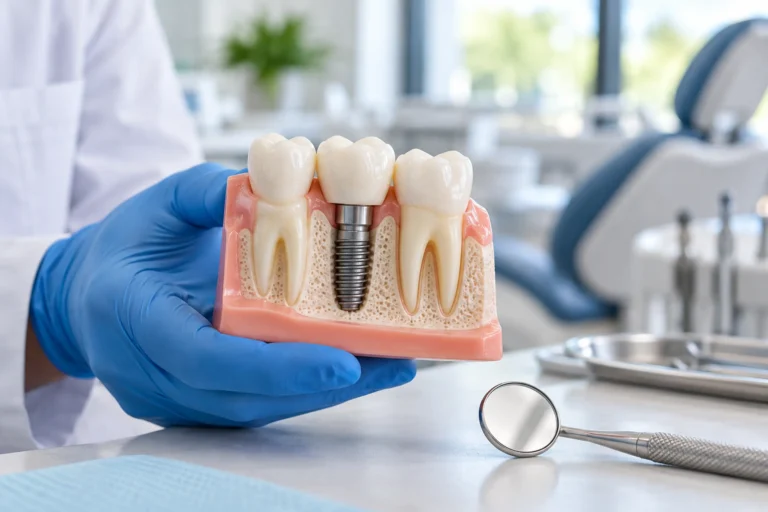
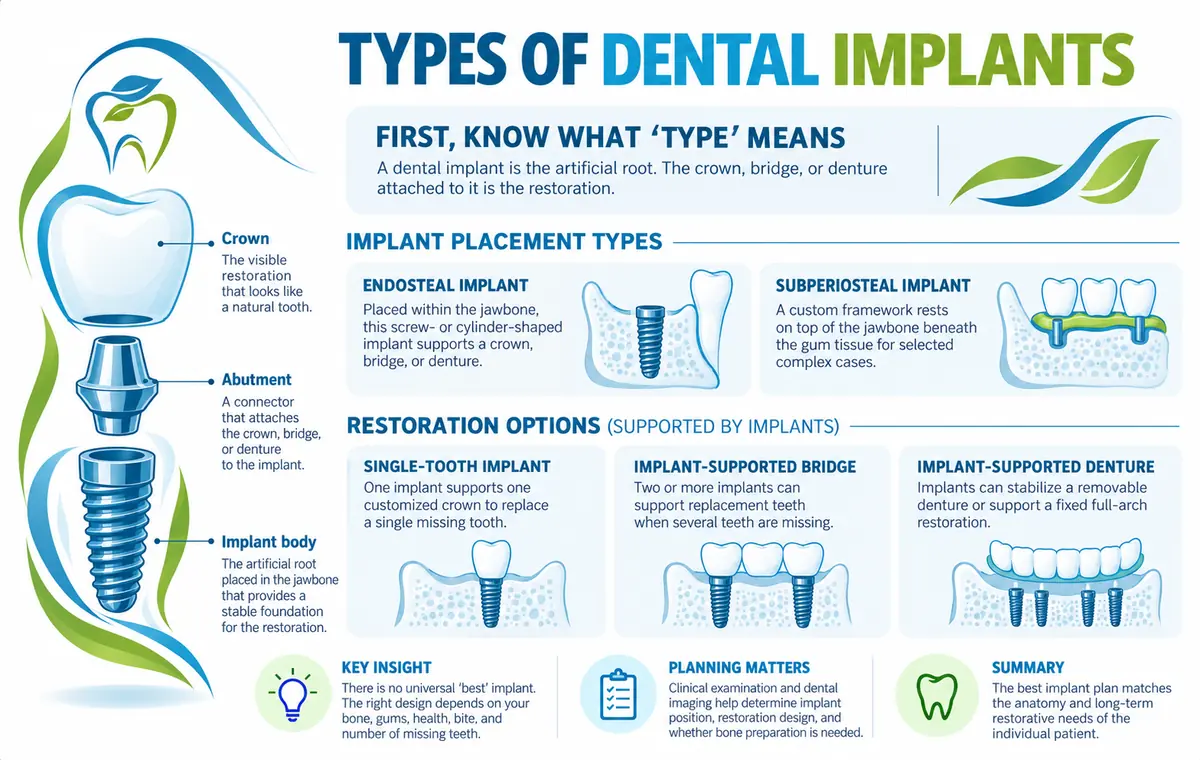
Endosteal implants, placed in the jawbone, are the most common type of dental implant. Subperiosteal and zygomatic implants are other options used in selected circumstances. Single-stage and two-stage refer to surgical approaches, not separate implant categories. At Bloom Dental of Arlington, we offer consultations for dental implants in Arlington alongside our cosmetic dentistry services.
Dental implants come in all different shapes and sizes, but two main types of implants rely on the procedure used: single-stage or two-stage.
Table of Contents
Types of Dental Implants rely on the procedure used
Single-Stage:In a single-stage procedure, the implant is placed in the jawbone and a healing component remains visible through the gum. This usually avoids a separate operation to uncover the implant. The ITI describes this as non-submerged healing.
Two-Stage:In a two-stage procedure, the gum is closed over the implant during initial healing. A later procedure exposes the implant so a healing component can be attached. The ITI explains that covered healing can also protect bone augmentation material when it is part of the treatment.
Which Dental Implant Is Best?
here is no single best type of dental implant for everyone. Your dentist considers the missing teeth, available bone, gum health, bite, and medical history when planning implant treatment. Ask why the proposed option suits your situation and what alternatives are reasonable.
Titanium and zirconia describe implant materials, not where an implant is placed. The FDA identifies both among commonly used implant materials. Our guide to what dental implants are made of explains that distinction in more detail.
What Is the Alternative to Dental Implants?
Dental implants are not the only solution to replace missing or damaged teeth. Alternatives include removable appliances such as partial dentures, or a fixed device like a bridge that uses the adjacent teeth to anchor it.
Can Patients With Full or Partial Missing Teeth Benefit From Implants? How Can Implant Treatments Help Them?
Patients with full or partially missing teeth can use implant-supported dentures, full or partial to replace them. Implant-supported dentures have a lot of advantages including better retention, longevity, and preventing additional bone loss. In full edentulous patients who are using conventional complete dentures, there is a significant improvement in retention by adding the implant to the treatment plan and changing the conventional complete denture to overdenture or hybrid denture.
Who Is a Candidate for Dental Implants?
Since implants are connected with the gum tissues and bone structure in the mouth, ideal candidates have good oral health and gum tissue. Having good quality bone in regards to shape, width, and height is very essential in determining if you are a good candidate for an implant. At Bloom Dental of Arlington, by using the latest technology, including a very low dose CT Scan machine, we measure the amount of bone you have and let you know if you are a candidate for implants or you would benefit from doing bone grafting.
Patients should be committed to good oral hygiene and regular dental visits. Heavy smokers or patients who suffer from chronic diseases like diabetes or heart disease need to be evaluated on an individual basis. If you are considering implants or any alternatives, consult a dental professional to assess what options are best for you.
Can I Get Implants if I Have Periodontal Disease?
Periodontal disease is the leading cause of tooth loss and decay in adults. It can range from gum inflammation to major damage to tissue and bone that support the teeth. Dental implants can help reinvigorate oral health and restore your smile.
Improve Your Oral Health With Dental Implants
For more information regarding dental implants, dental cleaning services in the Fairfax area, or how our family practice can help your overall dental health, contact Bloom Dental of Arlington today.
Frequently Asked Questions
Is a one-piece implant the same as a single-stage procedure?
No. One-piece describes an implant with an integrated abutment. Single-stage describes a surgical approach in which a healing component remains exposed through the gum.
Is All-on-4 a separate implant material?
No. All-on-4 describes a treatment approach that uses four implants to support replacement teeth in one jaw. It does not identify the material used to make the implants.