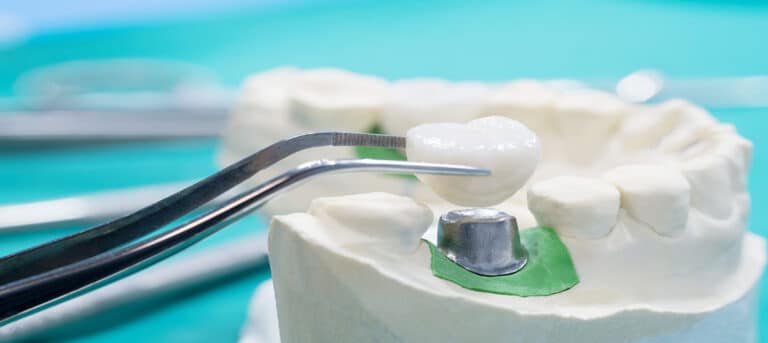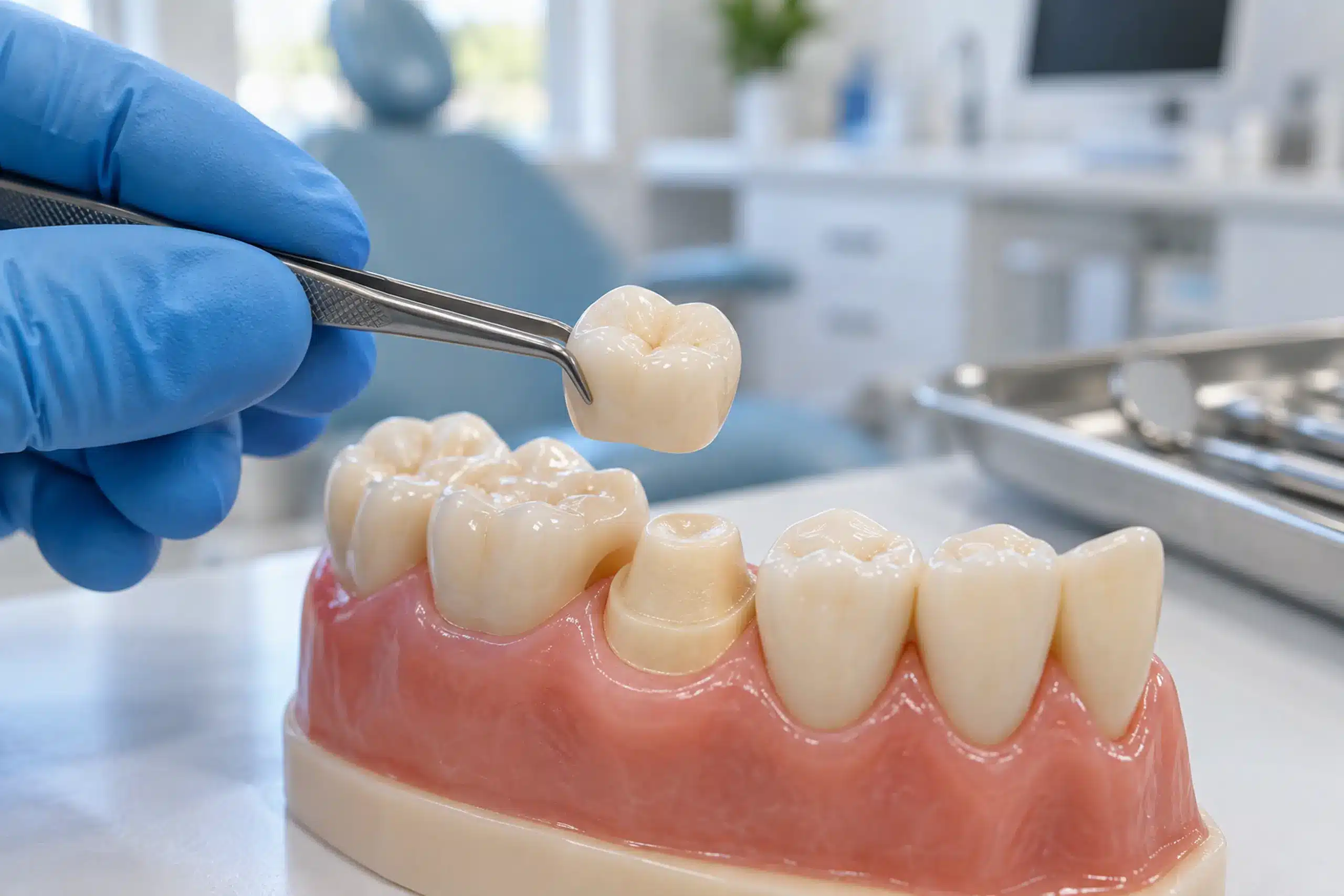
A crown after root canal treatment is often recommended, particularly for back teeth, but it is not automatically required for every treated tooth. Many molars and premolars benefit from a crown or another restoration that covers the chewing cusps because the tooth may be structurally weakened. The plan depends on tooth location, remaining structure, cracks, and existing restorations, which a dentist assesses during an examination.
Table of Contents
Why Do You Need a Crown After a Root Canal?
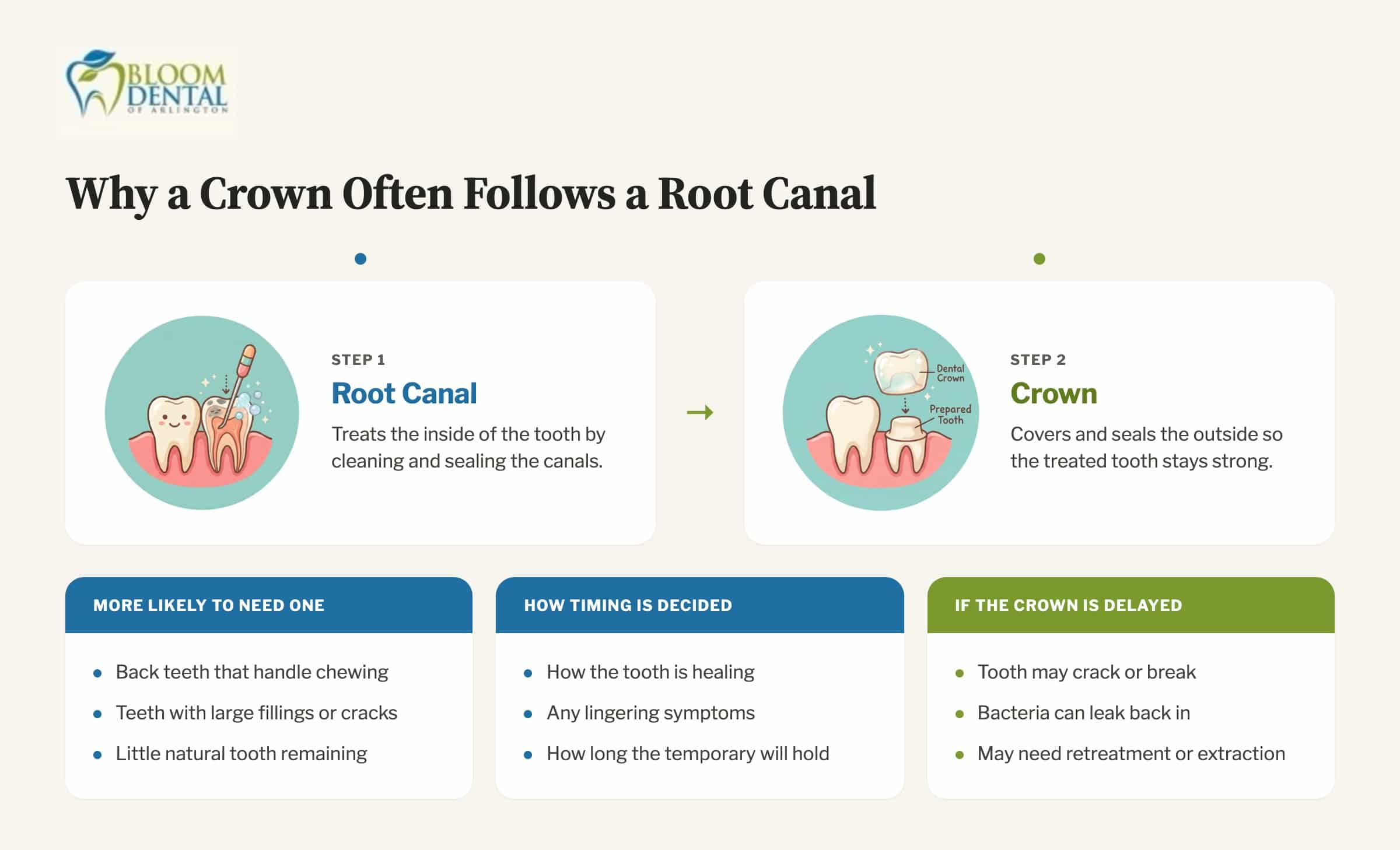
Do you need a crown after a root canal? The answer has less to do with the procedure than with the tooth itself. A study comparing root canal treated teeth with matching untreated teeth found no significant difference in toughness, which suggests treatment does not simply make teeth brittle. Fracture risk depends far more on how much sound tooth remains. Protection is usually recommended when the following factors are present.
- Tooth structure already lost to decay, earlier fillings, and the access opening
- Existing cracks, which chewing can extend
- Heavy chewing forces on molars and premolars
- The need for a durable seal that keeps bacteria out
Molars and premolars carry most of the chewing load on their cusps, and a deep filling or access opening between those cusps leaves them more likely to flex and split. This is why a crown after root canal treatment is advised more often for back teeth. Front teeth with enough intact structure may be restored with a filling instead.
Which Root Canal Teeth Usually Need a Crown
The table below shows how crown placement after root canal treatment is typically considered for different teeth.
| Tooth situation | Why coverage may or may not be needed | Typical restoration consideration |
| Molars and premolars | High chewing loads on the cusps | Crown or other cuspal coverage often considered |
| Front teeth | Lower biting loads and a small access opening | Filling may be sufficient if structure is intact |
| Large existing filling | Little sound tooth remains | Crown frequently considered |
| Cracked tooth | Crack may spread under load | Prompt full coverage often advised |
| Substantial remaining structure | Tooth retains much of its own strength | Conservative restoration may be discussed |
How Long After Root Canal to Get a Crown
No single answer applies to how long after root canal to get crown placement, because root canal crown timing is individualized. Symptoms, healing, remaining structure, and the restorative plan all matter, but the final restoration should not be delayed unnecessarily. In one eight-year retrospective study, teeth crowned more than four months after treatment were about three times as likely to be extracted as those crowned sooner, and the American Association of Endodontists notes that delay raises the risk of a cracked tooth splitting.
Why Wait Two Weeks After Root Canal for Crown?
Some patients are told to wait about two weeks before the crown appointment, but this is not a universal rule. A dentist may wait intentionally to confirm that symptoms have settled or healing is under way. In those cases, the interval allows tenderness to resolve and the tooth to be tested under normal biting before a permanent restoration is committed to, and the tooth should remain sealed with a sound temporary or core filling throughout. A planned pause differs from simply postponing care.
Temporary Crown After Root Canal
A temporary crown after root canal treatment protects the tooth while the final restoration is made. Temporary materials are weaker and less tightly sealed than the final crown, so they are not intended for long-term use.
The following precautions help keep one in place.
- Avoid chewing very hard or sticky foods on the tooth, since these can crack or dislodge the temporary.
- Keep the area clean with gentle brushing and careful flossing around the temporary.
- Follow the treating dentist’s instructions, and report a temporary that feels loose or high when biting.
Permanent Crown After Root Canal
The permanent crown after root canal treatment generally involves evaluation and preparation, an impression or digital scan, a temporary restoration when needed, and final placement. During preparation, the dentist confirms that the tooth is comfortable, rebuilds missing structure with a core filling where necessary, and shapes the tooth to receive the crown. Once the crown has been made, its fit, bite, and shade are checked before it is cemented.
What Happens If You Don’t Get a Crown After a Root Canal?
When coverage is indicated, an unprotected tooth may face a higher risk of fracture or of losing its seal. In a University of Iowa study, root canal treated teeth without crowns were lost at about six times the rate of crowned teeth, although this observational finding does not mean every uncrowned tooth will fail. A fracture that runs below the gum line can leave a tooth impossible to restore, and a leaking filling may allow bacteria back into the treated canals. The outcome depends on the tooth and the restoration already in place.
Is a Crown Necessary After Root Canal Treatment for Every Tooth?
Is a crown necessary after root canal treatment for every tooth? Not always. Dentists might work through the following options and questions before recommending one.
- Tooth location: back teeth take heavier loads than front teeth.
- Remaining tooth structure: how many sound walls are left?
- Crack or fracture history: is there a crack that could spread?
- Size of the existing filling: how much of the tooth is already restored?
- Bite and grinding: will heavy forces act on the tooth?
- Symptoms: has the tooth settled since treatment?
- Restorative options: could a filling, onlay, or crown each do the job?
When to Contact a Dentist After a Root Canal
Mild tenderness for a few days is common. Worsening pain, swelling, a loose or lost temporary, or a cracked tooth should be assessed, since persistent pain in a root canal tooth may occasionally require retreatment or endodontic surgery.
Bloom Dental of Arlington evaluates each treated tooth individually and explains the benefits, risks, and timing of every option, including dental crowns in Arlington, so patients can decide with confidence.
Frequently Asked Questions
Can you eat after a root canal before getting a crown?
Yes, once the numbness has worn off, but chew on the other side and avoid hard or sticky foods until the final restoration is placed. Follow the instructions given for the temporary restoration.
Can a root canal tooth break before the crown is placed?
It can, particularly a back tooth with little remaining structure or an existing crack. This is one reason dentists advise against postponing the final restoration without a clinical reason.
Can a crown be placed the same day as a root canal?
Sometimes. It depends on the condition of the tooth, whether symptoms or infection need to settle first, and how the crown is fabricated, so the treating dentist will advise on timing.
What if my temporary crown comes off after a root canal?
Contact the dental office promptly, keep the area clean, and avoid chewing on that tooth. A lost temporary leaves the tooth exposed to bacteria and fracture, so it should be replaced rather than left.
Does getting a crown after a root canal hurt?
Crown placement is generally not painful. A local anesthetic may be used to keep the surrounding gum comfortable, and some mild tenderness for a few days afterward is common. Pain that worsens or does not settle should be examined.
How long can a root canal tooth last with a crown?
Many last for years or decades with good care, although no restoration is guaranteed. Longevity depends on remaining tooth structure, the quality of the seal, bite forces, oral hygiene, and regular checkups.
Can a front tooth need a crown after a root canal?
Yes, in some cases. A front tooth with extensive decay, a large filling, a fracture, or marked discoloration may be better served by a crown, while one with ample intact structure may only need a filling.