
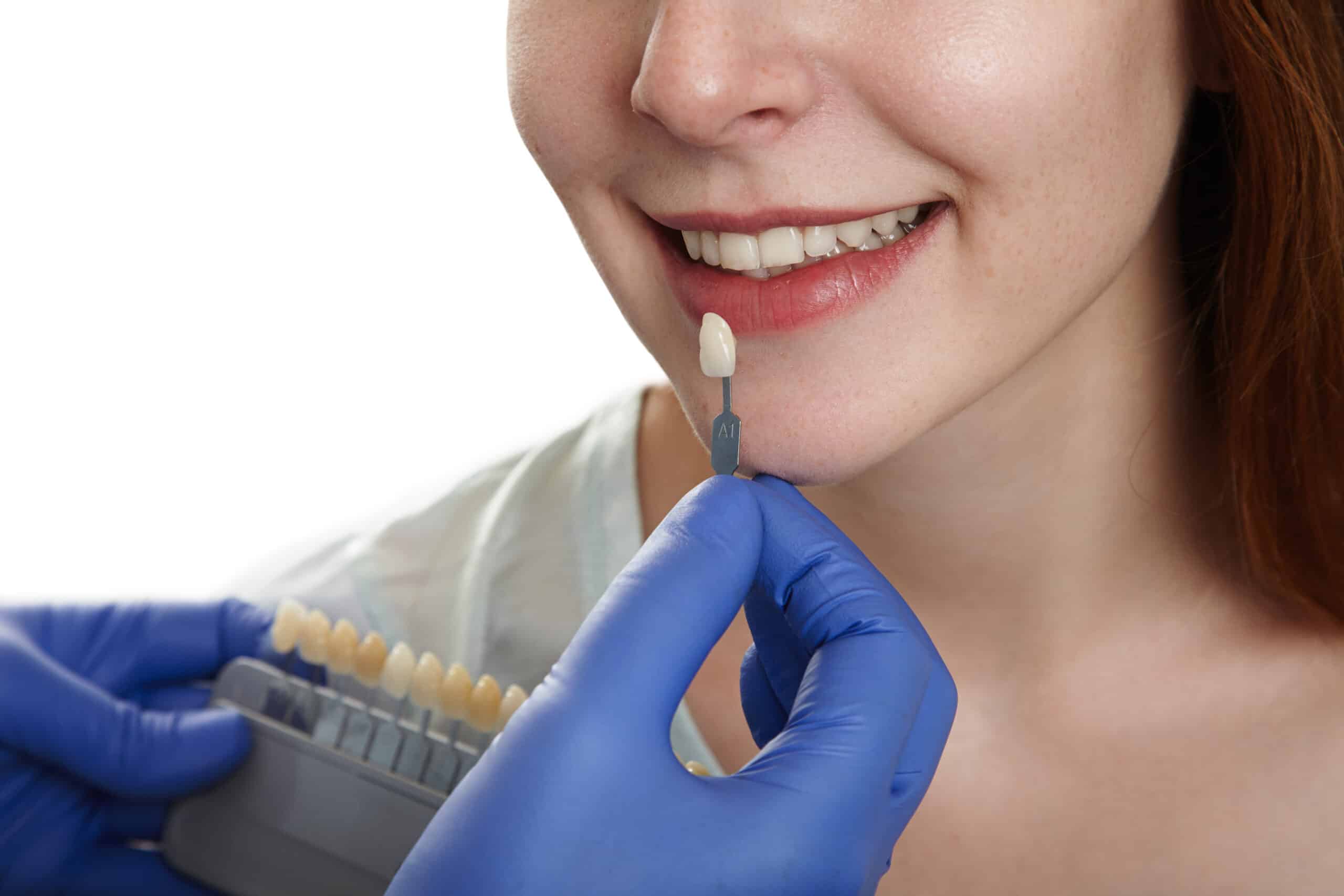
Losing a dental crown is already unsettling, but discovering that the tooth underneath looks dark gray or black can be genuinely alarming. The important thing to know is that tooth discoloration beneath a lost crown does not automatically indicate a serious problem.
However, it should never be ignored, because the causes range from benign staining to active decay or infection, each of which carries different clinical implications and different timelines for care.
Table of Contents
Crown Fell Off and Tooth Is Black: Should You Be Worried?
If your crown fell off and the tooth is black, don’t panic—but don’t ignore it either. A dark tooth beneath a lost crown does not always mean the tooth is severely damaged. In some cases, the discoloration is simply the result of a previous root canal or an older metal-based crown.
However, a black tooth under a crown can also indicate tooth decay, a dying nerve, or an infection beneath the restoration. The only way to determine the cause is through a dental examination and X-rays. If the tooth is painful, swollen, or draining pus, seek dental care as soon as possible.
Common Reasons a Tooth Looks Black Under a Lost Crown
Several distinct factors can explain the dark appearance of a tooth once a dental crown has come off, and identifying the underlying cause is the essential first step toward appropriate treatment.
One of the most common explanations involves the history of the tooth itself. Teeth that have undergone root canal treatment often darken over time because the internal pulp tissue is no longer vital. A root canal-treated tooth may appear gray, brown, or black when the crown is removed, and in many cases this discoloration is entirely benign. Crown recementation or a replacement crown may be all that is needed.
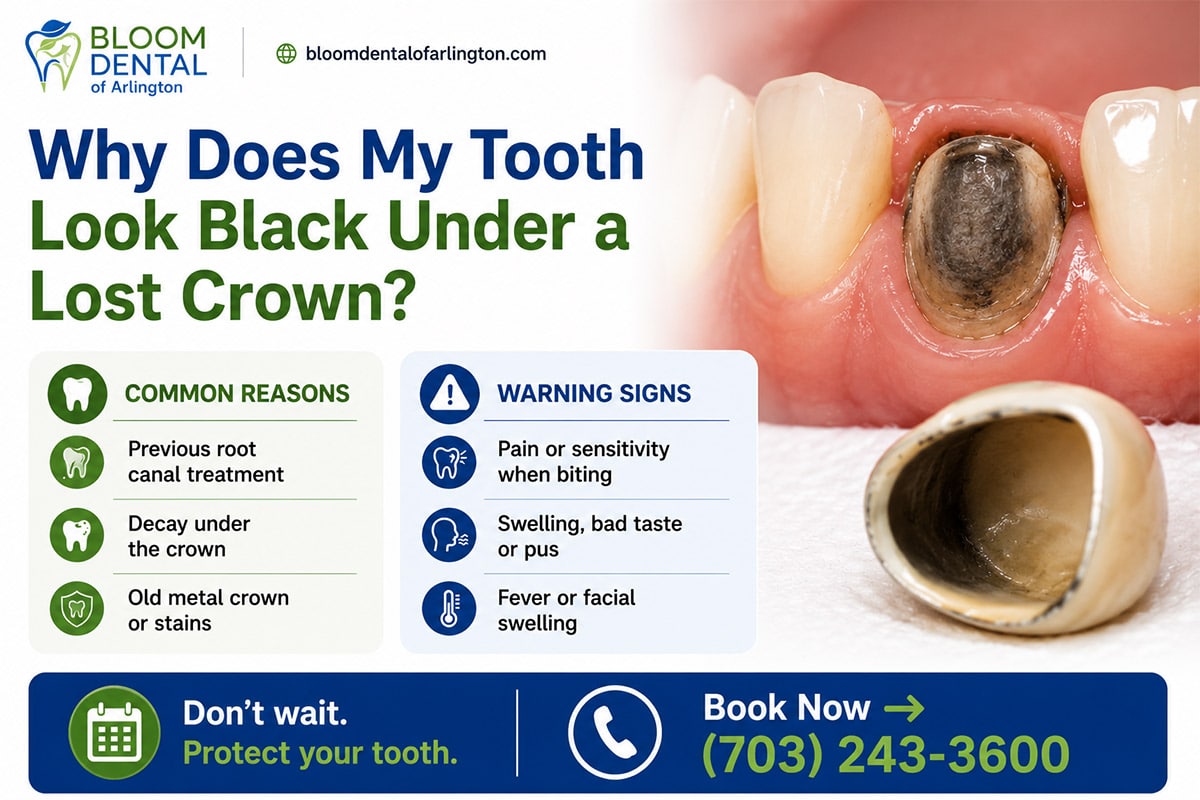
An older porcelain-fused-to-metal crown (PFM crown) can also produce a dark appearance. These restorations contain a metal base beneath the porcelain layer, and over time metal ions or shadowing from that underlying structure can cause gumline discoloration or a darkened appearance within the tooth structure itself. An amalgam stain from previous dental work can similarly leave a tooth looking gray or black, even when no active disease is present.
However, not all discoloration is harmless. Recurrent decay, also referred to as decay under the crown, can develop when bacteria infiltrate the crown margin through microleakage or old dental cement failure. This form of dental caries may progress silently beneath a restoration, causing the exposed dentin to appear darkened when the crown pops off. In more serious situations, pulp necrosis may be responsible for the color change: when the internal tissue of the tooth dies, the result is a necrotic tooth that becomes discolored and may eventually develop a tooth infection, a dental abscess, or both.
A 2010 study published in Dental Traumatology under the title “Association of Crown Discoloration and Pulp Status in Traumatized Primary Teeth” found that when a tooth turns dark, it is more likely to have a dead or infected nerve inside compared with a similar tooth that has not changed color. While that research examined primary teeth following dental trauma, the underlying clinical principle applies broadly: a black tooth beneath a lost crown always warrants a careful examination rather than being dismissed as surface staining.
Why Does the Tooth Look Black?
| Possible Cause | Pain? | Urgency |
|---|---|---|
| Previous root canal | Usually no | Routine evaluation |
| Metal shadow from PFM crown | No | Routine evaluation |
| Recurrent decay | Sometimes | Prompt dental visit |
| Dead nerve (pulp necrosis) | May or may not | Prompt evaluation |
| Dental abscess | Often yes | Urgent care |
Warning Signs That Should Not Be Ignored
Questions about whether a crown falling off constitutes a dental emergency arise frequently in online patient communities such as r/askdentists. The answer depends significantly on what accompanies the crown loss. If your crown fell out and the tooth does not hurt, the situation may not require a same-day emergency visit, though prompt evaluation is still advisable to prevent complications such as further decay, tooth sensitivity, or damage to the exposed dentin from biting hard foods or sticky foods.
Certain warning signs, however, demand urgent dental care without delay. Pain or significant sensitivity when biting, a persistent bad taste in the mouth, halitosis, visible swelling, pus drainage or a fistula near the gumline, facial swelling, fever, or difficulty swallowing all indicate that the situation has moved beyond a simple restorative issue. These symptoms may signal a spreading tooth infection or dental abscess that requires immediate attention from an emergency dentist.
If dental floss snagging around the crown preceded its loss, this can also indicate long-standing crown margin breakdown that should be evaluated as part of the workup. Even if your crown came off and the tooth is black without pain, it is still important to schedule a dental appointment because some serious problems progress silently.
At-Home Care While You Wait for Your Appointment
If your crown has come loose or fallen off, retrieve it carefully and store it in a clean container. Do not discard it, as your dentist may be able to save time and cost through crown recementation. Keep the exposed tooth clean and avoid chewing on that side of the mouth. Avoiding hard foods, sticky foods, and anything that places stress on the exposed tooth structure will help prevent further damage in the interim.
A warm salt water rinse can help keep the area clean and soothe irritated tissue around the exposed tooth. An OTC pain reliever may provide temporary relief, and a cold compress applied externally can help reduce any swelling that develops. Temporary dental cement, available at most pharmacies, may occasionally be used as a very short-term measure to protect the exposed tooth until your appointment. Under no circumstances should superglue or any other household adhesive be used inside the mouth. These products contain chemicals unsafe for oral tissues and can significantly complicate the professional treatment that follows.
Whether you are dealing with a lost filling, a lost veneer, or a crown that has popped off, the same principle applies: black spots on teeth that appeared after the crown was lost, or a tooth that now looks noticeably darker than before, both warrant a prompt professional evaluation. Delaying care increases the risk that a manageable issue becomes a more complex one.
What Your Dentist Will Evaluate and How Treatment Is Decided
When you visit your dentist following crown loss, the evaluation will begin with a comprehensive examination of both the crown and the underlying tooth. Dental X-rays, including a periapical radiograph and potentially a bitewing X-ray, are typically taken to assess whether recurrent decay, tooth fracture, or infection is present beneath the surface where visual inspection alone cannot reach.
Your dentist will examine the crown margin, assess the integrity of the existing restoration, check for signs of dental caries or cement failure, and evaluate the occlusion to determine whether a bite adjustment is necessary. If a structural issue such as a fractured core or a compromised post and core is identified, these will need to be addressed before the crown can be recemented or replaced. In cases where the tooth pulp is affected, root canal retreatment may be required before a new restoration is placed. The clinical picture will guide the treatment plan, which may involve simple crown recementation, fabrication of a new crown, or more involved restorative work.
Why Choose Bloom Dental of Arlington
At Bloom Dental of Arlington, we understand that a lost crown often arrives unexpectedly and can be stressful to navigate. Our team is experienced in the full range of crown-related care, from same-day crown recementation to comprehensive restoration planning when the underlying tooth requires additional treatment before a new crown can be placed. We use advanced digital dental X-rays to ensure that no decay, fracture, or infection goes undetected beneath the surface.
We invite you to visit our dental crowns page to learn more about our restorative crown options and what to expect during the evaluation process.
Our team is here to restore both your crown and your confidence.
FAQs About Tooth Black Under Crown
Why is my tooth black after my crown fell off?
Is a black tooth under a crown always infected?
Can a black tooth under a crown be saved?