

Is it normal for a root canal tooth to hurt? Root canals are serious endodontic procedures that are indeed often painful. If a tooth with a root canal hurts with pressure is applied, pain is fairly common in the immediate days that follow. Let’s examine the potential reasons a root canal tooth feels sore to determine whether sensitivity in a tooth with a root canal is normal and when to see a dentist for root canal pain.
Table of Contents
Why is My Root Canal Tooth Hurting?
A root canal tooth is usually tender simply because it’s undergone a fairly invasive transformation. Longer drilling in a root canal can cause significant pressure on a root canal tooth in the following days.
Healing from root canal procedures can be very uncomfortable. A dentist must perform precise work inside the tooth’s inner chamber to resolve nerve pain in the root canal tooth. Usually, another appointment is needed to adjust the bite on a root canal tooth.
Thus, it is normal for a root canal tooth to hurt shortly after each procedure stage; however, pain under a crown with a root canal shouldn’t arise suddenly. If a root canal tooth feels sore out of the blue, consider scheduling a dental appointment.
Common Causes of Pressure Pain After a Root Canal
Several conditions may explain why a root canal tooth hurts with pressure, including:
- temporary inflammation in the tissues surrounding the tooth after treatment
- bite misalignment causing extra force on the treated tooth during chewing
- delayed placement or problems with a dental crown or filling
- reinfection inside the treated root canal space
- small cracks in the tooth structure developing over time
- irritation of the supporting ligament around the tooth root
Identifying the underlying cause helps determine whether the discomfort is part of normal healing or requires additional dental treatment.
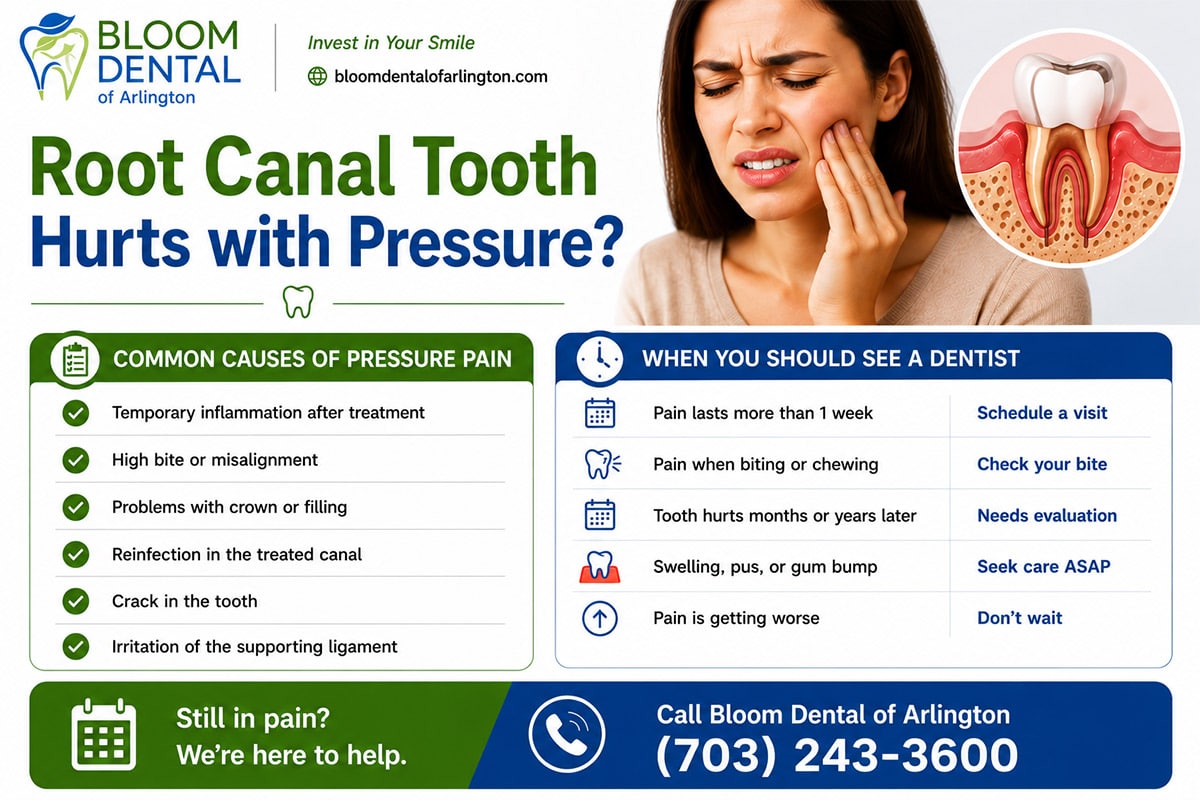
How to Handle a Tooth with a Root Canal that Hurts with Pressure
The best solutions for pain management for a root canal tooth depend on individual circumstances. For example, your dentist may prescribe you medications during recovery to reduce inflammation in the root canal tooth and relieve any residual pain under the crown with the root canal.
Regular check-ups and cleanings can prevent or detect infections before any root canal tooth feels sore. Contact Bloom Dental to discuss or examine dental crowns in Arlington, VA.
Pain Management for a Root Canal Tooth
Depending on the severity, sensitivity in a tooth with a root canal is to be expected, but typically only for a matter of days/a week. If you experience pain under a crown with a root canal that was previously pain-free, or suddenly a root canal hurts after years, seek professional dental attention.
Additional treatment for root canal pain varies based on the severity of the underlying issue, but remember that once treated and healed, sudden nerve pain in a root canal tooth is unlikely to go away on its own.
Pain when biting after a root canal is typical, but if your root canal tooth feels sore for more than a few days, monitor it closely to determine when to see a dentist again.
What to Do if My Root Canal Tooth Hurts
Over-the-counter pain medications can provide temporary relief, but a board-certified dentist should promptly examine the tooth to address pain and inflammation, especially if a tooth with root canal hurts with pressure during chewing or biting. If an infection is causing pain under a crown with a root canal, antibiotics and/or retreatment of the sore root canal tooth may be required. If root canal pain persists for more than a few weeks, a professional dental examination with X-rays can help determine the most appropriate next steps.
Bottom line: Mild sensitivity after a root canal should not be ignored. When a root canal tooth continues to feel sore or becomes increasingly uncomfortable with pressure, there is almost always an underlying cause that, if left untreated, is likely to worsen over time.
How Do You Know If You Need a Root Canal?
Root canal pain is not always limited to the period after treatment. In many cases, patients first begin researching root canal therapy because they are experiencing ongoing tooth pain, sensitivity, swelling, or other symptoms that suggest the tooth’s pulp may be infected. Understanding the warning signs can help determine whether a tooth may need root canal treatment before more serious complications develop. While only a dentist can confirm the diagnosis through an examination and X-rays, the symptoms below are among the most common signs that root canal therapy may be necessary.
1. Persistent Pain
Just because you are dealing with a nagging toothache, that doesn’t mean a root canal is inevitable. There are many potential causes of tooth pain, and there are many different types of tooth pain. The types of pain associated with root canal infection include pulsing aches, pain that fluctuates as you change your posture, intermittent pain, and pain so intense that you can’t sleep through the night. At Bloom Dental of Arlington, we deal with toothaches all the time, but root canal infections can require more aggressive treatment.
2. Increased Sensitivity
Do you notice a sharp, deep pain when you eat or drink something that’s hot or cold? It is not unusual for your teeth to be sensitive to extreme temperatures, but you shouldn’t feel any extraordinary pain, and it should subside rather quickly. If you have lingering pain more than 10 sec, you need to check with your dentist, you might have defective restoration, caries, or need to root canal therapy. You should contact a dentist and address the problem before it gets worse.
3. Gum Inflammation
It’s important to note that inflamed gums are not strictly associated with root canal infections. Gum inflammation is more commonly associated with periodontal disease (AKA gingivitis) than root canal infections. However, if you are experiencing swollen, painful gums in conjunction with one or more of the other symptoms on this list, that could mean that you are, in fact, dealing with a root canal infection. If you notice a small pimple-like bump on the gums near the affected tooth, this is another sign that it might be a good idea to make an appointment with the dentist.
4. Discoloration
Ever heard of a “dead tooth?” That’s what happens when the pulp and nerves inside of a tooth get infected due to an injury, poor dental hygiene, or perhaps something else. When a tooth dies, it loses its natural color and begins to take on a different shade than the rest of your teeth. Teeth that are dead or dying can start to become brown, gray, or black once the soft tissue inside has completely decayed and blood no longer flows to the tooth. It is crucial to seek treatment for dead or dying teeth as soon as possible, as the infection can easily spread to other teeth or worse — your brain.
5. Headaches, Jaw Pain, or Ear Pain
When a tooth infection begins to spread beyond its initial host-tooth, so does the pain that it brings. For example, an infected molar can easily spread to the jaw and ear area on that side of your head, if you fail to address the problem as early as possible. As mentioned before, the infection can even spread to your brain, which is the worst-case scenario. To prevent a tooth infection from spreading to other parts of your head, schedule a visit with your dentist to address any issues you’ve been experiencing.
So, are you dealing with any of these symptoms? Need a root canal procedure near Arlington, VA? Contact Bloom Dental of Arlington to consult with a dentist and see if root canal therapy is right for you.
When a Root Canal Tooth Hurts with Pressure Months Later: What It Means
If a root canal tooth hurts with pressure months later, the discomfort is usually not considered part of normal healing and should be evaluated by a dentist. In many cases, delayed pressure sensitivity may develop because of bite misalignment, inflammation around the root, a loose or leaking filling or crown, or a small reinfection inside the treated tooth. Sometimes the surrounding ligament tissues remain irritated for longer than expected, especially if the tooth has not yet received a permanent restoration after treatment. When a root canal tooth hurts with pressure months later, it is important not to ignore the symptoms, since early examination can help identify the cause and prevent more serious complications such as structural damage or the need for retreatment.
Why Does a Root Canal Tooth Hurt with Pressure Years Later?
If a root canal tooth hurts with pressure years later, the discomfort is usually not related to the original healing process and should be evaluated by a dentist. Root canal treatment removes the infected nerve inside the tooth, but the tooth structure and surrounding tissues can still develop problems over time. Pain that appears after several symptom-free years often suggests a new issue rather than a normal recovery reaction.
One common cause is reinfection inside the treated tooth, which can occur if bacteria enter through a worn filling, leaking crown, or untreated crack in the tooth. In other cases, pressure sensitivity years later may be linked to bite changes, gradual structural stress, or weakening of the tooth after treatment. Occasionally, inflammation in the surrounding ligament can also cause discomfort when chewing. Because a root canal tooth hurts with pressure years later is not considered typical, a professional dental exam with X-rays is recommended to identify the cause early and prevent more serious complications.
When Should You See a Dentist for Root Canal Pressure Pain?
If your root canal tooth hurts with pressure, it can sometimes be difficult to tell whether the discomfort is part of normal healing or a sign of a more serious issue. Mild sensitivity shortly after treatment is common, but persistent symptoms or delayed pressure pain should not be ignored. The timing and severity of symptoms often help determine whether the tooth is healing normally or needs professional evaluation. The guide below explains when pressure sensitivity in a treated tooth is expected and when you should schedule a dental visit.
| Symptom | What It May Indicate | When to Act |
|---|---|---|
| Pain lasts more than a few days after treatment | Delayed healing or bite imbalance | Contact your dentist if pain continues beyond one week |
| Pain increases when chewing or biting | Bite misalignment or ligament inflammation | Schedule a bite adjustment appointment |
| Tooth hurts with pressure months later | Possible reinfection or restoration issue | Dental evaluation recommended |
| Tooth hurts with pressure years later | Crack, crown leakage, or new infection | X-ray exam needed as soon as possible |
| Swelling near the treated tooth | Active infection | Seek prompt dental care |
| Pain returns after the tooth was previously pain-free | Structural or bacterial issue | Schedule an exam quickly |
| Sensitivity continues to worsen instead of improving | Ongoing inflammation or hidden complication | Do not delay professional evaluation |
Scheduling a visit with a trusted family dentistry Arlington VA provider ensures the treated tooth is properly evaluated and helps protect your long-term oral health.
Contact the Leading Family Dentistry Group in Arlington, VA
When a root canal tooth feels sore or you experience sensitivity in a tooth with a long-healed root canal, it’s best to consult an experienced dental professional. Contact Bloom Dental of Arlington to schedule your appointment today!
FAQ About Root Canal Pain
Is it normal for a tooth to hurt when pressed after dental treatment?
Why does my tooth hurt months after a root canal when I bite down?
When should I see a dentist if my tooth hurts with pressure?