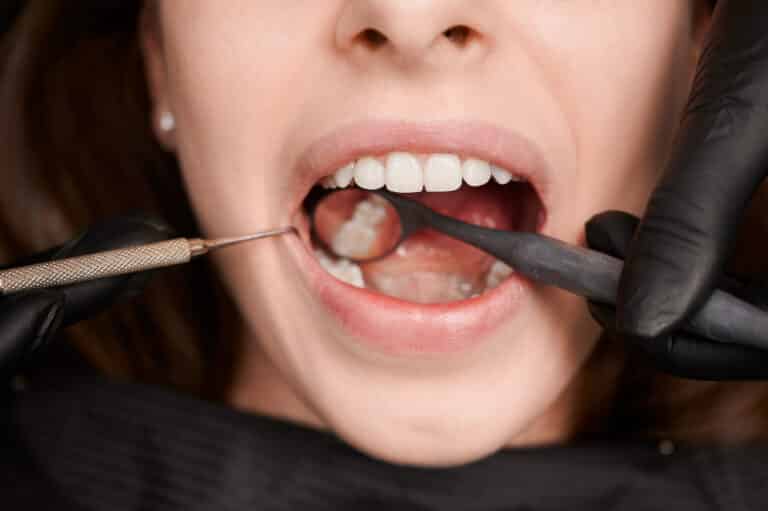
Waking up with morning tooth pain does not always signal a serious dental problem. It can stem from teeth grinding or teeth clenching during sleep, sinus pressure, or an issue affecting one specific tooth. Recurring discomfort should never be dismissed, since only a dental examination, sometimes supported by a dental X-ray, can identify the true cause before complications set in.
Pressure on the teeth and jaw overnight can leave both sore by morning, while sinus congestion or an already compromised tooth becomes more noticeable after rest. Soreness across several teeth, alongside jaw tightness or a morning headache, is worth describing to a dentist. Pain concentrated in one tooth more often points to that tooth or its surrounding periodontal ligament, and tooth sensitivity or facial swelling are clues that warrant prompt evaluation.
Table of Contents
Sleep Bruxism, Teeth Grinding, and TMJ Disorder
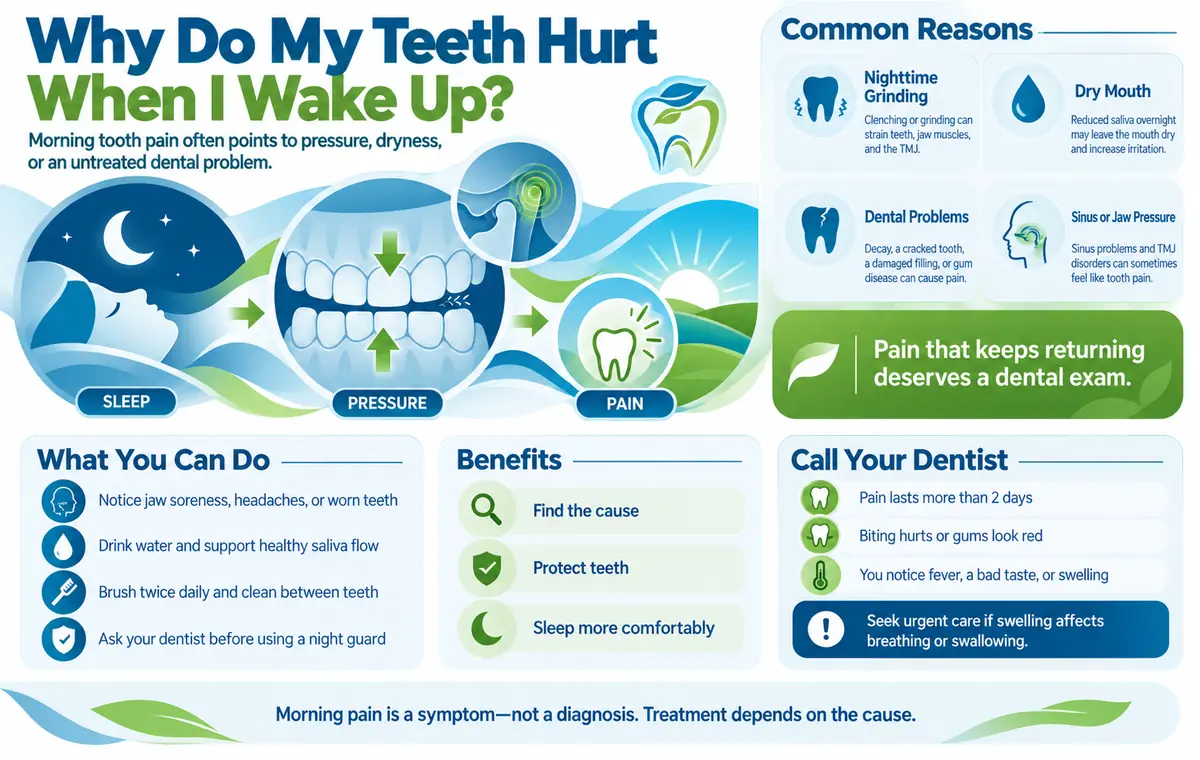
One frequent culprit is sleep bruxism, involuntary teeth grinding or clenching during sleep, often first noticed through morning symptoms. It is more widespread than many people realize. A study conducted over ten years found that global sleep bruxism prevalence impacts about a quarter of the population.
Beyond sore teeth, bruxism may cause a morning headache, worn tooth surfaces, jaw clicking, or tenderness around the temporomandibular joint. Because several tooth and jaw problems can trigger headaches, recurring symptoms should be evaluated rather than assumed to come from grinding alone. A dentist should examine your teeth, jaw, and bite before recommending a custom night guard. An over-the-counter guard may not fit properly or address the cause of your symptoms. Repeated force can also cause a cracked tooth or pulp damage, so persistent tooth sensitivity should be evaluated rather than dismissed as “just grinding.”
Sinusitis, Tooth Decay, and Gum Disease
Not every morning toothache begins in the teeth themselves. Sinusitis can create sinus pressure that mimics dental pain, particularly around the upper back teeth, whose roots sit close to the sinus floor. Cavities, a cracked tooth, gum disease, and dental infection can also cause morning pain. If decay or damage reaches the pulp inside the tooth, a dentist may need to determine whether root canal treatment is necessary. Food trapped between teeth may also irritate the gums, which is why daily flossing and oral hygiene matter. A tooth that repeatedly hurts when biting deserves a bite assessment and dental examination.
| Pattern of Pain | Possible Cause | Other Clues | Recommended Next Step |
|---|---|---|---|
| Soreness across several teeth | Nighttime grinding or clenching | Jaw tightness, worn teeth, clicking, or a morning headache | Schedule a dental examination if it keeps happening |
| Pressure in the upper back teeth | Sinus congestion or sinusitis | Stuffy nose, facial pressure, or pain affecting several upper teeth | Monitor the sinus symptoms and see a dentist if the cause is unclear |
| Pain focused in one tooth | Decay, a crack, a damaged filling, or pulp inflammation | Sensitivity to temperature, sweets, pressure, or biting | Arrange a dental evaluation |
| Tender or bleeding gums | Food trapped between teeth or gum disease | Swelling, redness, bad breath, or gum recession | Improve gentle cleaning and schedule a check-up if symptoms continue |
| Throbbing pain with swelling or fever | Dental abscess or spreading infection | Bad taste, drainage, facial swelling, or difficulty opening the mouth | Seek urgent dental care |
Recognizing a Dental Emergency
A tooth abscess, a pocket of infection at the root of a tooth or gum, causes throbbing pain, facial swelling, and fever, and is a genuine dental emergency requiring same-day care. Don’t wait if these symptoms arise.
Frequently Asked Questions About Morning Tooth Pain
How can I tell if I grind my teeth while sleeping?
Common clues include morning jaw tightness, headaches, worn or chipped teeth, tooth sensitivity, and tenderness near the jaw joints. A dentist can look for wear patterns and other signs during an examination.
Can sinus pressure make my teeth hurt in the morning?
Yes. Sinus pressure can cause aching in several upper back teeth because their roots are located close to the sinus floor. Nasal congestion and facial pressure make a sinus-related cause more likely.
Why does only one tooth hurt in the morning?
Pain in one tooth is more likely to come from that tooth or the tissue around it. Possible causes include decay, a crack, an uneven bite, a damaged filling, pulp inflammation, or an infection.
Will morning tooth pain go away on its own?
Temporary discomfort may improve, but recurring pain should not be ignored. If the pain returns, worsens, or is triggered by pressure or temperature, schedule a dental examination.
Can a night guard stop morning tooth pain?
A properly fitted night guard may reduce pressure from grinding or clenching, but it will not treat cavities, infections, or every cause of jaw pain. A dentist should identify the cause before recommending one.
When is morning tooth pain an emergency?
Seek urgent care for facial swelling, fever, uncontrolled bleeding, difficulty breathing or swallowing, trauma, or severe pain that rapidly worsens. These symptoms may indicate infection or another serious dental problem.
Why Choose Bloom Dental of Arlington
Our team evaluates the full picture before recommending anything ranging from a night guard, occlusal splint, or sleep clench inhibitor to offer relief. If morning tooth pain has become routine, schedule an appointment with Bloom Dental of Arlington today.