
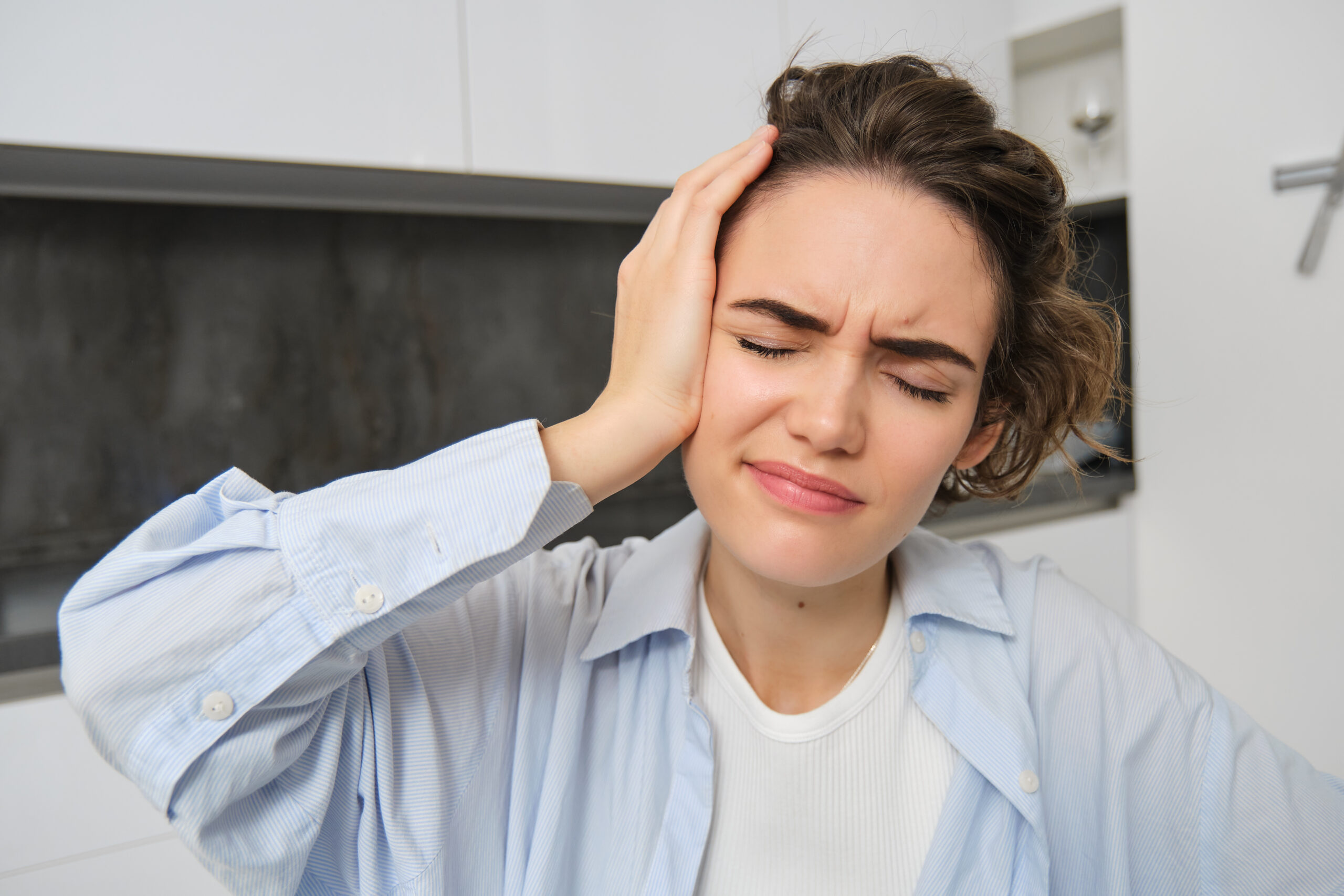
A headache may seem unrelated to your teeth, but the teeth, jaw, and head share nerve pathways closely enough that a toothache, jaw pain, or other orofacial pain can sometimes appear as head pain instead. This does not mean every headache has a dental cause, but when headaches occur alongside tooth sensitivity, jaw soreness, or pain when chewing, a dental examination can help identify, or rule out, a connection.
Table of Contents
How Tooth and Jaw Problems Can Cause Headaches
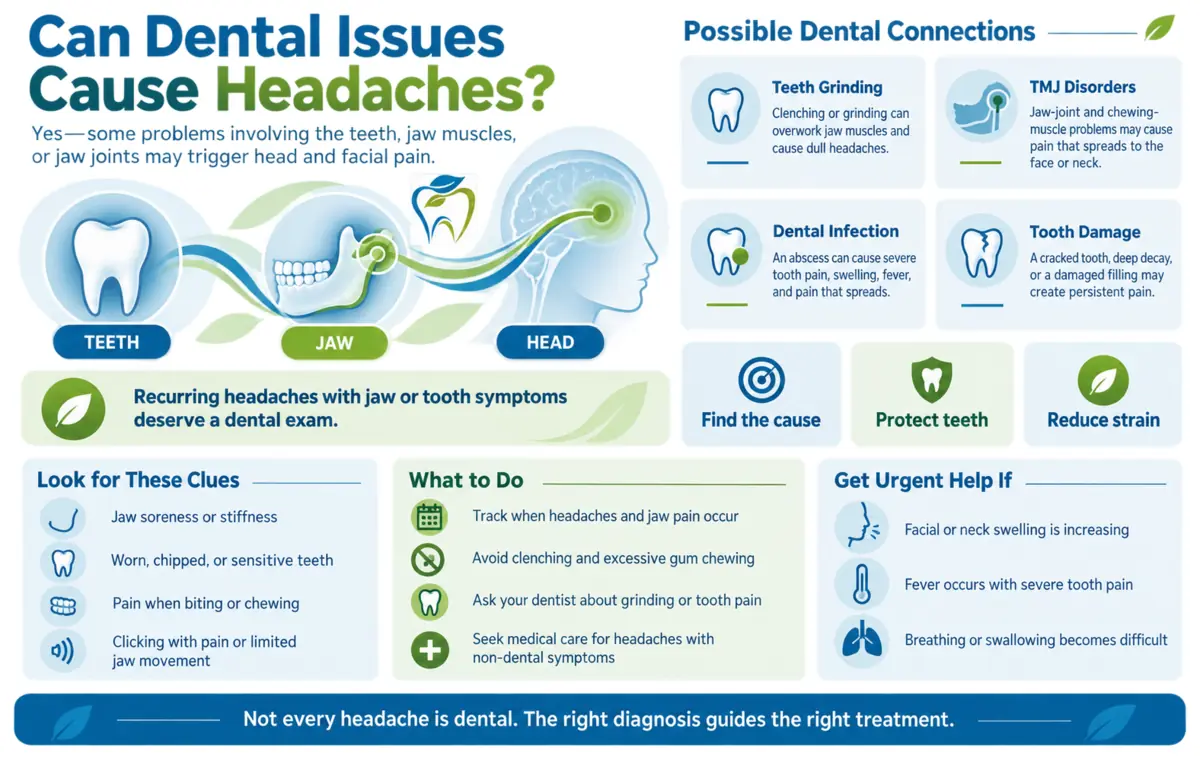
Referred pain occurs when pain originating in one area is perceived somewhere else. The trigeminal nerve carries sensory information from large areas of the face, including the teeth and jaw, so inflammation around a tooth can sometimes register as facial pain, ear pain, or a diffuse headache rather than a localized toothache.
Jaw or tooth pain does not automatically confirm a dental problem. Migraine, tension-type headaches, sinus pressure, and some nerve-related conditions can produce overlapping symptoms.
Common Dental Causes of Headaches
A small cavity may cause few symptoms, but tooth decay reaching the tooth pulp can trigger persistent or radiating pain. A dental abscess or advanced periodontal infection can also cause tooth, facial, or head pain. Learn how to recognize the signs of a tooth infection, especially when pain occurs with facial swelling, fever, drainage, or difficulty swallowing. A cracked tooth, other tooth damage, or a bite alignment problem can add stress to the jaw muscles, and good oral hygiene reduces the risk of the tooth decay and gum disease behind many of these symptoms.
Bruxism and Nighttime Clenching
Teeth grinding and clenching, especially during sleep, can leave the jaw muscles working for hours when they should rest. This may explain why your teeth hurt when you wake up or why jaw pain and headaches are most noticeable in the morning.
Bruxism-related headaches are often most noticeable after waking and may occur with sore teeth, tired jaw muscles, flattened tooth surfaces, or tenderness near the temples. Some people are unaware that they grind their teeth until a dentist notices signs of wear.
Temporomandibular Disorders
The temporomandibular joint connects the lower jaw to the skull and works every time you speak, chew, or yawn, and TMJ disorders can involve the joint, the surrounding muscles, or both, with symptoms including jaw or temple pain, clicking, and headaches. If grinding or clenching contributes to the symptoms, a dentist may discuss the potential benefits of a custom night guard. Treatment should be based on the examination findings, since not every headache or TMJ-related symptom is caused by bruxism.
Signs a Headache May Be Related to Your Teeth or Jaw
A dental or jaw-related cause may be more likely when the headache occurs with:
- Pain focused around one tooth
- Sensitivity to hot, cold, sweets, or pressure
- Pain when biting or chewing
- Jaw tightness or soreness after waking
- Worn, chipped, or cracked teeth
- Tenderness around the temples or jaw joints
- Swollen or bleeding gums
- Facial swelling, fever, or a bad taste in the mouth
- Headaches that become worse after prolonged chewing or clenching
These signs cannot confirm the cause on their own, but they can help your dentist decide what to examine.
Dental Headache or Another Type of Headache?
| Pattern | Possible Explanation | Helpful Clues |
|---|---|---|
| Pain centered around one tooth | Decay, a crack, pulp inflammation, or infection | Sensitivity, pain when biting, swelling, or a bad taste |
| Headache after waking | Sleep bruxism or nighttime clenching | Jaw tightness, sore teeth, worn enamel, or temple tenderness |
| Pain that worsens with chewing | Tooth damage or a jaw-related condition | Bite pain, jaw fatigue, clicking, or limited movement |
| Pressure around several upper teeth | Sinus congestion | Stuffy nose, facial pressure, or symptoms affecting several teeth |
| Throbbing headache with nausea or light sensitivity | Migraine or another primary headache disorder | Symptoms are not clearly triggered by a particular tooth or jaw movement |
| Facial swelling with fever or difficulty swallowing | Spreading dental infection | Requires urgent dental or medical evaluation |
When to Seek Care
If headaches repeatedly occur alongside tooth sensitivity, pain when biting, swollen or bleeding gums, jaw tenderness, or discomfort after chewing or waking, schedule one of our regular dental check-ups and cleanings in Arlington. A dentist can check for decay, dental infection, cracked teeth, gum disease, and jaw-related conditions, and may recommend dental restoration, a night guard, or bite equilibration.
Facial swelling, fever, difficulty swallowing, or rapidly worsening pain calls for emergency dental care, while a sudden severe headache with weakness, confusion, or vision changes needs urgent medical evaluation.
Frequently Asked Questions About Dental Headaches
What does a headache caused by teeth feel like?
There is no single pattern. Dental pain may feel localized near one tooth or may spread toward the jaw, temple, ear, or side of the head. Sensitivity and pain when biting make a dental cause more likely.
Can a cracked tooth cause a headache?
A cracked tooth can cause sharp or intermittent pain, particularly when chewing. Pain may spread into the jaw or face, although headaches can have many other causes.
Will a night guard stop dental headaches?
A night guard may help when grinding or clenching is contributing to the problem. It will not treat headaches caused by tooth decay, infection, migraine, sinus pressure, or every type of jaw disorder.
Why Choose Bloom Dental of Arlington
Tooth and jaw problems can genuinely contribute to headache symptoms, but not every headache traces back to the teeth.
Our team evaluates tooth decay, gum disease, bite alignment, and jaw muscle tension before recommending treatment such as a custom night guard or bite equilibration.
If headaches keep appearing alongside jaw pain or tooth sensitivity, schedule an appointment with Bloom Dental of Arlington today to find out what’s behind it.