

A dental crown is designed to protect and strengthen a damaged tooth, but some people experience tooth pain under a crown that comes and goes. This intermittent discomfort can range from mild sensitivity to sharp pain, making daily activities like eating or drinking uncomfortable. Thus, understanding the causes of crown tooth pain and how to address it is crucial to maintaining oral health.
Table of Contents
Is It Normal for Tooth Pain Under a Crown to Come and Go?
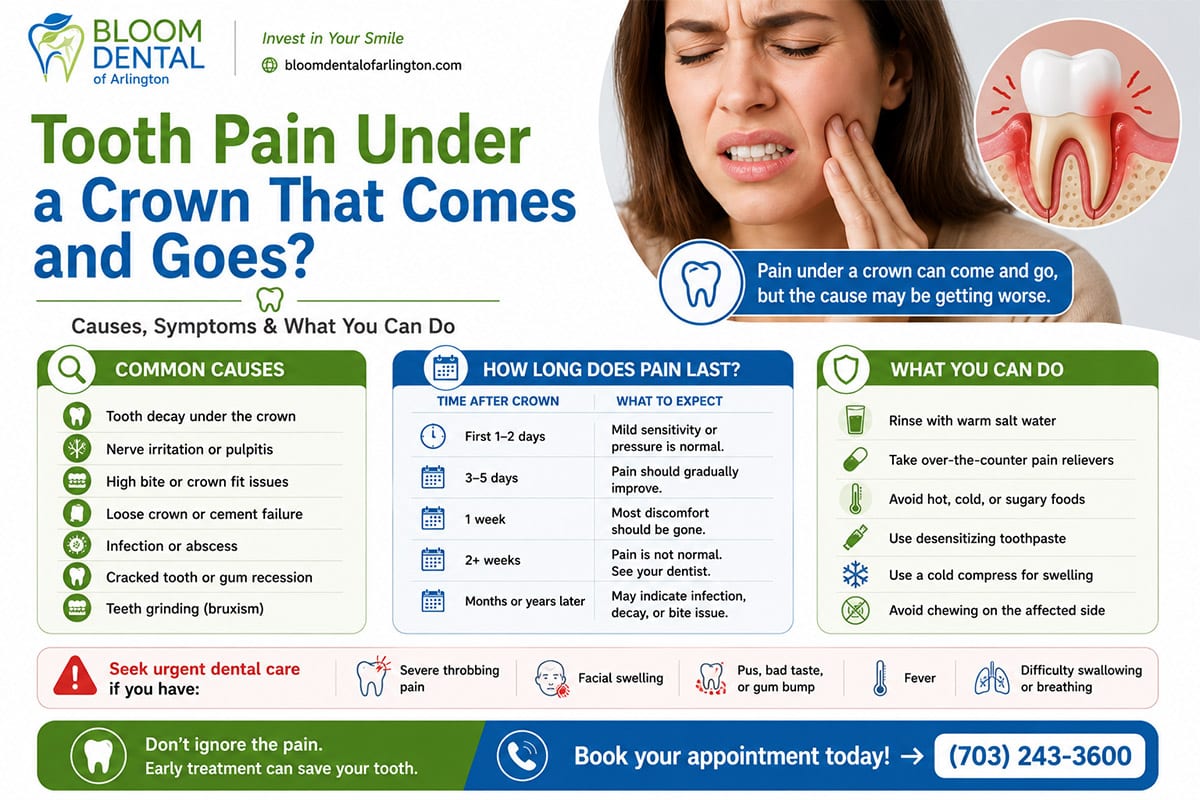
Tooth pain under a crown that comes and goes is not always an emergency, but it should not be ignored. Mild sensitivity shortly after getting a new crown can happen, especially when eating or drinking something hot, cold, or sweet. However, recurring pain in a tooth with a crown may also point to a deeper issue, such as tooth decay under the crown, an irritated nerve, a loose crown, bite problems, or infection. In some cases, this discomfort is actually caused by tooth decay under crown, which often develops without obvious warning signs.
If you keep asking, “why does my tooth hurt under my crown?” the safest answer is that the tooth needs to be checked by a dentist. Crown-related pain can feel temporary at first, but the underlying cause may continue to worsen if bacteria, nerve inflammation, or pressure from an uneven bite is involved.
| What You Feel | Possible Cause | What It May Mean | What to Do |
|---|---|---|---|
| Pain comes and goes when chewing | High bite or crown fit issue | The crown may be putting too much pressure on the tooth | See your dentist for a bite adjustment |
| Sharp pain when biting down | Cracked tooth, loose crown, or nerve irritation | The tooth under the crown may be stressed or damaged | Avoid chewing on that side and book a dental visit |
| Sensitivity to hot or cold | Exposed dentin, gum recession, or irritated nerve | Mild sensitivity may improve, but lingering pain can suggest pulp irritation | Use desensitizing toothpaste and monitor symptoms |
| Throbbing pain under crown | Infection or abscess | This can become serious if untreated | Contact a dentist promptly |
| Bad taste, swelling, or gum bump | Dental abscess or decay under crown | Bacteria may be trapped under the crown | Seek dental care as soon as possible |
| Pain under an old crown after years | Decay, cement failure, crown leakage, or gum changes | The crown may no longer seal the tooth properly | Dentist may need X-rays and crown replacement |
How Long Tooth Pain After Crown Placement Typically Lasts
If throbbing tooth pain after crown placement continues longer than expected or becomes more intense instead of improving, it may suggest issues such as bite misalignment, gum inflammation, or irritation beneath the crown. In these situations, early dental evaluation helps prevent complications and ensures the long-term success of your restoration.
| Time After Crown Placement | What Is Usually Normal | When to Contact a Dentist |
|---|---|---|
| First 24–48 hours | Mild sensitivity or pressure discomfort | If pain is sharp or severe |
| 3–5 days | Gradual improvement expected | If throbbing tooth pain after crown placement continues |
| 1 week | Most sensitivity should resolve | If pain remains unchanged |
| 2+ weeks | Pain usually not normal | Professional evaluation recommended |
| Months later | Not part of healing process | Possible infection or bite issue |
Monitoring how your tooth pain after crown placement changes over time is one of the most reliable ways to know when professional care is needed.
Why Does My Crown Hurt When I Put Pressure on It?
If your crown hurts when you put pressure on it, the most common causes include a high bite, crown fit issues, nerve irritation, decay under the crown, a cracked tooth, or inflammation around the tooth root. Pressure pain is especially common when the crowned tooth hits harder than the surrounding teeth during chewing or clenching.
Mild pressure sensitivity after a new crown can improve within a few days, but pain that continues, worsens, or appears months or years later should be checked by a dentist. A bite adjustment, X-rays, or crown evaluation may be needed to identify the cause.
Tooth Pain Under Crown Causes
There are several reasons why you might experience pain under a crown:
- Tooth decay or infection under the crown: If bacteria get trapped beneath the crown, it can lead to decay or infection under the dental crown, causing persistent pain.
- Nerve pain under tooth crown: If a crown is placed on a tooth with an exposed or irritated nerve, it can cause pulpitis under the crown, similar to delayed sensitivity discussed in ” Why Does My Tooth Filling Hurt After Months.”
- Tooth abscess under crown: A severe infection can cause an abscess, resulting in throbbing pain that worsens over time.
- Crown fit issues: A poorly fitted crown may pressure surrounding teeth or the underlying tooth, causing discomfort when chewing, especially if your crown hurts when biting down.
- Root canal needed after crown: If a tooth isn’t treated adequately before placing a crown, nerve damage may require a root canal.
- Loosening crown causing pain: Over time, dental cement can weaken, causing the crown to shift and expose the tooth to bacteria and sensitivity.
1. Tooth Decay Under the Crown
Decay can develop at the edge of a crown if bacteria and plaque collect near the gumline. If the crown is loose, old, cracked, or no longer sealed well, bacteria may enter underneath it and irritate the tooth. This can lead to tooth pain under the crown that comes and goes at first, then becomes more constant over time.
2. Nerve Pain Under Crown
Nerve pain under crown may happen when the tooth pulp becomes inflamed. This can occur after deep decay, trauma, repeated dental work, or pressure from the crown. The pain may feel sharp, electric, throbbing, or triggered by hot and cold foods. If the nerve does not recover, root canal treatment may be needed. Patients often wonder how long does it take to recover from a root canal before deciding to proceed with treatment. Occasionally, a tooth with root canal hurts with pressure during healing and should be evaluated if symptoms persist.
3. Crown Is Too High or Does Not Fit Properly
If the crown changes your bite even slightly, the crowned tooth may hit harder than the surrounding teeth. This pressure can cause pain when biting or chewing. The discomfort may come and go because it is triggered mainly during meals or when clenching.
When you repair damaged or decaying teeth with crowns, the biting surface of those teeth is changed. If your dental crown is too high or improperly positioned, that may result in moderate to severe pain in your tooth when biting down. If your bite feels off after getting a crown and you feel pain when biting down, you may want to consider asking a dentist if the crown is loose or if it needs to be adjusted.
4. Loose Crown or Cement Failure
A loose crown can allow saliva, food particles, and bacteria to reach the tooth underneath. This may cause sensitivity, bad taste, gum irritation, or decay under the crown. A loose crown should be checked quickly before the tooth becomes more damaged.
5. Tooth Abscess Under the Crown
A tooth abscess is a bacterial infection that can cause severe toothache, swelling, pus, fever, or a bad taste in the mouth. Mayo Clinic notes that a periapical abscess can result from untreated decay, injury, or prior dental work.
6. Gum Recession Around the Crown
If the gum pulls away from the crown, the root surface may become exposed. This can cause sensitivity to cold, sweets, brushing, or air. Cleveland Clinic lists gum recession, cavities, worn enamel, and recent dental work among possible causes of tooth sensitivity.
7. Cracked Tooth Under the Crown
Sometimes the tooth under the crown develops a crack. This can cause sharp pain when biting, especially when releasing pressure. A crack may not always be visible, so your dentist may need X-rays, bite tests, or other exams.
If you are feeling sharp, severe pain in a crowned tooth, you can’t rule out the possibility of the tooth being fractured. Additionally, there could be a cavity somewhere in the remaining part of your tooth. Any sharp, shooting pains you get from a crowned tooth should be discussed with a dentist who can determine if there is any damage that needs to be addressed.
8. Teeth Grinding (Bruxism)
While tooth grinding can even cause discomfort for individuals who don’t have crowns, grinding your teeth when you do have crowns can definitely cause some serious pain. Many people who grind their teeth do so subconsciously or while they are sleeping. So, even if you know you aren’t a tooth grinder, do not rule out this possibility if you are dealing with unexplainable pain when biting down on a crowned tooth.
Tooth grinding can be especially harmful when done within the days, weeks, and months immediately after the procedure; the sooner it occurs after getting the crown, the more harmful it is. If you do grind your teeth and you need help finding solutions, a dentist can fit you with a mouthguard to help prevent grinding.
Symptoms of Crown-Related Tooth Pain
If you experience tooth pain under a crown at night or sensitivity under a dental crown, pay attention to the following symptoms:
- Sharp pain when biting or chewing
- Pain that appears only when pressure is placed on the crown
- Throbbing tooth pain after crown placement
- Morning chewing pain, especially with teeth grinding
- Temperature sensitivity
- Swelling, redness, bad taste, or gum irritation
Pain that comes and goes can still be a warning sign. Infections and nerve problems may feel mild at first, then become more painful as inflammation increases.
Toothache Under Crown Treatment
Depending on the cause, treatment options may include:
- Dental cleaning and crown adjustment: If your crown causes an improper bite, your dentist may adjust or replace it.
- Antibiotics for infection under dental crown: Antibiotics may be prescribed before further treatment if an infection is present.
- Root canal for pulpitis under crown: If nerve damage is the issue, a root canal may be necessary to remove infected tissue.
- Replacing an old or loose crown: If you have tooth pain under an old crown, your dentist may recommend replacing it.
How to Relieve Crown Tooth Pain at Home
Several effective home remedies can provide temporary relief while your mouth adjusts to the new crown. These simple steps can be helpful as a home remedy for a toothache under a crown during the early healing period. Rinsing with warm saltwater—mixing one teaspoon of salt in warm water—helps reduce inflammation and promotes healing of the gum tissue. Applying a cold compress to the outside of your cheek can help minimize swelling and provide temporary pain relief by numbing the area. If you are experiencing discomfort before seeing a dentist, here’s what to do for crown tooth pain:
- Take over-the-counter pain relievers like ibuprofen.
- Avoid extremely hot, cold, or sugary foods.
- Use a desensitizing toothpaste for sensitivity under a dental crown.
- Rinse with warm salt water to reduce inflammation.
- Avoid chewing on the affected side to minimize crown tooth pain when biting.
Using desensitizing toothpaste formulated for sensitive teeth can gradually reduce discomfort, particularly when dealing with temperature sensitivity. During the initial healing period, avoid hard, sticky, cold, and extremely sugary foods that may aggravate the crowned tooth. Soft foods are usually more comfortable, and questions like can i eat scrambled eggs after tooth extraction are common when patients are looking for easy-to-chew meal options. Practice good oral hygiene with a soft-bristle toothbrush to keep the area clean without causing additional irritation.
For mild pain, over-the-counter pain relievers such as ibuprofen can provide effective relief. Drinking room-temperature liquids helps avoid temperature sensitivity triggers that can cause sharp, sudden pain. Some patients find that natural herbal remedies, such as clove oil, are beneficial as a home remedy for toothache under crown when applied carefully to the affected area.
When to See a Dentist
If you have persistent or worsening pain under a crown after years of wear, schedule an appointment with your dentist. Early intervention can prevent complications such as severe infections or tooth loss.
When Is Crown Tooth Pain an Emergency?
Seek urgent dental care if you have tooth pain under a crown along with facial swelling, fever, difficulty swallowing, difficulty breathing, pus, or severe throbbing pain. These symptoms may suggest that an infection is spreading. A dental abscess is a pocket of pus caused by bacterial infection, and it can affect the tooth, gums, and nearby bone if untreated.
Final Thoughts
Tooth pain under a crown is not normal and should not be ignored. Whether it is an infection, a nerve issue, or a poorly fitted crown, addressing the problem early can save your tooth and prevent more serious issues. If you are experiencing discomfort, consult your dentist for the best treatment options.
FAQ About Tooth Pain Under Crown That Comes and Goes
Why does my tooth hurt under my crown?
Is tooth pain under crown that comes and goes normal?
What does nerve pain under crown feel like?
Can a crowned tooth still get infected?
Why does my crown hurt when I bite down?
How long does tooth pain after crown placement last?
Why does my crown hurt when I put pressure on it?