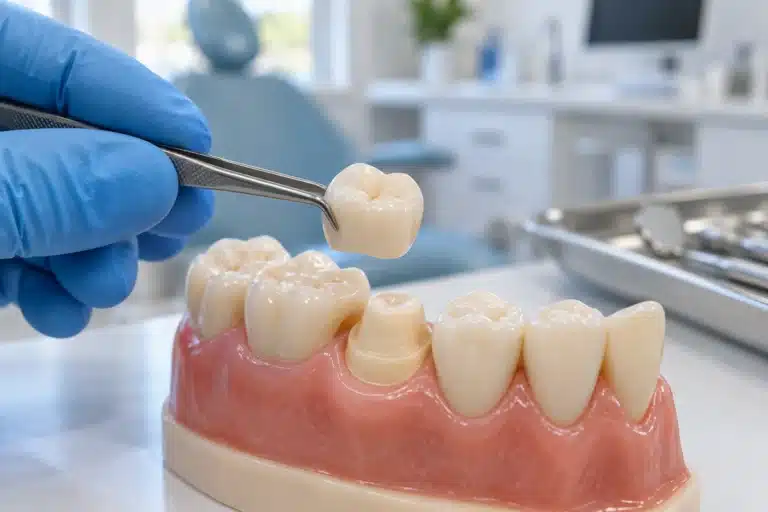
If your crown fell out but it doesn’t hurt, keep the crown and call your dentist to arrange an appointment. A painless tooth can still need repair, so avoid chewing on that side until it has been checked. If you develop severe pain or swelling, seek urgent dental care.
Table of Contents
What to Do if My Crown Fell Out, But It Doesn’t Hurt
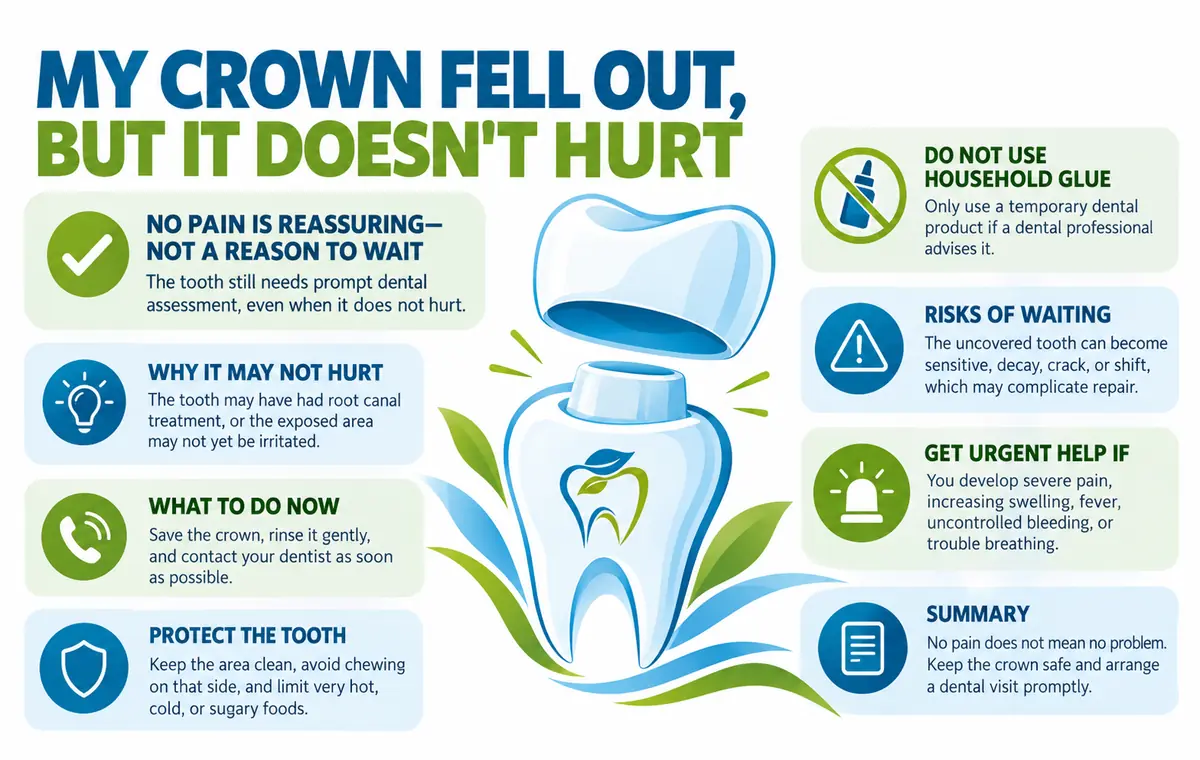
Pain is not a reliable way to judge the condition of a tooth after its crown comes off. You may have little or no sensitivity, particularly if the tooth has had root canal treatment. The dentist still needs to check for decay, cracks, and whether the old crown can be reused.
Tooth may still be structurally stable for nowSchedule a dental visit within a few daysCrown fell out and tooth feels sensitiveEnamel or dentin may be exposedAvoid chewing on that side and see a dentist soonCrown fell out after biting sticky foodLikely cement failureSave the crown and bring it to your appointmentCrown fell out and tooth looks darkerPossible decay under crownDental evaluation needed quicklyCrown fell out after many yearsNormal wear may weaken bondingDentist will check if recementing is possibleCrown fell out and gum feels irritatedFood or bacteria entering exposed areaKeep area clean and book appointment promptlyCrown fell out after root canal treatmentTooth may not feel pain due to nerve removalStill requires restoration protection soon.
| Situation | What It Means | What You Should Do |
|---|---|---|
| Crown fell out but there is no pain | No pain does not confirm that the tooth is undamaged | Call your dentist to arrange an appointment and avoid chewing on that tooth |
| Crown fell out and the tooth feels sensitive | The exposed tooth may react to temperature or touch | Avoid very hot or cold foods and drinks, and arrange a dental visit |
| Crown fell out after biting sticky food | The food may have dislodged a crown that was already loose | Save the crown and bring it to your appointment |
| Crown fell out and the tooth looks darker | Discoloration may have several causes, including decay or previous treatment | Have the tooth examined; color alone cannot identify the cause |
| Crown fell out after many years | The cement may have weakened, or the crown or tooth may have changed | Your dentist will check whether the crown can be reattached |
| Crown fell out and the gum feels irritated | Food buildup or a rough edge may be irritating the gum | Clean the area gently and arrange an appointment; seek urgent care if swelling or pus develops |
| Crown fell out after root canal treatment | The tooth may have little sensitivity because its inner nerve tissue was removed | Avoid chewing on the tooth and arrange a visit to restore its protection |
| Temporary crown fell out but there is no pain | The prepared tooth has lost its temporary covering | Call the dental office rather than waiting until your permanent crown appointment |
Even if your crown does not hurt, you still need to see a dentist if it falls out. The underlying tooth was fitted with a crown for a reason, and leaving the tooth unsupported can lead to further damage. In this situation, see the crown and examine the tooth area for immediate concerns. If all looks well, book an appointment with your dentist ASAP. Until then, make sure not to skip your regular oral hygiene. Just as we recommended eating scrambled eggs after a tooth extraction, they can also be a good option for this situation.
Why Do Crowns Fall Out?
A crown can come loose when the cement holding it in place weakens. Biting into hard or sticky food may dislodge it, especially if it was already loose. Your dentist will check both the crown and the tooth to find out why it came off.
Poor oral hygiene is another common reason crowns fall out. If there is increased tooth decay under the crown, it wears away at the crown bonding and destabilizes the tooth cap.
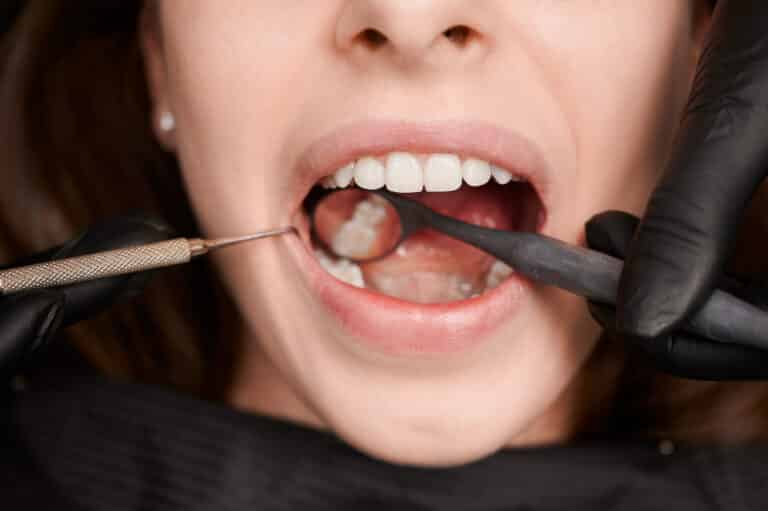
Tooth decay under a crown can damage the tooth supporting it, so your dentist will check for decay before reattaching the crown.
Another major culprit is a poorly fitting crown. If the crown does not fit snugly, it will likely come off from general wear and tear.
Risks of Avoiding Emergency Dental Treatment
Do not ignore a fallen crown just because there is no immediate pain. Doing this can have serious consequences for your oral health, including tooth decay, infection, and severe structural damage. Leaving your damaged tooth exposed can also lead to gum issues like inflammation and gum disease.
Conclusion
Dental crowns provide structure and support to damaged teeth but can fall out for various reasons. “My crown fell out but it doesn’t hurt.” Even without pain, leaving the issue untreated can lead to infection, decay, and gum issues. No matter the circumstance, always contact your dentist if your crown falls out. Who should call? Invest in your smile with the best dentistry in Arlington with Bloom Dental. Schedule your appointment today with a trusted dental crowns Arlington VA provider to restore and protect your tooth as soon as possible. Book an appointment today.
FAQ in Case You’re Asking: My Crown Fell Out But It Doesn’t Hurt, Why?
Why doesn’t my tooth hurt after the crown falls off?
Some teeth have little sensitivity after a crown comes off. If the tooth has had root canal treatment, the nerve tissue inside it has been removed, which may explain the lack of sensitivity. No pain does not rule out decay or a crack.
My temporary crown fell out but it doesn’t hurt. Can I wait until my next appointment?
Call the dental office rather than waiting for your scheduled visit. The temporary crown protects the prepared tooth while the permanent one is being made, and the office can advise whether it needs to be replaced sooner.
Can my dentist reuse the crown that fell out?
Sometimes. If the crown is intact, fits properly, and the tooth underneath is suitable, your dentist may be able to reattach it. Bring the crown with you so it can be checked.
Will I need another root canal if my crown falls off?
Not necessarily. A lost crown alone does not mean you need root canal treatment. Your dentist will examine the tooth and may take an X-ray to decide whether reattaching or replacing the crown is enough.