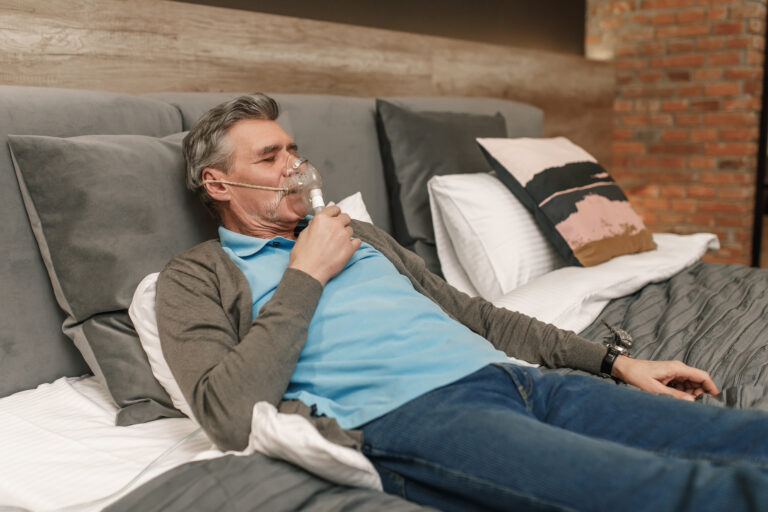
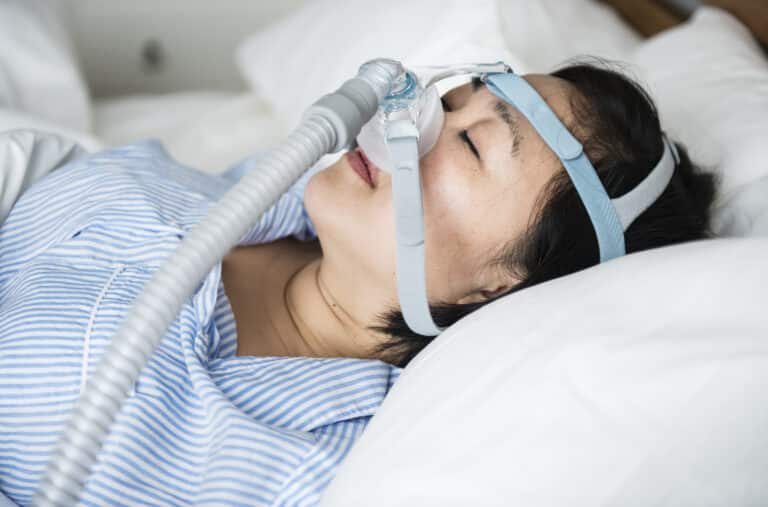
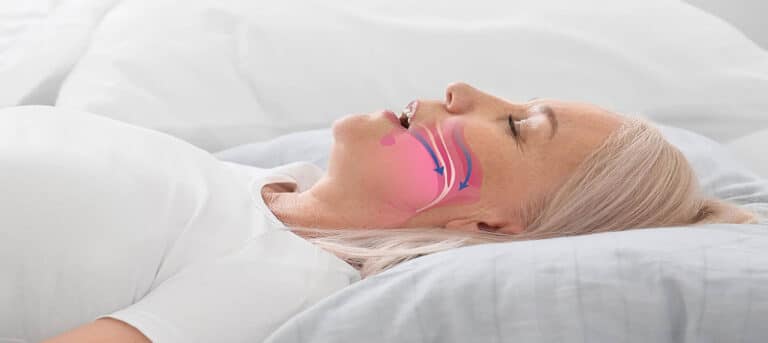
CPAP is an effective treatment for obstructive sleep apnea, but not everyone can sleep comfortably with a mask and machine. If dryness, mask discomfort, noise, or claustrophobia makes CPAP difficult to use, other treatments may be available. Sleep apnea treatment without CPAP can include a custom oral appliance, positional therapy, weight management, treatment of nasal obstruction, or surgery in selected cases.
The best option depends on the type and severity of sleep apnea, your airway, overall health, and dental condition. Before stopping CPAP or choosing an alternative, speak with the healthcare professional managing your sleep apnea.
Table of Contents
Can Sleep Apnea Be Treated Without CPAP?
Yes. Many patients with obstructive sleep apnea can use non-CPAP sleep apnea treatment, particularly when CPAP cannot be tolerated. A custom oral appliance is one of the most established alternatives for suitable adults. Other options may help when sleep apnea is related to sleeping position, excess weight, nasal obstruction, or a specific anatomical problem.
These treatments are not equally suitable for everyone. A method that helps mild, position-dependent obstructive sleep apnea may not adequately control severe or central sleep apnea. According to the National Heart, Lung, and Blood Institute, treatment may include lifestyle changes, positive airway pressure, an oral device, surgery, or a combination of approaches.
Start With a Proper Diagnosis
Snoring may be a warning sign, but it does not confirm sleep apnea. Diagnosis normally requires an evaluation and either an overnight sleep study or an appropriate home sleep apnea test.
Common signs include:
- Loud, frequent snoring
- Breathing pauses noticed by another person
- Gasping or choking during sleep
- Morning headaches or dry mouth
- Repeated nighttime awakenings
- Difficulty concentrating
- Excessive daytime sleepiness
If no one observes you while you sleep, our guide to recognizing sleep apnea when you sleep alone explains which signs may justify further evaluation.
It is also important to identify the type of sleep apnea. Oral appliances can help manage obstructive sleep apnea by supporting the upper airway, but they do not treat the abnormal breathing signals involved in central sleep apnea. Learn more about the causes and types of sleep apnea.
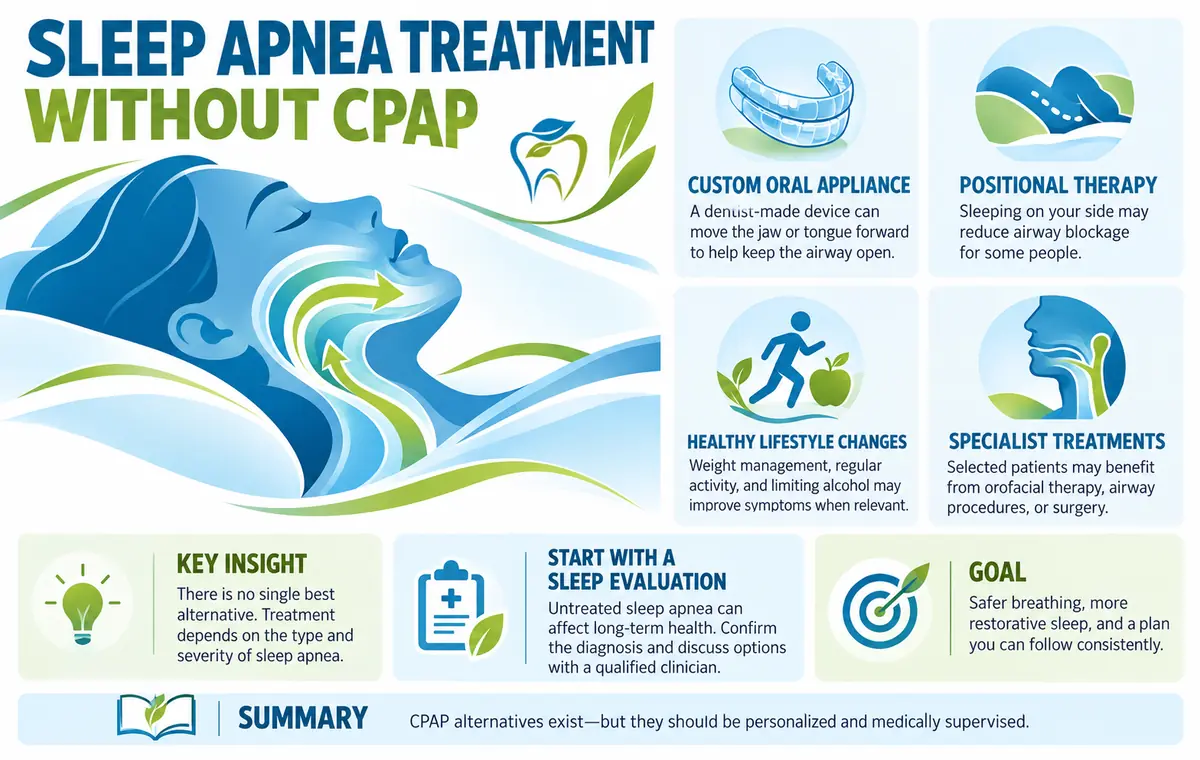
Sleep Apnea Treatments Other Than CPAP
| Treatment | How it may help | Important consideration |
|---|---|---|
| Custom oral appliance | Holds the lower jaw forward to support an open airway | Requires professional fitting, adjustment, and follow-up testing |
| Positional therapy | Encourages side sleeping when apnea is worse on the back | Most useful for position-dependent OSA |
| Weight management | May reduce pressure on the airway when excess weight contributes to OSA | Improvement varies and usually occurs gradually |
| Lifestyle changes | Reducing alcohol, quitting smoking, and reviewing sedating medicines may limit aggravating factors | Often used with another treatment |
| Nasal treatment | Improves airflow when allergies or structural blockage affect nasal breathing | May not resolve obstruction in the throat |
| Surgery or nerve stimulation | Addresses selected anatomical causes of airway collapse | Requires specialist assessment and careful patient selection |
How Oral Appliance Therapy Works
Oral appliance therapy uses a small device worn inside the mouth during sleep. It may resemble a mouthguard or retainer, but it is designed to hold the lower jaw in a slightly forward position. This helps prevent the tongue and nearby soft tissues from narrowing the airway.
Unlike CPAP, an oral appliance does not require a mask, hose, airflow machine, or power supply. It is quiet, portable, and usually easy to travel with. These features make it an appealing apnea treatment without CPAP for patients who find PAP equipment difficult to use consistently.
Clinical guidelines recommend a custom, adjustable appliance provided by a qualified dentist rather than a generic device. They also recommend dental follow-up and repeat sleep testing to confirm that the appliance is controlling the breathing interruptions—not simply reducing snoring. The complete clinical guidance is available through PubMed.
Who May Benefit From an Oral Appliance?
Oral appliance therapy may be considered if:
- You have a confirmed diagnosis of obstructive sleep apnea.
- You have mild or moderate OSA.
- You cannot use CPAP consistently.
- You prefer an alternative after reviewing its benefits and limitations.
- Your teeth, gums, bite, and jaw can safely support the device.
A dentist can identify oral signs and risk factors, but sleep apnea must be diagnosed and medically managed in coordination with a qualified healthcare provider.
An oral appliance may not be suitable if you have active gum disease, loose teeth, too few supporting teeth, or certain jaw-joint problems. An examination is needed before treatment.
What to Expect During Treatment
Treatment begins with a review of your diagnosis and sleep-study results. The dentist then examines your teeth, gums, bite, jaw movement, and dental restorations. If the treatment is appropriate, digital scans or impressions are taken to create a custom appliance.
The device is adjusted gradually until it reaches a position that is both comfortable and clinically useful. Temporary jaw soreness, tooth tenderness, dry mouth, or increased saliva can occur. Over time, some patients may experience tooth movement or bite changes, which is why regular follow-up matters.
Reduced snoring or improved energy is encouraging, but it does not prove that sleep apnea is fully controlled. Follow-up sleep testing should be used to measure the effectiveness of the appliance.
Patients considering this option can read more about our approach to sleep apnea treatment in Arlington.
Oral Appliance Therapy vs. CPAP
| Consideration | Oral appliance | CPAP |
|---|---|---|
| Equipment | Small device worn in the mouth | Mask connected to an airflow machine |
| Portability | Easy to carry | Requires a machine, mask, tubing, and power |
| Effectiveness | Effective for appropriately selected patients | Usually reduces breathing events more effectively |
| Common concerns | Jaw discomfort, tooth movement, or bite changes | Dryness, mask leakage, irritation, or pressure discomfort |
| Follow-up | Dental checks and repeat sleep testing | Medical follow-up and review of machine data |
CPAP generally controls breathing events more effectively, especially in severe OSA. However, a custom oral appliance can be a practical alternative when it is medically appropriate and used consistently. The best sleep apnea treatment without CPAP is the treatment that safely controls your condition and can be confirmed as effective.
Other Sleep Apnea Solutions Without CPAP
Positional Therapy
Some people experience most breathing interruptions while sleeping on their backs. Positional therapy uses a wearable device, specialized pillow, or another method to encourage side sleeping. It works best when a sleep study confirms position-dependent OSA.
Weight and Lifestyle Changes
When excess weight contributes to airway obstruction, sustainable weight loss may reduce the severity of sleep apnea. Limiting alcohol near bedtime, quitting smoking, and reviewing sedating medications with a healthcare provider may also help manage sleep apnea without CPAP.
These changes should not be assumed to cure the condition. Continue prescribed treatment until repeat testing shows that it can safely be changed.
Treating Nasal Obstruction
Allergies, chronic congestion, or structural nasal problems can make breathing uncomfortable. Medical or surgical treatment may improve nasal airflow and make other therapies easier to use, although it may not resolve obstruction farther down the airway.
Surgery and Airway Stimulation
Surgery may be considered when enlarged tonsils, jaw position, or another anatomical feature contributes to obstruction. Hypoglossal nerve stimulation is another option for selected patients who have moderate to severe OSA and cannot tolerate PAP.
These treatments require specialist assessment. Benefits, risks, eligibility requirements, and recovery differ for each procedure.
Why Treatment Matters
Sleep apnea affects more than snoring. Repeated breathing interruptions can fragment sleep and contribute to morning headaches, poor concentration, irritability, and dangerous daytime sleepiness.
Untreated OSA is also associated with high blood pressure and cardiovascular risk. Our article about sleep apnea and high blood pressure explains this connection in more detail.
Seek prompt medical advice if you regularly wake while choking, another person notices repeated breathing pauses, or you become dangerously sleepy during the day. Do not drive if you are struggling to remain alert.
Finding the Right Treatment
If CPAP feels uncomfortable, explain the specific problem to your sleep team. A different mask, heated humidification, pressure adjustment, or another PAP setting may make treatment easier.
If these changes do not help, ask whether oral appliance therapy or another sleep apnea solution without CPAP is appropriate. The decision should be based on your diagnosis, sleep-study results, health history, airway anatomy, dental condition, and preferences.
Dr. Ashkan Yousefi is a Diplomate of the American Board of Dental Sleep Medicine. At Bloom Dental of Arlington, we provide professionally fitted oral appliances and coordinate treatment with the patient’s medical care team. Contact our office to arrange an evaluation and find out whether an oral appliance may be suitable for you.
Frequently Asked Questions
How can I treat sleep apnea without CPAP?
Options may include a custom oral appliance, positional therapy, weight management, treatment of nasal obstruction, surgery, or hypoglossal nerve stimulation. The right choice depends on the type and severity of sleep apnea.
What is the best sleep apnea treatment without CPAP?
There is no single best treatment for everyone. A custom oral appliance is an established option for many adults with obstructive sleep apnea who cannot tolerate CPAP or prefer an alternative.
Can a dentist help with sleep apnea?
A qualified dentist can provide and manage a custom oral appliance after sleep apnea has been properly diagnosed. Medical and dental follow-up are both important.
Is an oral appliance as effective as CPAP?
CPAP generally reduces breathing events more effectively, particularly in severe OSA. A custom oral appliance can still work well for appropriately selected patients.
Can I use an over-the-counter mouthguard?
An ordinary mouthguard is not a substitute for a custom sleep apnea appliance. A professionally fitted device can be adjusted and monitored for effectiveness, tooth movement, and bite changes.
How do I know whether an oral appliance is working?
Less snoring and better daytime energy are positive signs, but follow-up sleep testing is needed to confirm that the appliance controls breathing interruptions.
Can weight loss cure sleep apnea?
Weight loss may reduce OSA severity when excess weight contributes to airway obstruction, but it does not eliminate the condition in every patient. Repeat testing is needed before changing treatment.