Sleep apnea is most commonly associated with loud snoring, episodes of gasping for air, and significant daytime sleepiness. Yet some of the earliest clinical clues may be hiding in plain sight—right on the tongue.
Certain tongue signs of sleep apnea may indicate an increased risk of airway obstruction during sleep. Although a tongue examination alone cannot diagnose obstructive sleep apnea (OSA), these findings can raise clinical suspicion and serve as valuable warning signs that warrant further evaluation by a physician or dental sleep medicine specialist. Recognizing these signs early may help patients seek treatment sooner and improve long-term health outcomes.
Table of Contents
What Are the Most Common Tongue Signs of Sleep Apnea?
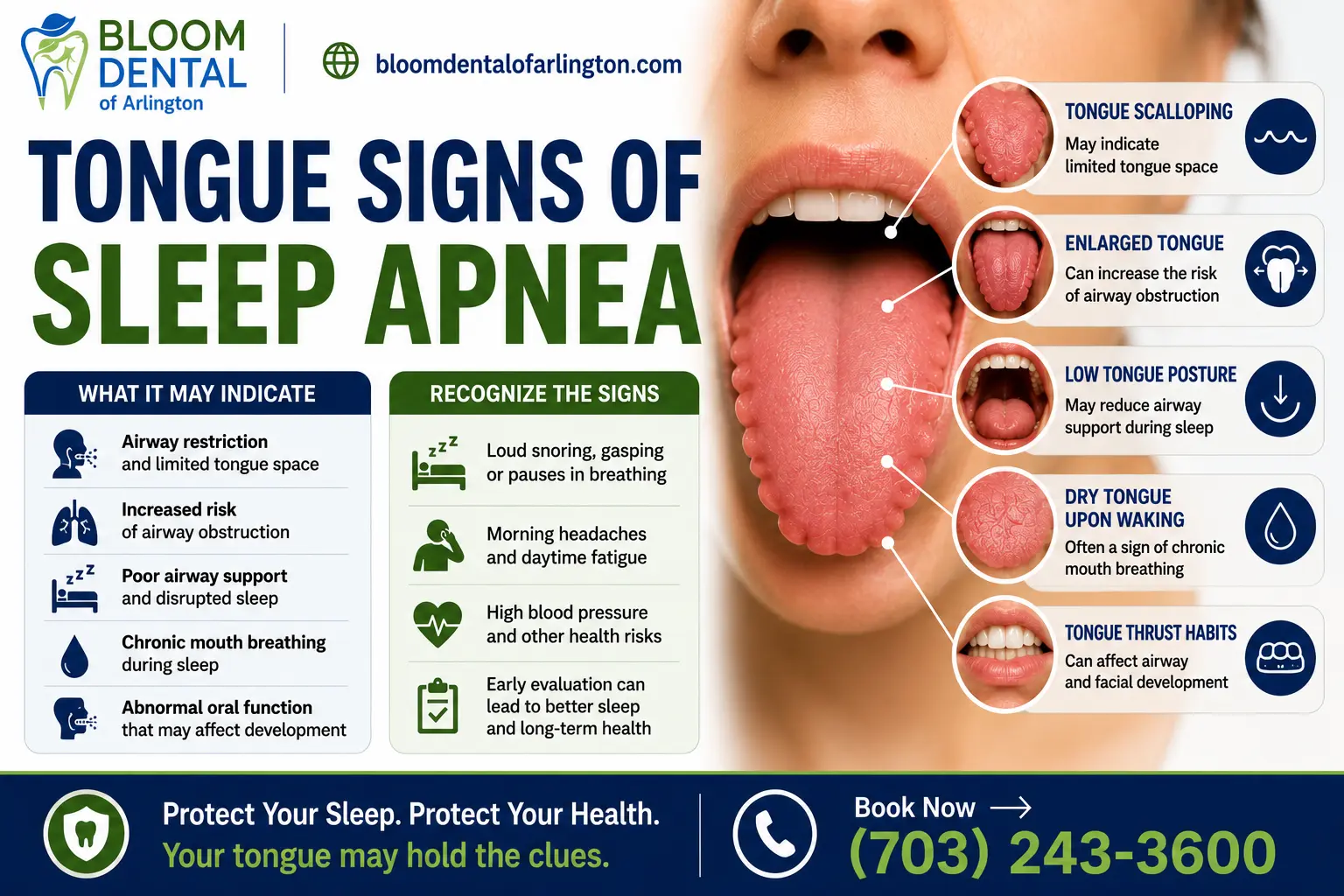
Dentists and sleep medicine professionals often look for specific oral findings that may be associated with sleep-disordered breathing. The most common tongue signs of sleep apnea include tongue scalloping, an enlarged tongue, poor tongue posture, and signs of chronic mouth breathing.
| Tongue Finding | What It May Indicate |
|---|---|
| Tongue scalloping | Limited tongue space, possible airway restriction |
| Enlarged tongue (macroglossia) | Increased risk of airway obstruction |
| Low tongue posture | Poor airway support and altered breathing patterns |
| Dry tongue upon waking | Chronic mouth breathing during sleep |
| Tongue thrust habits | Abnormal oral function that may affect airway development |
While none of these findings can independently confirm sleep apnea, the presence of multiple tongue signs of sleep apnea may justify further assessment by a qualified healthcare provider.
Tongue Scalloping
One of the most recognizable dental signs of sleep apnea is tongue scalloping, also known as a scalloped tongue. The relationship between scalloped tongue and sleep apnea has been widely discussed because a scalloped tongue may indicate limited tongue space and an increased risk of airway obstruction in some patients. This characteristic appearance results from tooth imprints forming along the lateral edges of the tongue, creating a wavy, indented border. Tongue scalloping typically occurs when the tongue is relatively large for the space available within the oral cavity, a condition clinically referred to as macroglossia. When the tongue repeatedly presses against the teeth during rest, these imprints can become persistent and visible over time. A 2005 study published in the Otolaryngology Head and Neck Surgery Journal under the title “The Association of Tongue Scalloping With Obstructive Sleep Apnea and Related Sleep Pathology” found tongue scalloping to be predictive of sleep pathology in high-risk patients.
Tongue Posture, Mouth Breathing, and Airway Function
Beyond size, tongue posture plays an important role in upper airway health. Ideal tongue posture involves the tongue resting gently against the roof of the mouth when it is not actively in use. Chronic mouth breathing, tongue thrusting, and poor resting tongue posture can influence facial development and airway function over time.
These findings are frequently discussed within the fields of dental sleep medicine because of their potential long-term impact on breathing patterns. While such issues do not automatically produce obstructive sleep apnea, they are considered contributing anatomical factors worthy of clinical attention.
Scalloped Tongue and Sleep Apnea: What Is the Connection?
Researchers have observed an association between a scalloped tongue and sleep apnea in some patients with obstructive sleep apnea (OSA). A scalloped tongue may develop when the tongue presses repeatedly against the teeth because there is limited room within the oral cavity. Although this finding cannot diagnose sleep apnea on its own, it is considered an important clinical clue that may prompt further airway evaluation.
Recognizing Warning Signs and Pursuing a Diagnosis
Many patients with sleep-disordered breathing report waking with a dry mouth, a common consequence of mouth breathing during sleep. Morning headaches, excessive daytime sleepiness, and persistent fatigue despite adequate time in bed are also widely reported. Bed partners may observe witnessed apneas, periods when breathing appears to stop entirely, followed by choking or gasping for air. Elevated high blood pressure that is difficult to control can be another systemic consequence of untreated OSA.
Dentists are frequently among the first healthcare professionals to identify possible dental signs of sleep apnea. Evidence of bruxism, nighttime clenching, and unusually worn tooth surfaces may prompt clinical questions about sleep quality and nighttime breathing. Although these findings are not diagnostic in isolation, they serve as valuable clues that warrant further investigation.
When sleep apnea is suspected, a comprehensive physical examination is typically followed by objective diagnostic testing. This may involve an overnight polysomnography study conducted in a sleep laboratory or a home sleep apnea test (HSAT).
Treatment Options for Sleep-Disordered Breathing
The presence of tongue-related anatomical findings does not mean that sleep apnea is inevitable, and a range of effective treatment options is available. Treatment selection depends on the severity of the condition and the specific source of obstruction.
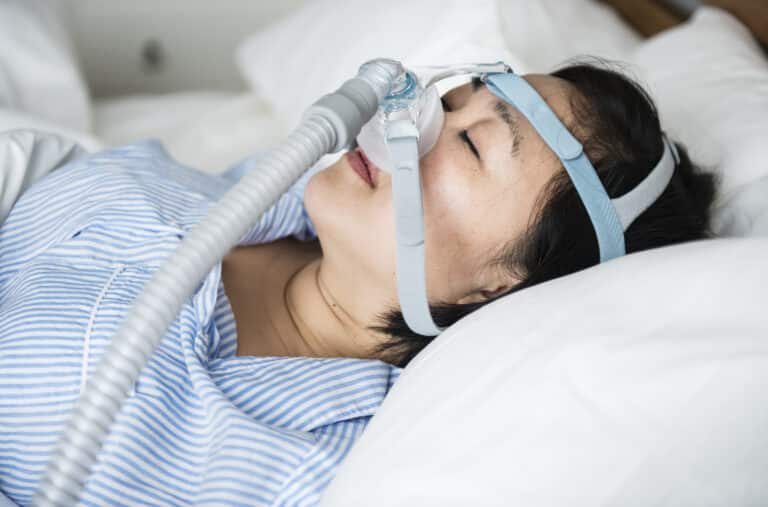
For many patients, CPAP therapy remains the gold standard, delivering continuous positive airway pressure throughout the night to keep the upper airway open and prevent airway collapse. Oral appliance therapy, particularly a mandibular advancement device, offers a well-established alternative for patients who find CPAP difficult to tolerate or are seeking a more portable solution.
By gently repositioning the lower jaw forward, these custom devices enlarge the airway and reduce the risk of tongue-base obstruction. Innovative system-based approaches such as the VIVOS system are also being explored as longer-term orthodontic interventions aimed at addressing underlying airway dimensions. Positional therapy, which encourages side sleeping rather than back sleeping, can benefit patients whose breathing disturbances are posture-dependent.
For patients with significant anatomical contributions from the tongue, additional options may be considered. Myofunctional therapy focuses on improving ideal tongue posture and strengthening the muscles involved in breathing and swallowing. If a restrictive tongue tie is contributing to abnormal tongue function, targeted intervention may be appropriate. In more complex cases involving significant tongue-base obstruction, an ENT specialist, such as those at a dedicated practice like Enticare, may discuss surgical options including partial glossectomy or midline glossectomy. The appropriate path forward is best determined through a thorough evaluation of each patient’s specific anatomy and symptoms.
Why Choose Bloom Dental of Arlington
At Bloom Dental of Arlington, our team specializes in the dental management of sleep-disordered breathing, bringing comprehensive expertise in dental sleep medicine to every patient evaluation. Whether you are experiencing dental signs of sleep apnea, have been told you snore or stop breathing at night, or are seeking sleep apnea treatment in Arlington, we are equipped to guide you from initial assessment through a customized treatment plan.
We invite you to visit our sleep apnea services page to learn more about custom oral appliances and the full range of dental sleep medicine options we provide.
FAQs About Tongue Signs of Sleep Apnea
What are the most common tongue signs of sleep apnea?
Can a scalloped tongue mean sleep apnea?
Can Tongue Signs Alone Diagnose Sleep Apnea?