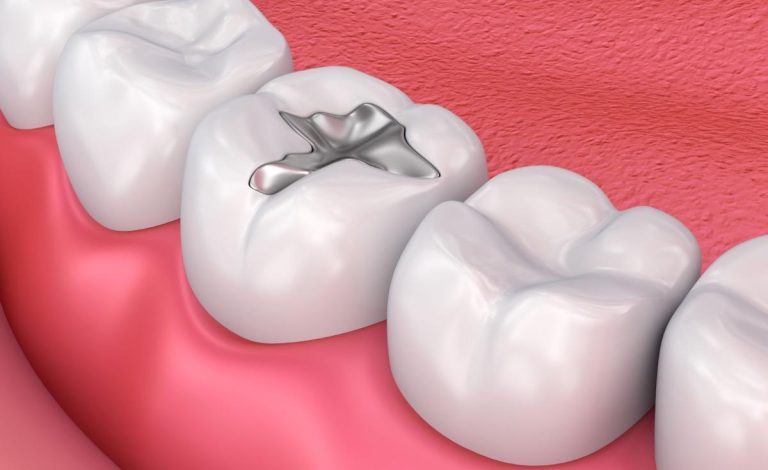
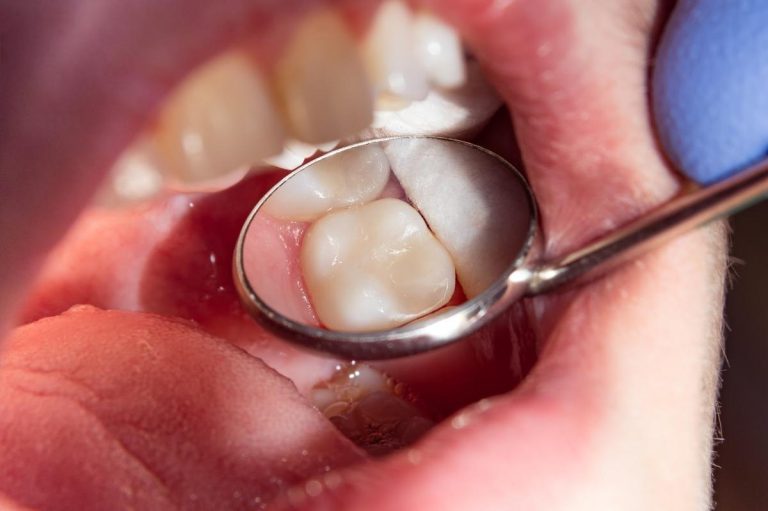
A filling that hurts months later may be affected by an uneven bite, pulp inflammation, a crack, or decay around the restoration. Persistent pain after a filling needs a dental check, especially if it is worsening or heat and cold trigger pain that lingers.
Table of Contents
Common Reasons for Delayed Filling Pain
Brief sensitivity after treatment can settle, but pain that persists or returns months later should not automatically be dismissed as healing. The pattern of the pain helps guide the examination.
Nerve Irritation
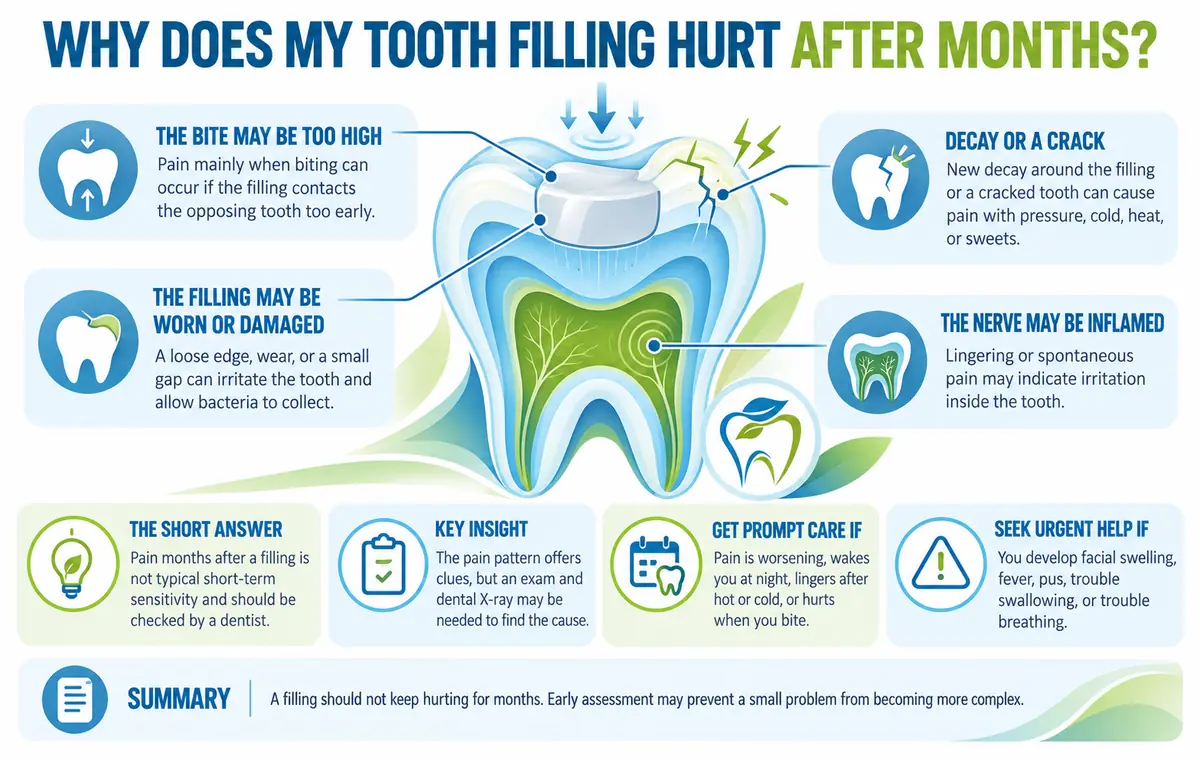
A deep cavity or dental treatment can irritate the pulp inside a tooth, causing pulpitis. Some inflammation can recover after the cause is treated; more advanced pulp damage may need root canal treatment. Do not assume it will resolve simply by waiting longer.
Bite Misalignment
Even a slight height difference between the new filling and your natural teeth can throw off your bite, causing painful pressure points. This can cause jaw pain, lead to severe headaches, or make chewing painful.
Recurrent Decay or Infection
A loose or damaged filling can allow problems to develop around the restoration. Decay, cracks, and infection are among the possible causes of toothache, so your dentist needs to check the tooth rather than assume the filling alone is responsible.
Symptoms That Suggest a Filling Needs Evaluation
If you’re still asking why does my filling hurt after months, paying attention to specific warning signs can help determine whether the discomfort is temporary or a sign that your filling needs professional attention. While mild sensitivity after treatment can be expected, symptoms that continue or appear long after the procedure often indicate that the tooth is reacting to pressure, nerve irritation, or changes beneath the restoration.
For example, some patients notice toothache months after filling when chewing or applying pressure, while others report that their teeth still sensitive months after filling when exposed to hot or cold foods. These symptoms may seem minor at first, but they can provide early clues that the filling or surrounding tooth structure needs evaluation before the problem worsens.
The table below highlights common signs that suggest your filling should be checked and explains what each symptom may indicate.
| Symptom | Possible Meaning | Urgency Level |
|---|---|---|
| Pain when biting | High filling or cracked tooth | Medium |
| Temperature sensitivity lasting minutes | Nerve irritation | Medium |
| Throbbing pain | Possible infection | High |
| Sensitivity months later | Seal failure or pulp stress | Medium |
| Pain after one year | Recurrent decay or restoration breakdown | High |
Recognizing these symptoms early makes it easier to understand why does my tooth filling hurt after a year or why discomfort continues long after treatment. In many cases, small adjustments or early intervention can prevent the need for more complex procedures later.
If any of these warning signs persist or worsen over time, a dental examination can quickly identify the cause and help restore comfort before the condition progresses further.
Why Does My Filling Hurt After Months?
If you’re wondering why does my filling hurt after months, the timing of the pain can offer important clues about what may be happening inside the tooth. While short-term sensitivity after a filling is expected, discomfort that appears weeks or months later is usually a sign that the tooth needs professional evaluation.
In many cases, delayed pain develops gradually rather than immediately after treatment. This often suggests changes beneath the filling, such as bite pressure imbalance, nerve irritation, or hidden structural stress within the tooth.
Tooth Pain a Month After Filling
Experiencing tooth pain a month after filling is not typical, but it is still relatively common in clinical practice. At this stage, the tooth should normally be adjusting well to the restoration.
Pain after one month may indicate:
- a slightly high filling affecting your bite
- lingering nerve inflammation inside the tooth
- early leakage around the filling margins
- sensitivity caused by temperature changes or chewing pressure
Fortunately, many of these issues can be corrected quickly with a simple bite adjustment or follow-up dental evaluation.
Tooth Pain 2 Months After Filling
If you notice tooth pain 2 months after filling, the discomfort is less likely to be part of the normal healing process and more likely related to an underlying dental concern.
Pain at this stage may be associated with:
- recurrent decay beneath the filling
- a small crack in the tooth structure
- long-term pulp irritation
- weakening of the seal between the filling and the tooth
Because symptoms appearing two months after treatment usually indicate a developing issue rather than temporary sensitivity, scheduling a dental exam is strongly recommended.
When Delayed Filling Pain Should Not Be Ignored
Pain that continues or worsens months after treatment is rarely random. If your symptoms persist, your dentist may need to check whether the filling needs adjustment, replacement, or further treatment such as pulp therapy.
Understanding why does my filling hurt after months helps patients recognize early warning signs and seek care before minor problems turn into more complex dental conditions.
When to Contact Your Dentist
SArrange a dental appointment for continuing pain, pain when chewing, or lingering temperature sensitivity. Swelling, fever, pus, or severe worsening pain may indicate a dental abscess and need urgent dental care. Difficulty breathing or swallowing, or swelling spreading toward the eye or neck, requires emergency medical attention.
Read more about signs of a tooth infection, but do not use a symptom checklist to delay care when swelling or fever develops.
Prevention and Treatment Options
Treatment may involve adjusting the bite or repairing or replacing a damaged dental filling. A weakened or cracked tooth may need a dental crown; pulp damage may also require root canal treatment.
As for prevention, brush and floss twice a day, avoid tobacco, and regularly visit your dentist for a checkup.
Final Thoughts: Don’t Ignore the Signs
Tooth pain that lingers for months isn’t just annoying — it’s a sign that something might be truly wrong. So, if you find yourself wondering, “Why does my tooth filling hurt after months?”, trust your instincts and schedule a check-up.
Ready to get your teeth checked and fixed? Contact Bloom Dental of Arlington for friendly, expert tooth care!
FAQ: Tooth Pain Months After a Filling
Why does my filling hurt after months?
Toothache months after filling, is this normal?
Teeth still sensitive months after filling, should I worry?
Why does my tooth filling hurt after a year?