
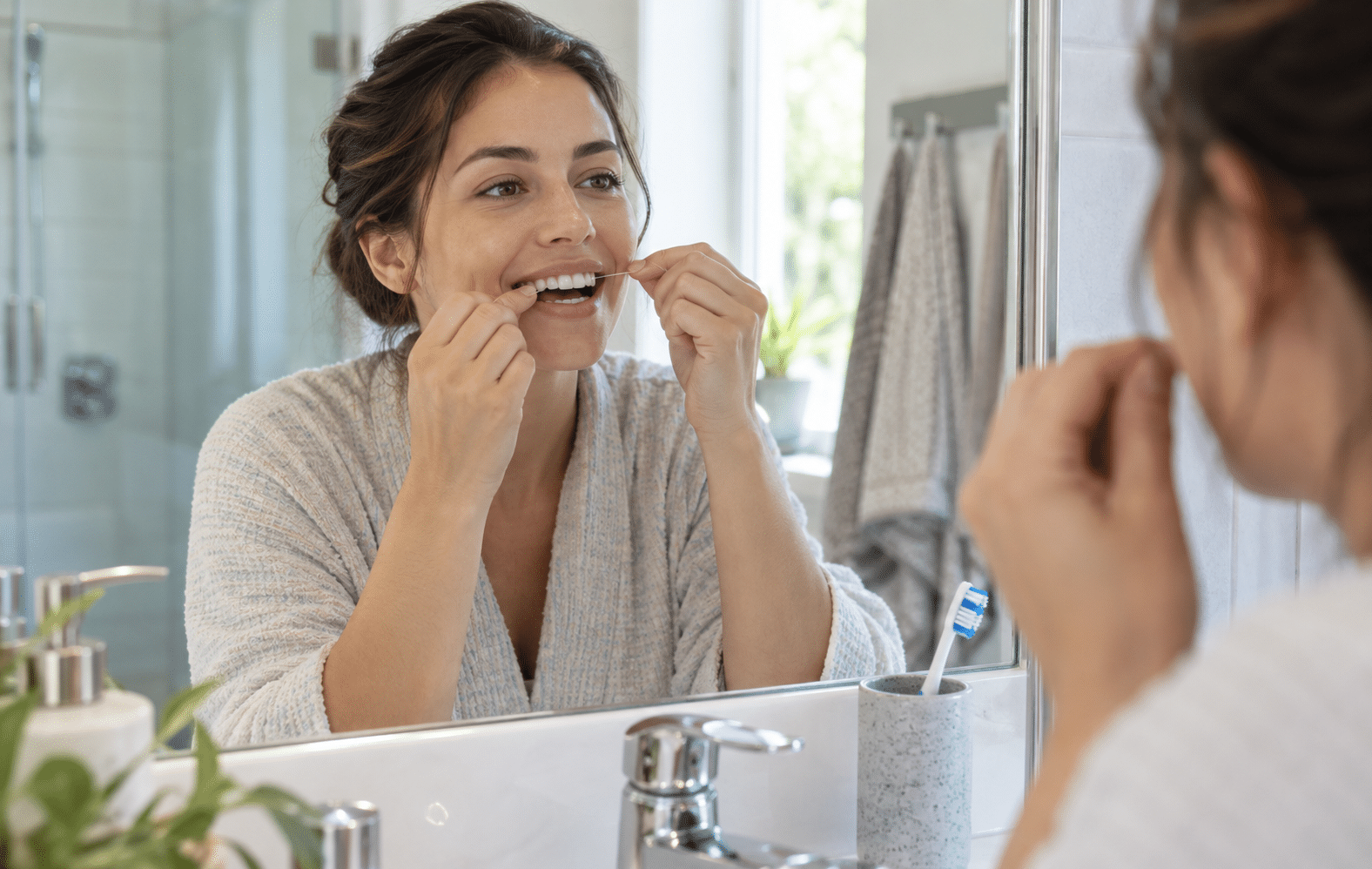
Floss before or after brushing? Either order can work if you clean thoroughly between your teeth every day, but flossing first has a modest, evidence-based edge. A small randomized trial found that flossing before brushing removed more interdental plaque and left more fluoride between teeth than brushing first. Still, the American Dental Association says the order matters far less than making daily interdental cleaning a habit, and as long as the cleaning is thorough.
Table of Contents
Flossing Before vs. After Brushing
| Comparison | Floss Before Brushing | Floss After Brushing |
|---|---|---|
| Main benefit | Loosens food and plaque before brushing | Removes debris that may remain after brushing |
| Fluoride exposure | May help fluoride toothpaste reach between the teeth | Still effective when flossing is done thoroughly |
| Best for | People who want to follow the evidence-supported order | People who are more likely to remember flossing afterward |
| Most important point | Floss thoroughly, then brush with fluoride toothpaste | Do not skip flossing simply because you already brushed |
How to Floss Properly
- Use about 18 inches of floss, wound around your middle fingers.
- Guide it gently between teeth with a rubbing motion, never snapping it into the gums.
- Curve it into a C shape against one tooth at the gumline.
- Move it up and down against that surface, then the neighboring tooth.
- Use a fresh section as you move around your mouth, including behind the back molars.
String floss works well for most people,though the ADA also recognizes interdental brushes, picks, and water flossers, which can help around braces, bridges, or other dental work. Ask your dentist which tool fits your mouth best. 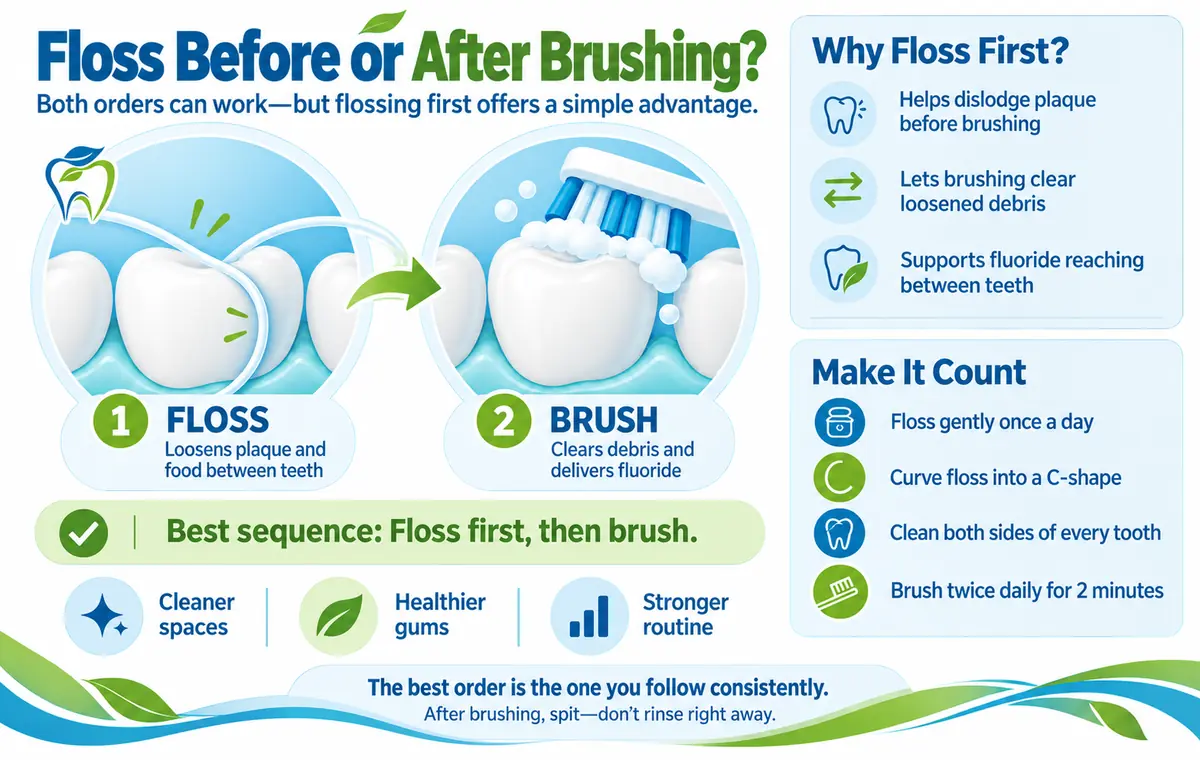
How Often Should You Floss?
The ADA recommends cleaning between your teeth once a day, at whatever consistent time you are most likely to keep up; thorough, daily cleaning matters more than timing. The CDC likewise advises brushing twice daily with fluoride toothpaste and flossing daily to remove plaque. Looking for more ways to build a healthier home routine? See Bloom Dental’s guide to oral hygiene tips.
What Happens If You Don’t Floss?
A toothbrush cannot fully clean between teeth, where plaque can linger and, over time, contribute to:
- Plaque buildup between teeth
- Tartar once plaque hardens
- Cavities between teeth
- Gum inflammation and bleeding
- Persistent bad breath
Once plaque hardens into tartar, brushing and flossing cannot remove it at home. A professional cleaning is usually needed, and patients with buildup below the gumline may be advised to have deep teeth cleaning.
Frequently Asked Questions About Flossing Before or After Brushing
How long should you wait between flossing and brushing?
You do not need to wait. You can floss and brush one after the other as part of the same oral hygiene routine.
Should you floss every time you brush?
Most people do not need to floss every time they brush. Cleaning between the teeth once a day is generally enough, while teeth should usually be brushed twice daily.
Is it okay to floss only at night?
Yes. Flossing at night is a good option because it removes food and plaque that have collected between the teeth during the day. The most important thing is to floss thoroughly once a day.
Should you use mouthwash before or after flossing and brushing?
If you use mouthwash, follow the directions on the product or your dentist’s advice. Some fluoride mouthwashes are best used at a different time from brushing so they do not wash away fluoride toothpaste immediately.
When to See a Dentist About Flossing Problems
Some tenderness is common when returning to flossing after a break but flossing itself should not hurt. Contact a dentist if bleeding is regular, pain continues, gums stay swollen or appear to recede, teeth feel loose, or your bite changes as this may indicate gum disease. If flossing continues to cause pain, bleeding, or other concerns, learn more about preventive dentistry with Bloom Dental, and make an appointment today.
