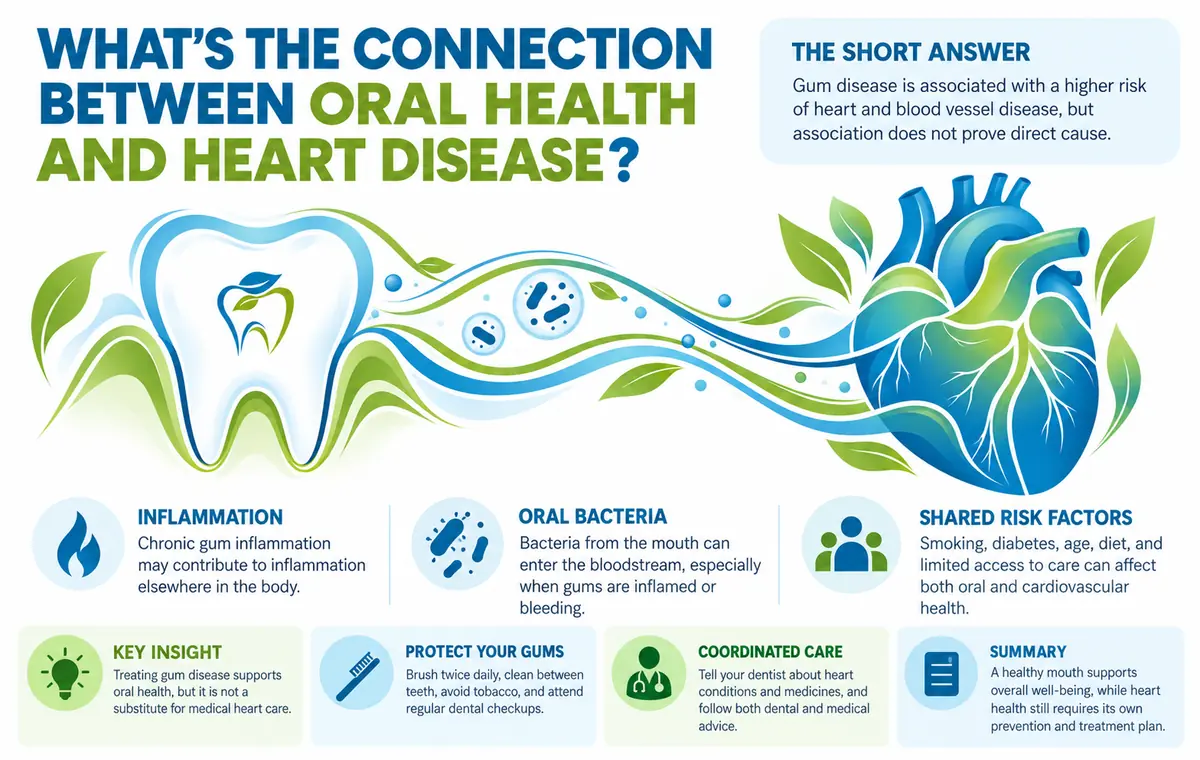
Oral health and heart disease are linked, particularly when it comes to periodontal disease. However, the American Heart Association notes that this association does not prove gum disease causes heart disease. Researchers are studying bacteria, inflammation, and shared risk factors to better understand the connection.
At Bloom Dental of Arlington, we help patients understand what the evidence means for their mouth and heart.
Table of Contents
Proposed Theories
There are several current theories about the connection between poor oral health and heart disease, including:
1. Bacterial Infections
The same bacteria that infect gums and cause gum diseases like periodontitis and gingivitis can also travel through the bloodstream, causing inflammation and damage in blood vessels along the way. In addition, cardiovascular “events” may result, including blood clots, strokes, and heart attacks. The research that supports this theory is the fact that remnants of oral bacteria have been found in arteries far from the mouth that were suffering from atherosclerosis (a buildup of cholesterol).
2. Immune Response
Another proposed pathway is chronic systemic inflammation. The immune response to periodontal disease may contribute to inflammation beyond the gums, although its precise role in cardiovascular outcomes remains under investigation.
3. Other Variables
Even though there’s a distinct and tangible relationship between oral health and heart disease, it doesn’t mean there’s a direct connection. According to this theory, there is a third factor, like smoking or a poor access to healthcare, that may link the two.
What This Means for You
Regardless of the connection with heart disease, maintaining good oral hygiene remains an important part of caring for your teeth and gums. However, most dentists, oral health professionals, and physicians agree on one thing—more research needs to be done on this subject to understand the importance of such observations and precisely what they mean for us.
What You Can Do
It’s estimated that somewhere around half of all American adults have gingivitis or some form of mild periodontal disease. Untreated periodontitis can damage the tissues and bone supporting your teeth. Depending on its severity, periodontal disease treatment may be needed to control the disease and help protect your teeth.
Brush twice daily and clean between your teeth every day. If you’re unsure about the order, our guide explains whether to floss before or after brushing. Additionally, it’s a good idea to visit the oral care experts here at Bloom Dental of Arlington every six months for professional cleanings and a thorough dental examination.
Whether the link between oral and heart health is direct or indirect, it doesn’t matter—you should make your oral hygiene a priority. To schedule an appointment for a cleaning or checkup, call us at 703-243-3600 today!
Frequently Asked Questions
Do bleeding gums mean I have heart disease?
No. Bleeding gums may indicate inflammation or another dental problem, but they do not diagnose heart disease. A dental examination can help identify the cause.
Do people with heart disease need antibiotics before dental treatment?
Not everyone does. Preventive antibiotics are reserved for certain high-risk heart conditions before specific dental procedures. Your dentist and cardiologist can determine whether they are appropriate.
Should I stop blood thinners before a dental cleaning?
Do not stop or change prescribed blood thinners on your own. Tell your dentist what you take; any necessary changes should be coordinated with the prescribing clinician.