Yes, a crown falling off can be a dental emergency — especially if the tooth underneath is cracked, painful, sensitive, infected, or exposed. Even if there is no pain, losing a crown leaves the tooth vulnerable to further damage, decay, and fractures.
In some cases, a lost crown may not cause immediate symptoms. However, delaying treatment increases the risk of the tooth breaking, shifting, or becoming infected.
Dental crowns fall out for a variety of reasons. Biting down on something hard or chewy or a sharp blow to the jaw could knock a crown loose. The gradual loosening of dental crowns can also happen if a crown gets chipped but does not fall out at that time. Even the smallest chip can lead to loss of crown integrity as the chip enlarges and weakens the adherence of the crown to the tooth.
Another possible cause is tooth decay under a crown, which can damage the tooth supporting the restoration.
So, what should you do if a crown falls out? Here’s what you should know:
| Situation | Is It an Emergency? | What You Should Do |
|---|---|---|
| Crown fell out but no pain | Usually urgent, not life-threatening | Save the crown and see a dentist soon |
| Severe pain or sensitivity | Yes | Contact a dentist immediately |
| Swelling, pus, or fever | Yes — possible infection | Seek urgent dental care |
| Crown fell out from front tooth | Often cosmetic urgency | Avoid damaging the exposed tooth |
| Tooth cracked after crown fell off | Yes | Avoid chewing and see a dentist ASAP |
| Swallowed the crown | Usually not dangerous | Monitor symptoms and contact your dentist |
| Crown loose but not fully off | Needs prompt attention | Avoid sticky foods and schedule repair |
Table of Contents
What Happens When You Lose a Crown on Your Tooth?
What happens when you lose a crown on your tooth depends on the condition of the tooth underneath. Some people notice only mild sensitivity, while others experience pain, sharp edges, difficulty chewing, or even tooth fractures.
Without the crown, the exposed tooth becomes vulnerable to:
- Cracking or breaking
- Temperature sensitivity
- Bacterial infection
- Tooth shifting
- Gum irritation
- Difficulty chewing
- Additional decay
If the tooth looks black after the crown falls off, the color alone cannot tell you whether it is decay; the tooth needs to be examined.
In many cases, the tooth underneath the crown has already been weakened by decay, trauma, or a previous root canal. That is why acting quickly is important even if the crown does not hurt right away.
Crowns Should Be Replaced As Soon As Possible
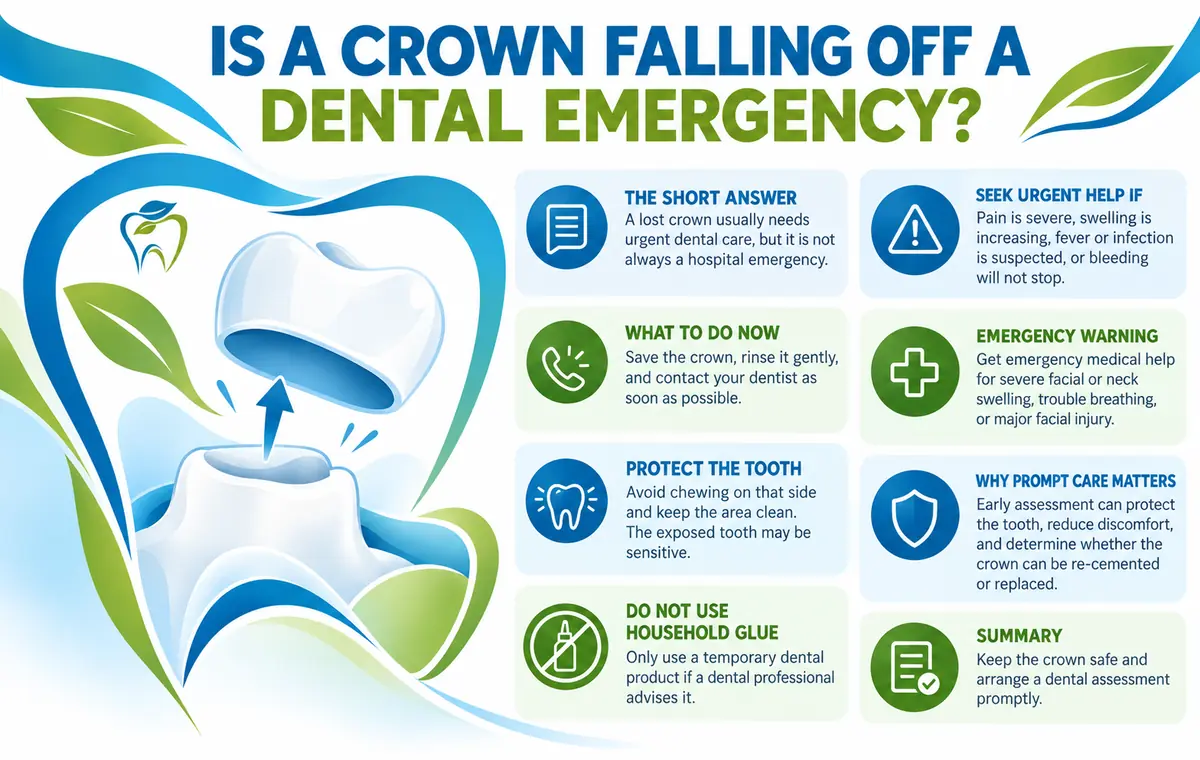
IIf you think you swallowed it, seek medical advice rather than assuming it will pass safely. Crowns are made of non-toxic, ceramic material and will pass naturally. But if you don’t swallow the crown (and hopefully you won’t!), pour hydrogen peroxide over the crown to sterilize it before placing it in a small, plastic container (a pillbox, for example), then contact us to replace the crown. A dental crown falling off a tooth should be considered a dental emergency.
Most people have dental crowns to protect a cracked/chipped but still intact tooth, to insulate a tooth following a root canal, or to try and save a decayed tooth that cannot hold a filling. Until the crown is repaired, avoid chewing hard or sticky foods on that tooth. Even without pain, the tooth needs checking before you return to chewing normally.
If your crown fell out but it doesn’t hurt, our related guide explains what to do while you wait for your dental appointment.
NEVER use super glue to adhere the crown yourself. You might think this is a decent temporary fix until you can get to the dentist, but it will not work and could:
-
Poison you. Certain glues contain toxic substances that, when ingested, can cause serious signs of poisoning
-
Worsen tooth damage. The inside of a dental crown is coated with a dental adhesive that needs to be removed before your dentist puts it back on the tooth. Simply applying glue on top of dental adhesive means the crown will not fit properly. Chewing on a dental crown that doesn’t fit correctly could cause unnecessary chipping or cracking of dental enamel.
Is It Safe to Eat or Drink Before Getting a Lost Dental Crown Replaced?
Dentists recommend not using a crownless tooth to chew with. For example, if a molar on the right side of your mouth lost a crown, chew only on the left side of your mouth. Allowing cold drinks or food to touch the tooth may cause pain, so try to avoid that from happening as well. Do not attempt to chew hard or chewy foods using a tooth that has lost a dental crown.
How Does a Dentist Replace a Crown?
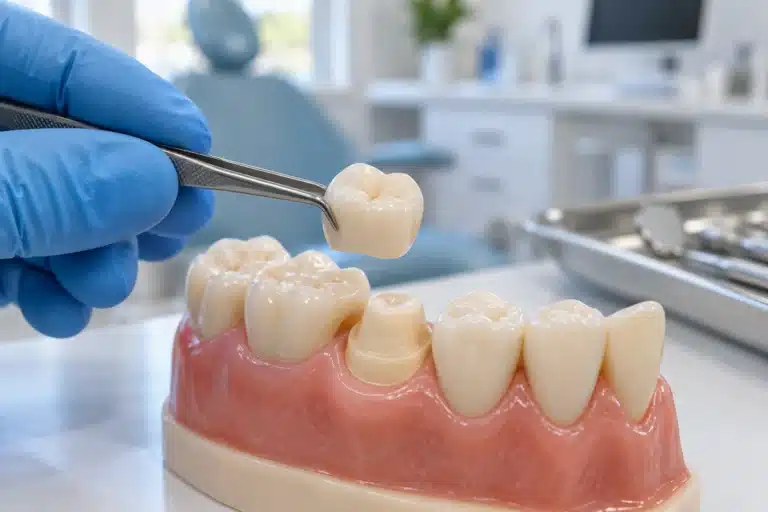
In many cases, you won’t need a new crown made to replace the old crown. If the old crown is not damaged and the uncovered tooth is in the same condition it was at the time of receiving the crown, your old crown should be reusable. A dentist will examine the old crown and your tooth before determining if a new one should be made. Your dentist may be able to reattach the existing crown if it is intact and still fits. If the crown is damaged or the tooth needs further treatment, a replacement may be necessary.
For immediate replacement of a lost dental crown or any other dental emergency, contact Bloom Dental of Arlington today.
FAQ About Losing a Crown
Is a crown falling out an emergency?
Is losing a crown a dental emergency even without pain?
What happens when you lose a crown on your tooth?
Can I put my crown back on myself?