
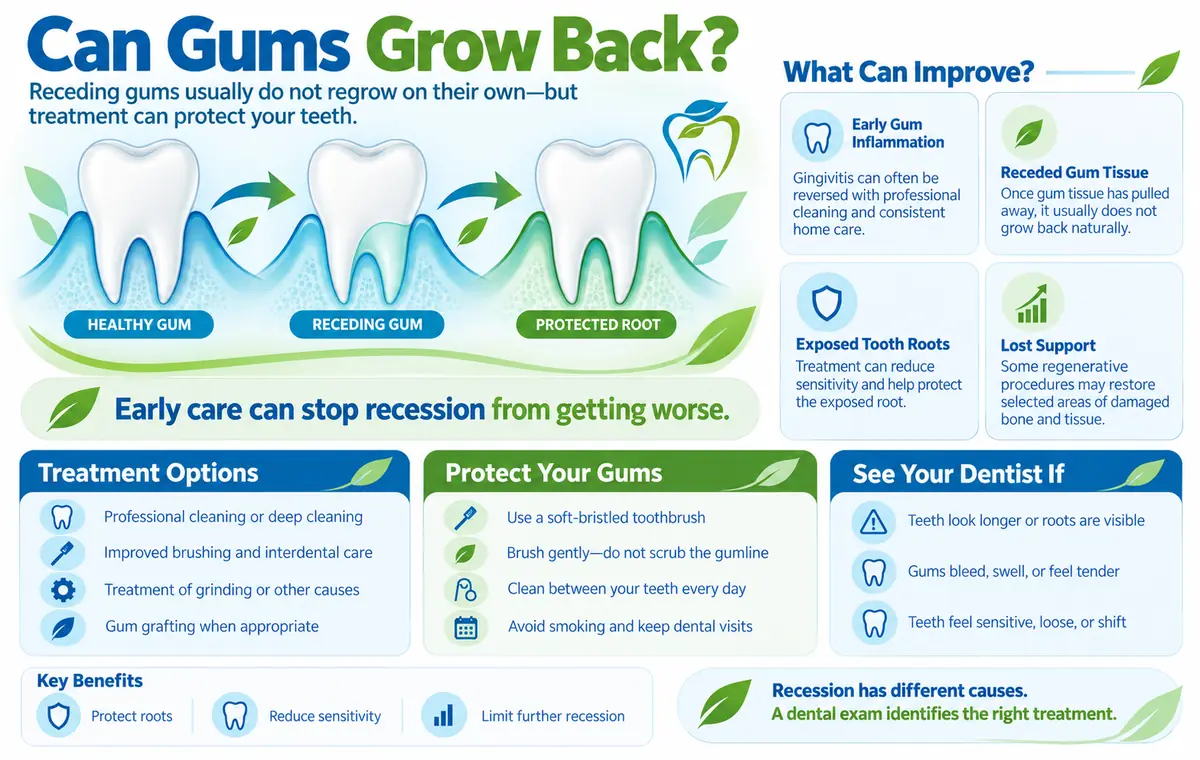
If your gums have started to recede, you may wonder whether they can grow back. The short answer is no: once gum tissue has genuinely receded and exposed part of a tooth’s root surface, it does not naturally regenerate.
That does not mean nothing can be done, however. Depending on the cause, treatment can protect the exposed root, prevent the recession from progressing, reduce tooth sensitivity, and in appropriate cases restore coverage over part of the root.
Table of Contents
Can Receding Gums Grow Back Naturally?
Gingiva has only a limited ability to regenerate once it has receded. Gums can heal after inflammation or dental treatment, but healing should not be confused with rebuilding tissue already lost, which is why products promising to regrow gums cannot recreate what is gone.
Inflamed gums may look fuller after professional cleaning and improved oral hygiene, but this does not mean lost gum tissue has grown back. Treatment focuses on controlling the cause, protecting the exposed root, and preventing further recession.
A periodontist can restore coverage through gum grafting instead, including a connective-tissue graft, a free gingival graft, or a pedicle graft. A 2022 review of 38 clinical trials covering more than 1,200 recession sites, published in the Journal of Periodontology, confirmed that a connective-tissue graft combined with a coronally advanced flap remains the most predictable technique for restoring root coverage.
What Causes Gum Recession?
Periodontal disease is a major cause of gum recession. Plaque accumulating along the gumline triggers gingivitis, and when plaque hardens into tartar and progresses to periodontitis, the resulting infection can damage the alveolar bone supporting the teeth, sometimes leading to attachment loss, periodontal pockets, and tooth mobility. Aggressive brushing with a hard-bristled toothbrush, tooth position, thin gum tissue, tobacco use, oral piercings, and bruxism can also contribute.
Gum recession can develop for more than one reason. Common causes and contributing factors include:
- Gum disease: Plaque and tartar can cause inflammation and damage the tissue and bone supporting the teeth.
- Aggressive brushing: Brushing too hard or using a hard-bristled toothbrush may gradually wear away the gum margin.
- Thin gum tissue: Some people naturally have thinner gums that are more vulnerable to recession.
- Tooth position: Crowded, tilted, or prominent teeth may have less supporting gum tissue around them.
- Teeth grinding and clenching: Repeated pressure may contribute to gum and tooth damage in some patients. If bruxism is part of the problem, a dentist may discuss the possible benefits of a custom night guard.
- Smoking and tobacco use: Tobacco can affect gum health and make periodontal problems harder to detect.
- Oral piercings: Jewelry that repeatedly rubs against the gums may cause localized recession.
- Previous dental treatment: Orthodontic movement or restorations near the gumline may sometimes contribute.
Signs and Symptoms of Receding Gums
One recognizable sign is a tooth that appears longer than the teeth around it, along with a visible root surface, an uneven gumline, or a small notch where the tooth meets the gingiva. Tooth sensitivity to cold drinks, hot foods, or sweets is another common clue. Recession does not always hurt and may progress slowly and almost unnoticed. Regular dental check-ups and cleanings allow your dentist to examine the gumline, measure periodontal pockets, and use dental X-rays when needed to evaluate the supporting bone.
Why Receding Gums Need Treatment
Tooth enamel protects the crown of a healthy tooth, but the root is covered mainly by cementum, a much thinner, less resistant layer. Once a root surface is exposed, it becomes more vulnerable to tooth sensitivity and root decay, and recession can create areas where plaque is harder to remove through routine interdental cleaning.
Protecting Your Gums Starts With Early Action
Treatment depends on the cause. A dentist may recommend professional cleaning or deep teeth cleaning, including scaling and root planing, when plaque and tartar have accumulated below the gumline. Other recommendations may include changing your brushing technique, managing bruxism, or seeing a periodontist about gum grafting. At home, maintain a consistent oral hygiene routine by using a soft-bristled toothbrush with a gentle technique, cleaning between your teeth daily, and brushing with fluoride toothpaste. A desensitizing toothpaste may also help if exposed roots are sensitive. Don’t wait for recession to become painful before mentioning it.
| Treatment | When It May Be Recommended | Can It Regrow Lost Gum? |
|---|---|---|
| Improved brushing and flossing | Early irritation or recession linked to oral hygiene habits | No, but it may help prevent further recession |
| Professional dental cleaning | Plaque and tartar buildup above the gumline | No |
| Scaling and root planing | Gum disease and buildup below the gumline | No, but it can control inflammation |
| Desensitizing toothpaste or fluoride | Sensitivity from an exposed root | No, but it can reduce discomfort and protect the root |
| Dental bonding or protective material | An exposed root that is sensitive or at risk of decay | No, but it can cover and protect the area |
| Gum grafting | Significant recession, thin tissue, exposed roots, or progressive gum loss | It can restore coverage over part of the exposed root |
Frequently Asked Questions About Receding Gums
Can gums look normal again after treatment?
They may look healthier after inflammation is treated, and gum grafting can cover part of an exposed root. The result depends on the cause, location, and severity of the recession.
Can brushing too hard cause gum recession?
Yes. Repeated aggressive brushing can damage the gum margin, especially when a hard-bristled toothbrush is used. Switching to a soft brush and gentler technique may help prevent further damage.
Can gum recession be stopped?
In many cases, progression can be slowed or stopped once the cause is identified and treated. Regular dental care and appropriate home cleaning are important for maintaining the result.
Does every case of gum recession need a gum graft?
No. Mild, stable recession may only require monitoring, improved brushing, periodontal care, or sensitivity treatment. Gum grafting is more likely when recession is progressing or the exposed root needs additional protection.
Is gum recession always caused by gum disease?
No. Gum disease is a common cause, but aggressive brushing, thin gum tissue, tooth position, tobacco use, oral piercings, and teeth grinding may also contribute.
What toothpaste is best for receding gums?
A fluoride toothpaste can help protect exposed roots from decay. If sensitivity is present, a desensitizing toothpaste may also help. Your dentist can recommend a product based on your symptoms.
Why Choose Bloom Dental of Arlington
Gum recession can stem from periodontal disease, aggressive brushing, bruxism, or several factors at once. Our team evaluates your gum tissue, plaque levels, and bite before recommending treatment. Our Periodontics services treat gum disease and restore gum health with an experienced periodontist. If your teeth look longer than before or your gumline is changing, schedule an appointment with Bloom Dental of Arlington today.