

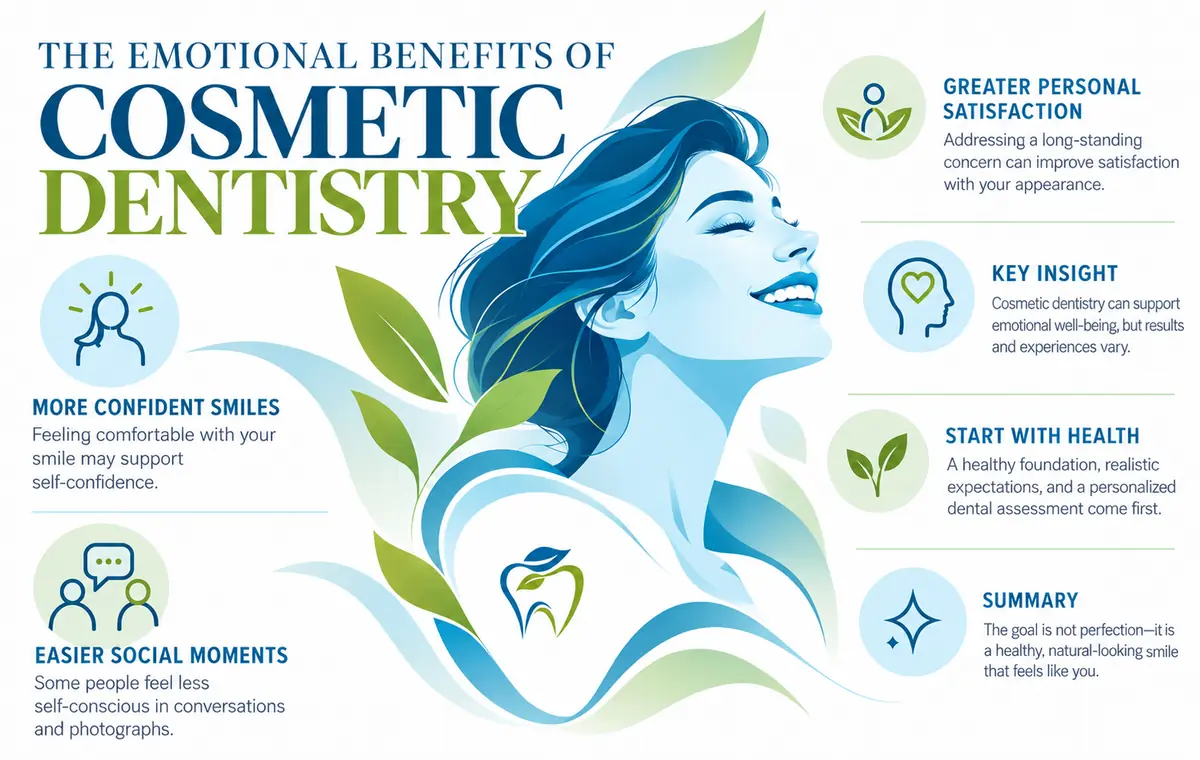
Feeling uncomfortable about a chipped, stained, or missing tooth can affect small everyday moments, from smiling for a photo to talking with someone face-to-face. Cosmetic dentistry may help you feel more at ease with your smile by addressing the specific feature that bothers you. The emotional benefits are personal, though, and no treatment can guarantee greater confidence.
At Bloom Dental of Arlington, we focus on changes that look natural, suit your goals, and make sense for your dental health. That might mean whitening your teeth, repairing a small chip, or discussing a more involved treatment.
Table of Contents
How Your Smile Can Affect Your Confidence
If you tend to cover your mouth when laughing or avoid showing your teeth in photos, you may already know how much attention a dental concern can take up. Stains, gaps, uneven edges, and missing teeth can make some people self-conscious, even when others barely notice them.
Not everyone who dislikes something about their teeth needs treatment. But if there is one feature you have wanted to change for a while, discussing your options with a dentist can help you decide whether a small improvement would be worthwhile. Research has linked dental appearance with self-esteem and oral health-related quality of life, although experiences differ from person to person (PubMed).
Emotional Benefits of Cosmetic Dentistry
Feeling More Comfortable When You Smile
For someone who has spent years hiding a chipped front tooth, having it repaired may make smiling feel easier. The change does not need to be dramatic. Sometimes fixing one tooth or reducing noticeable stains is enough to help a person stop thinking about their smile so often.
Less Self-Consciousness in Social Situations
Photos, dates, work meetings, and conversations can feel different when you are no longer distracted by a dental concern. Some patients find that they smile or speak more freely after treatment. Others notice only a small difference, and that is normal too.
More Motivation to Maintain Healthy Teeth
After improving their smile, some people pay closer attention to brushing, flossing, and regular cleanings. Those habits matter because cosmetic work still needs care. Whitening, bonding, and veneers do not replace preventive dentistry, and problems such as tooth decay or gum disease should be addressed first.
Which Cosmetic Treatments Might Help?
The right treatment depends on what you want to change and the condition of your teeth. Here is a quick comparison of common options.
| Treatment | What it addresses | What to keep in mind |
|---|---|---|
| Teeth whitening | Stains and discoloration of natural teeth | Results vary by stain type; temporary sensitivity is possible. |
| Dental bonding | Small chips, gaps, and uneven edges | Bonding can stain or chip and may need repairs. |
| Veneers | Visible changes in the color, shape, or appearance of front teeth | Enamel removal may be needed, making treatment generally irreversible. |
| Clear aligners or braces | Crowding, spacing, and certain bite concerns | Treatment takes time and requires follow-up. |
| Dental implants or restorations | Missing or damaged teeth | Suitability depends on dental health and other clinical factors. |
Teeth Whitening for a Brighter Smile
If you like the shape of your teeth but wish they looked less stained, whitening may be a straightforward option. Professional teeth whitening in Arlington can lighten many stains on natural teeth, but it will not change the color of fillings, crowns, bonding, or veneers. Some people also experience temporary sensitivity or gum irritation. The American Dental Association explains why the type and cause of staining matter.
Veneers or Bonding for Chips and Gaps
A small chip or uneven edge can stand out to you every time you look in the mirror. Composite dental bonding uses tooth-colored resin to repair or reshape a tooth, often with less alteration to the natural tooth than veneers. Bonding may need maintenance over time.
Dental veneers cover the front surfaces of selected teeth and can address several appearance concerns at once. They may require removing some enamel, so it is worth discussing the long-term commitment and alternatives before choosing them. You can also read the ADA’s patient guidance on veneers.
Looking Good and Keeping Your Teeth Healthy
Some treatments can help with more than appearance. Repairing a damaged tooth or replacing a missing one may also improve comfort or function. Whitening, on the other hand, mainly changes tooth color. An attractive result does not automatically mean healthier teeth, so your dentist should check your gums, teeth, and bite before recommending a procedure.
Explore cosmetic dentistry in Arlington to learn about the options available at Bloom Dental of Arlington.
How to Decide Whether Treatment Is Right for You
Start with a simple question: what exactly would you like to change? If it is one chipped tooth, you may not need a full smile makeover. If discoloration is the concern, ask whether cleaning or whitening could help before considering veneers.
It is also worth asking how long the result is likely to last, whether any healthy enamel will be removed, what upkeep is involved, and how much treatment will cost. Cosmetic dentistry can address dental concerns, but it cannot promise happiness, stronger relationships, or a completely different self-image. The best plan is one you understand and feel comfortable choosing for yourself.
Discuss Your Smile Goals at Bloom Dental of Arlington
You do not need a perfectly uniform smile to feel good about your teeth. If there is a specific concern you would like to address, our team can examine your oral health, explain your options, and help you choose a realistic approach. Sometimes a small change is all you are looking for.
Frequently Asked Questions
Will cosmetic dental work look natural?
It can. Your dentist can consider tooth color, shape, size, and how your smile fits your face. Share photos or examples of the look you prefer, and ask what is realistic for your teeth.
Do I need to fix every tooth to improve my smile?
No. If one tooth is your main concern, treating that tooth alone may be enough. Your dentist can explain whether a limited treatment would give you the result you want.
Can I try a less permanent option before getting veneers?
Sometimes. Depending on your teeth, whitening or bonding may be worth discussing first. These options do not solve every concern, but they may involve less alteration of natural tooth structure.
What should I tell my dentist if I am nervous about changing my smile?
Explain what bothers you, what you want to keep the same, and whether you prefer a subtle change. Ask about alternatives, maintenance, and any irreversible steps before agreeing to treatment.
Should I get a cleaning before cosmetic dental treatment?
A dental examination and, when appropriate, a cleaning are useful starting points. Your dentist can check for decay or gum problems and determine whether your teeth are ready for elective cosmetic work.

