
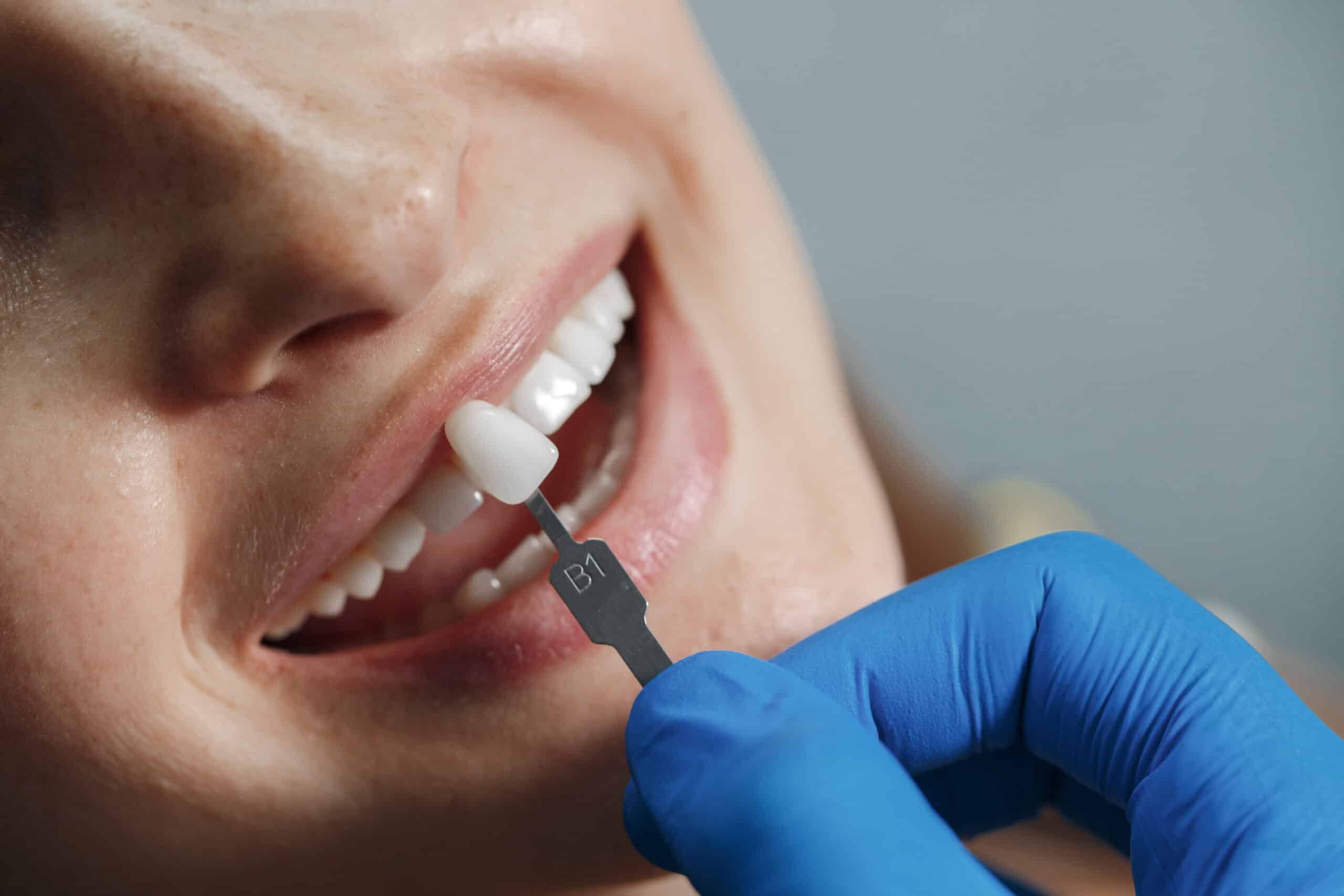
Composite bonding has become one of the most popular treatments in cosmetic dentistry because it can improve the appearance of your smile quickly, conservatively, and often in a single visit. Whether you are looking to repair a chipped tooth, close small gaps between teeth, or refine an uneven tooth shape, composite bonding offers a minimally invasive option that preserves most of your natural enamel. While the results can be impressive, composite bonding is not the right fit for every situation, and understanding how it works, along with its limits, can help you decide whether it belongs in your treatment plan.
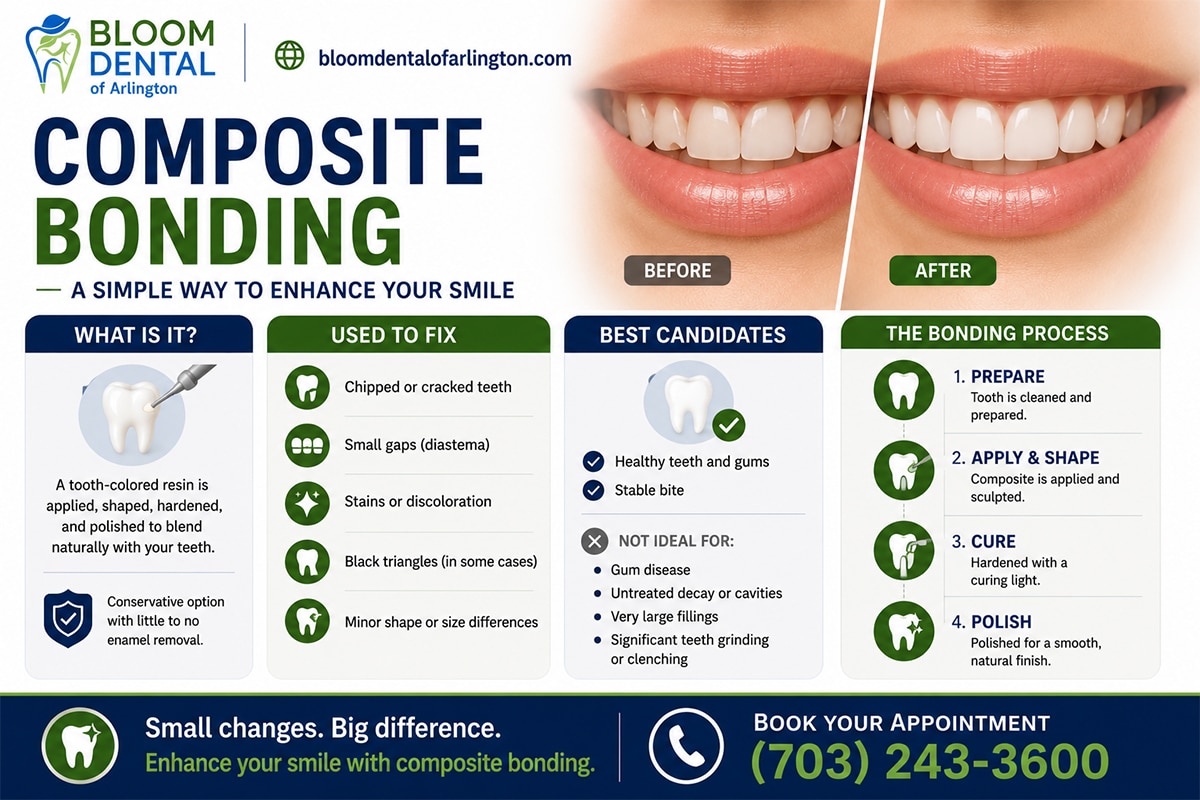
Table of Contents
What Composite Bonding Is, and What It Isn’t
Composite bonding, also called dental bonding or composite resin bonding, is a procedure in which a dentist applies a tooth-colored resin directly to the surface of a tooth. The material is layered, sculpted, and hardened with a dental curing light, then polished until it blends naturally with the surrounding teeth. Unlike crowns or veneers, composite bonding usually requires little or no removal of healthy enamel, which is part of why it appeals to patients who want a conservative option.
Composite bonding is commonly used to address a chipped tooth, a cracked tooth, worn edges, small gaps between teeth known as diastema, mild discoloration or staining that whitening alone cannot fully correct, black triangles between teeth in selected cases, and minor differences in tooth size or tooth shape. It is worth remembering, though, that bonding improves appearance rather than function. It will not correct tooth alignment on its own, and it is not a substitute for a crown when a tooth has significant structural damage. In these situations, your dentist may recommend a crown or discuss an alternative to crown for cracked tooth, depending on how much healthy tooth structure remains.
The best candidates for cosmetic bonding have healthy teeth, healthy gums, and a stable bite. Bonding is generally not recommended for patients with active gum disease, untreated tooth decay or a cavity, very large existing fillings, or significant bruxism, since heavy grinding or clenching increases the risk of chipping soon after treatment. If an older restoration has become uncomfortable, persistent pain may indicate a problem beyond cosmetic concerns.
Common Uses of Composite Bonding
| Dental Concern | How Composite Bonding May Help |
|---|---|
| Chipped tooth | Rebuilds the missing portion of enamel |
| Small gap between teeth | Adds width to reduce visible spacing |
| Uneven tooth shape | Reshapes or balances the tooth |
| Worn tooth edges | Restores length and smoothness |
| Mild discoloration | Covers selected areas that whitening may not improve |
| Black triangles | May reduce small spaces near the gumline in suitable cases |
| Slightly short teeth | Adds length for a more even smile |
Composite bonding is intended for minor cosmetic and restorative changes. It does not straighten teeth, treat active decay, or replace the structural protection of a crown when a tooth is severely weakened.
How the Composite Bonding Procedure Works
Treatment usually begins with a consultation, during which your dentist evaluates your oral health, discusses your cosmetic goals, and selects a composite shade through careful shade matching so the material blends with your natural teeth. The tooth surface is then cleaned and conditioned, and a bonding agent is applied after light etching to improve adhesion between the resin and the enamel.
From there, the dentist builds up the composite resin using a layering technique, sculpting and contouring each layer before hardening it with a curing light. Once the desired shape is achieved, the restoration goes through finishing and polishing, and your bite is checked and adjusted so everything feels natural when you chew. Because the resin is shaped chairside rather than fabricated in a lab, most bonding procedures can be completed in a single appointment.
Most patients experience little or no discomfort during bonding, and local anesthesia is often unnecessary unless decay needs to be removed first or the tooth is especially sensitive. Mild, temporary sensitivity can occur afterward, but ongoing discomfort should be evaluated by your dentist to make sure the bite is properly balanced.
Who Is a Good Candidate for Composite Bonding?
Composite bonding may be a good option for patients who have:
- Small chips or worn edges
- Minor gaps between otherwise well-aligned teeth
- Mild differences in tooth shape or size
- Healthy teeth and gums
- Realistic expectations about durability and maintenance
It may be less suitable when there is active tooth decay, gum disease, extensive structural damage, large existing restorations, significant tooth misalignment, or uncontrolled grinding and clenching.
Cost, Insurance, and Choosing the Right Treatment
The cost of composite bonding depends on several factors, including the number of teeth being treated, the complexity of the case, your geographic location, and your dentist’s experience. Additional costs, such as a consultation, X-rays, professional cleanings, gum treatment, or a custom night guard, may also affect the total investment. Insurance coverage varies as well. Cosmetic bonding performed purely to improve appearance is often not covered, while restorative bonding used to treat a tooth affected by decay or trauma may qualify for partial benefits under some dental plans.
Composite bonding, veneers, onlays, and crowns each serve a different purpose, and your dentist can help you determine which one fits your situation. Composite bonding is conservative, repairable, and often finished in a single visit. Porcelain veneers offer stronger stain resistance and long-term aesthetics but usually require more tooth preparation and a greater investment. Onlays and crowns are typically reserved for teeth with more significant structural damage or a large cavity, where a bonding replacement alone would not hold up over time. If discoloration is your primary concern, professional whitening is often recommended before bonding, so the composite can be shade-matched to your brighter natural teeth, and if tooth alignment is the underlying issue, orthodontics may be worth addressing before cosmetic refinements are considered.
In short, composite bonding offers an effective way to improve minor cosmetic imperfections while preserving your natural tooth structure. It is not permanent and does call for occasional maintenance, but it delivers natural-looking results with far less preparation than veneers or crowns require.
Why Choose Bloom Dental of Arlington
At Bloom Dental of Arlington, our team takes the time to evaluate your oral health, your cosmetic goals, and your bite before recommending composite bonding or any other treatment, so the plan we build together is the right one for your smile.
FAQs About Composite Bonding
What is composite bonding on teeth?
What is composite edge bonding?
What is dental composite bonding used for?