

If you’re trying to heal a cut in your mouth overnight, the best approach is to keep the area clean, reduce irritation, and support your body’s natural healing process.
For the fastest relief:
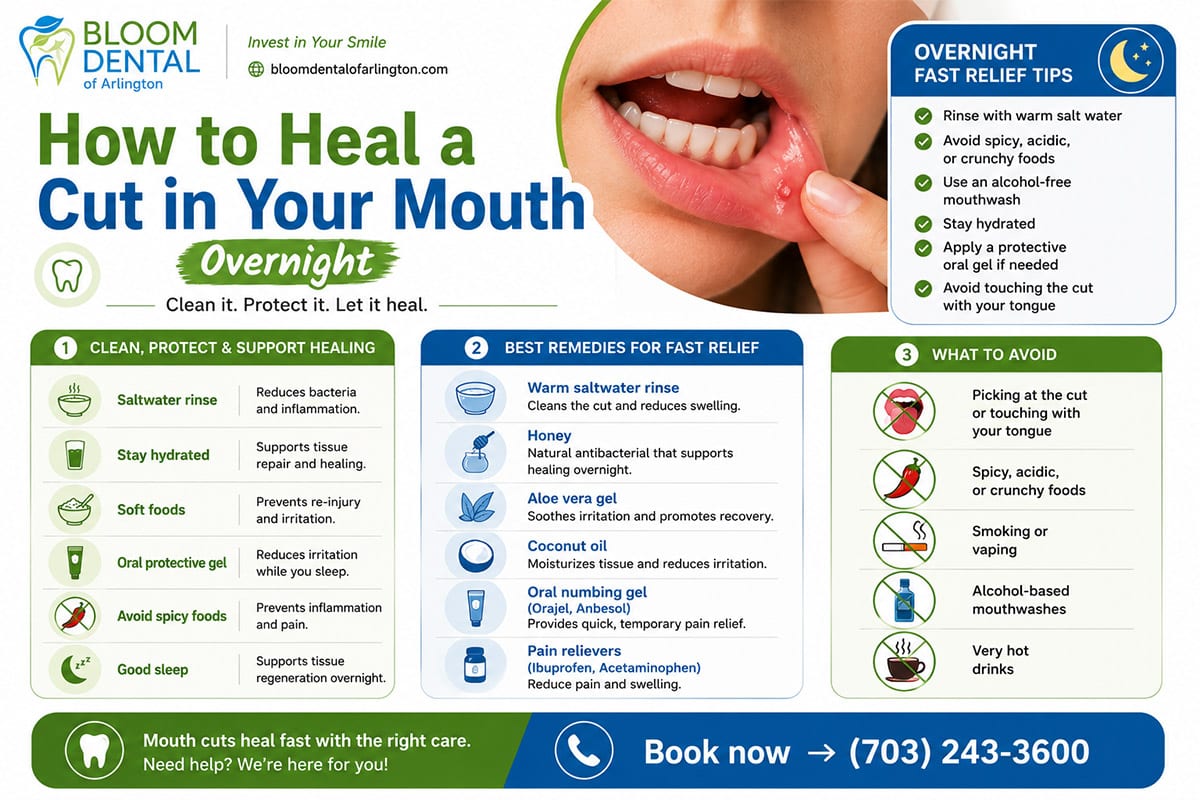
- Rinse with warm salt water
- Avoid spicy, acidic, or crunchy foods
- Use an alcohol-free mouthwash
- Stay hydrated
- Apply a protective oral gel if needed
- Avoid touching the cut with your tongue
While most cuts will not completely heal overnight, many people notice a significant reduction in pain and swelling within the first 24 hours.
| Action | Why It Helps | Best Time |
|---|---|---|
| Saltwater rinse | Reduces bacteria and inflammation | Several times daily |
| Stay hydrated | Supports tissue repair | Throughout the day |
| Soft foods | Prevents re-injury | Until healing improves |
| Oral protective gel | Reduces irritation | Before bed |
| Avoid spicy foods | Prevents inflammation | During healing |
| Good sleep | Supports tissue regeneration | Overnight |
Mouth injuries are painful, frustrating, and hard to ignore, especially when you’re trying to eat, talk, or sleep. If you’re wondering how to heal a cut in your mouth overnight, the good news is that there are tried, and tested ways to ease the pain and help your mouth heal faster.
According to the Cleveland Clinic and other oral health experts, most minor cuts inside the mouth heal faster than cuts on the skin because oral tissues receive a rich blood supply and are continuously protected by saliva.
Table of Contents
Common Causes of Mouth Cuts
Cuts in your mouth can happen in an instant. Maybe hot food burned the roof of your mouth, or you bit your cheek while chewing.
Dental tools (or even brushing too hard) can also leave tiny cuts or abrasions. Sometimes, even an underlying condition (e.g., a vitamin deficiency or an autoimmune disorder) can make your mouth more prone to injury.
How to Heal a Cut in Your Mouth Overnight: First Steps
The first step to healing a cut in your mouth overnight is to keep the area clean. Gently rinse your mouth with warm salt water to kill bacteria and soothe inflammation.
You can also use an alcohol-free antiseptic mouthwash to speed up the healing. If the cut is bleeding, gently press clean gauze or a damp tea bag against the wound.
Best Overnight Remedies for Mouth Cuts
If you’re trying to figure out how to heal a cut in your mouth overnight, the most effective approach is to keep the area clean, protected, and free from irritation while your oral tissue begins repairing itself. Simple home remedies can significantly reduce inflammation and discomfort within the first 24 hours.
Rinsing your mouth with warm salt water several times a day is one of the safest and most effective ways to clean a mouth cut and support faster healing. Natural soothing options such as food-grade aloe vera gel, honey, or coconut oil can also calm irritated tissue and provide antibacterial protection that helps the wound recover more comfortably overnight.
If additional relief is needed, several over-the-counter products can support healing while preventing further irritation. Oral numbing gels like Orajel or Anbesol help reduce mouth cut pain quickly, while protective pastes such as Colgate Peroxyl or Canker-X create a barrier over the wound to support recovery. Pain relievers like ibuprofen or acetaminophen may also help reduce swelling and discomfort during the healing process.
To help you choose the most effective option for your situation, the comparison below shows how different remedies support healing and when they work best.
| Remedy | How It Helps | How Fast It Works | Best For |
|---|---|---|---|
| Warm saltwater rinse | Reduces bacteria and inflammation | Within hours | General mouth cuts and overnight healing support |
| Honey (natural antibacterial) | Protects tissue and supports repair | Overnight improvement possible | Small cheek or lip cuts |
| Aloe vera gel (food-grade) | Soothes irritation and promotes healing | Same-day comfort improvement | Burning or inflamed mouth tissue |
| Coconut oil | Moisturizes tissue and reduces irritation | Gradual overnight support | Dry or sensitive mouth cuts |
| Oral numbing gels (Orajel, Anbesol) | Temporarily relieves pain signals | Immediate relief | Painful tongue or gum cuts |
| Protective oral pastes (Peroxyl, Canker-X) | Forms protective barrier over wound | Overnight protection | Cuts irritated during eating |
| Ibuprofen or acetaminophen | Reduces swelling and discomfort | Within 30–60 minutes | Moderate mouth cut pain |
What Should You Avoid?
Certain habits can slow healing and make a mouth cut more painful.
Avoid:
- Picking at the cut with your tongue
- Smoking or vaping
- Alcohol-based mouthwashes
- Crunchy foods such as chips
- Very spicy foods
- Extremely hot drinks
Reducing irritation is often just as important as applying treatments.
Dietary Adjustments to Protect the Cut
Eat soft, bland foods like yogurt, scrambled eggs, or smoothies until your mouth starts to feel better. Stay away from spicy, acidic, or crunchy foods that can irritate the wound. Drinking plenty of water will also help flush bacteria from your mouth, keep the tissue hydrated, and speed up the healing process.
How Fast Do Mouth Cuts Heal?
Most minor cuts inside the mouth begin healing faster than people expect. Because oral tissues have a strong blood supply and are constantly protected by saliva, small injuries inside the cheeks, lips, or gums often start improving within the first 24 hours. This is why many people searching how to heal a cut in mouth faster notice that pain and swelling decrease noticeably overnight when the area is kept clean and protected.
During the next two to three days, the surface of the cut usually begins closing and irritation becomes less noticeable, especially if the wound is not repeatedly disturbed while eating or brushing. Patients who are looking for how to heal a cut tongue fast often see improvement during this stage as well, although tongue injuries can take slightly longer because the tongue moves frequently during speaking and chewing.
Within about four to five days, most small mouth cuts are close to fully healed and everyday activities like eating and talking feel comfortable again. However, if a cut in mouth was not healing after several days and continues to look swollen, painful, or irritated, it may be a sign that the wound is being repeatedly aggravated. People who keep biting the inside of their cheek often find that the tissue reopens before it has a chance to fully heal. Infection or friction from a sharp tooth edge can also slow recovery. In these situations, a dental evaluation can help identify the cause and support proper healing.
- First 12 hours: bleeding usually stops and early inflammation begins to settle as the tissue starts repairing itself.
- Within 24 hours: pain often improves noticeably, especially when following steps recommended for how to heal a cut in your mouth overnight.
- After 2–3 days: the surface of the wound begins closing and everyday irritation during eating or speaking decreases.
- After 4–5 days: most small injuries heal significantly if proper care is taken to heal cut in mouth faster.
- After 1 week: the tissue normally returns close to normal appearance and function.
- Beyond 7 days: a cut in mouth not healing may indicate irritation, infection, or another issue that should be evaluated by a dentist.
How to Heal a Cut Tongue Fast
Tongue cuts can be especially uncomfortable because the tongue is constantly moving while you talk, eat, and drink. The good news is that most minor tongue injuries heal surprisingly quickly due to the tongue’s rich blood supply. If you’re looking for how to heal a cut tongue fast, the key is to reduce irritation and give the tissue the best environment to repair itself.
Start by rinsing your mouth gently with warm salt water several times a day to help keep the area clean and reduce bacteria. Avoid spicy, acidic, crunchy, or very hot foods that can reopen the wound or make the cut more painful. Drinking plenty of water can also help keep oral tissues hydrated and support faster healing.
If the cut is causing significant discomfort, an over-the-counter oral numbing gel may provide temporary relief while the tissue recovers. It is also important to chew carefully and avoid repeatedly touching the injured area with your teeth or tongue, as constant friction can slow the healing process.
Most small tongue cuts begin improving within the first 24 to 48 hours and are often significantly better within a few days. However, if the cut is deep, continues bleeding, shows signs of infection, or does not improve after a week, you should contact a dentist or healthcare professional for evaluation.
Tips to Help a Tongue Cut Heal Faster
- Rinse with warm salt water 3–4 times per day
- Stay hydrated throughout the day
- Choose soft foods such as yogurt, eggs, smoothies, and soup
- Avoid spicy, acidic, and crunchy foods
- Use oral numbing gels if pain is interfering with eating or sleeping
- Avoid smoking and vaping during healing
- Get enough sleep to support your body’s natural repair process
By minimizing irritation and keeping the area clean, most people notice that a tongue cut heals much faster than expected, often with noticeable improvement overnight.
When to See a Dentist
Some cuts in the mouth heal on their own in a day or two, but not all. Call a dentist if the mouth cut healing time stretches beyond a few days or if you notice it getting worse.
Watch for warning signs like continuous bleeding, swelling, pus, or a low-grade fever. These could signify an infection or a more serious oral injury that needs fast treatment. Deep cuts that continue bleeding or have separated edges may require treatment with dissolvable stitches in mouth to close the wound and support proper healing.
Final Tips for Faster Recovery
The fastest way to heal a mouth cut isn’t just about what you apply, it’s also about what you avoid.
Try not to touch the wound with your tongue, avoid brushing roughly near the cut, and switch to a soft-bristled toothbrush. It’s also critical that you get enough rest so your body can speed up the healing process.
Need Fast Relief? Bloom Dental Can Help
If the pain doesn’t go away (or you’re simply tired of dealing with it), our team is here to help. Bloom Dental of Arlington offers same-day and emergency appointments for injuries like mouth cuts, ulcers, and implant-related pain.
So, if you need immediate help with a painful mouth injury, contact Bloom Dental of Arlington today for expert care!
FAQ – How to Heal a Cut in Your Mouth Overnight
Can a cut in your mouth heal overnight?
What is the fastest way to heal a cut in your mouth overnight?
How do you heal a cut on your tongue fast?
Why is my mouth cut not healing?