

Cavities are relatively common; over 90% of adults in the United States will eventually experience tooth decay. However, black discoloration on teeth does not always mean a hole in the enamel. I was worried about Black Spots on Teeth That Aren’t Cavities. Check out the possible explanations below. Keep in mind that only a professional dentist can officially diagnose what’s going on with your teeth.
Table of Contents
Are Black Spots on Teeth Always Cavities?
Many patients worry that any dark mark on their enamel automatically means tooth decay. However, the answer to are black spots on teeth always cavities is no. While some black discolorations can be early signs of cavities, many others are harmless surface stains, tartar buildup, or natural changes in enamel color. If you’re also noticing lighter discoloration instead of dark stains, our guide on white spots on teeth explains the most common causes and treatment options. These types of black spots on teeth often develop from lifestyle habits such as drinking coffee or tea, smoking, or plaque hardening along the gumline—and they usually do not involve structural damage to the tooth.
It is also common for people to ask if all black spots on teeth are cavities, especially when the spot appears suddenly. In reality, cavities typically form alongside other warning signs such as sensitivity to hot or cold foods, rough or soft enamel texture, or visible pits in the tooth surface. In contrast, smooth and painless dark areas are more likely related to staining or mineral deposits rather than active decay.
Still, because it can be difficult to tell the difference at home, any persistent black spots on teeth should be evaluated by a dentist. A professional exam helps determine whether the discoloration is cosmetic or a sign of early tooth damage—allowing treatment to begin early if needed and helping protect long-term oral health.
How to Tell If a Black Spot on Your Tooth Is a Cavity
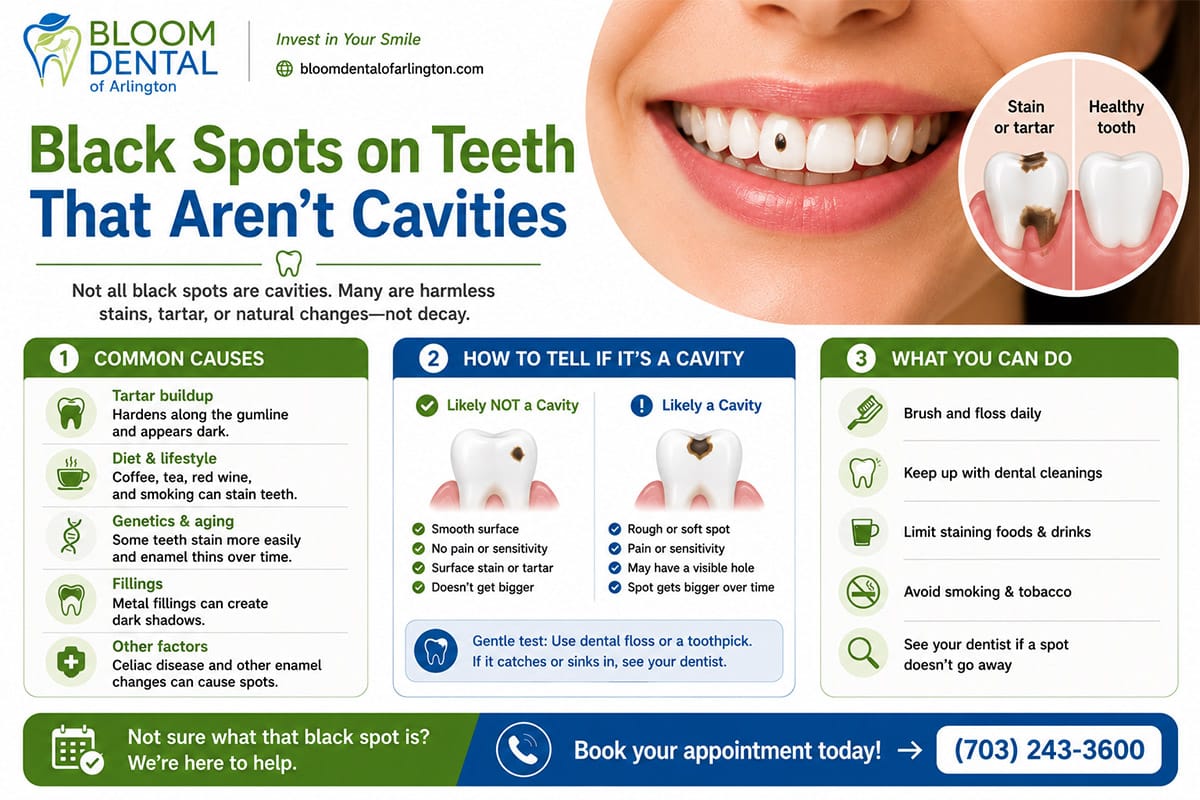
The quickest at-home test for whether a black spot on your tooth is a cavity is to take a toothpick or a piece of dental floss and gently prod the stain. If you can feel a pit or hole where the spot is, chances are you have got a cavity. If not, you may be looking at one of the culprits below.
What Causes Black Spots on Teeth That Aren’t Cavities?
Black spots on teeth can be caused by several things besides tooth decay. Below are a few of the most common.
- Tartar Buildup:If your saliva contains a relatively high calcium level, the tartar that builds up along your gumline may be noticeably darker. This discoloration sometimes appears as dark spots near the base of the teeth.
- Diet and Lifestyle:Staining foods and beverages like blueberries, coffee, and red wine can temporarily discolor teeth. Smoking tobacco can also stain teeth over time.
- Celiac Disease: Celiac disease can cause brown spots to form on the teeth. While these stains are permanent, they may be covered using bonding or veneers to create a more even look.
- Fillings: Metal fillings can deposit their color onto the surrounding teeth, creating black spots that look like cavities.
- Genetics and Aging: Teeth come in many shades; some teeth stain more quickly than others. Teeth also change color and become more susceptible to staining as the enamel breaks down.
Common Causes of Gray Teeth and Treatment Options
| Cause | Treatment Option | Professional Visit Needed? |
|---|---|---|
| Tartar buildup | Professional dental cleaning | Yes |
| Surface stains | Whitening treatment | Sometimes |
| Genetic enamel color | Cosmetic bonding or veneers | Yes |
| Celiac-related enamel defects | Bonding or veneers | Yes |
| Metal filling shadow | Filling replacement (optional) | Sometimes |
What Does a Black Spot on Tooth Near Gum Line Mean?
A black spot on tooth near gum line is a common concern for many patients, but it does not always indicate tooth decay. In many cases, dark discoloration close to the gumline is caused by tartar buildup rather than a cavity. Tartar forms when plaque hardens on the tooth surface, especially in areas that are harder to clean with regular brushing and flossing. Over time, this buildup can appear dark brown or black and may look alarming even though it belongs to a group of black spots on teeth that aren’t cavities.
Another possible reason for a black spot on tooth near gum is staining from foods, beverages like coffee or tea, tobacco use, or certain mouth rinses. These stains tend to collect along the gumline because plaque naturally accumulates more easily in that area. In many situations, professional dental cleaning can safely remove this type of discoloration.
However, it is still important not to ignore a black spot on tooth near gum line, because cavities can sometimes develop near the gumline as well—especially if plaque remains there for long periods. Signs that the spot may be related to tooth decay include increased tooth sensitivity, a rough or soft texture on the enamel, bleeding gums around the area, or gradual enlargement of the dark spot. Tooth decay can also develop underneath existing dental crowns, where it may go unnoticed until symptoms appear.
Because both harmless staining and early cavities can appear similar near the gumline, the safest approach is to have the area examined by a dentist. A professional evaluation can quickly determine whether the discoloration is cosmetic or requires treatment, helping prevent minor issues from developing into more serious dental problems.
Treating Non-Cavity-Related Black Spots on Teeth
Proper treatments for black spots on teeth that aren’t cavities vary depending on the cause of the marks. If high-calcium saliva is the culprit, your dentist can remove the stains by scraping away tartar buildup. Schedule a cleaning at least twice a year to maintain your sparkling smile.
Some food and tobacco stains may be reduced or eliminated by cutting back on the substances in question, maintaining excellent oral health, and scheduling professional whitening treatments at your dentist’s office. Permanent stains like those from Celiac disease must be covered using bonding or veneers. Keep in mind that whitening treatments work on natural teeth but do not whiten dental crowns.
Preventing Black Discoloration on Teeth
You can reduce your risk of permanent tooth stains by following these black spots on teeth prevention tips:
- Maintaining healthy brushing and flossing habits
- Keeping up with all dental appointments
- Cutting down on staining foods like coffee, tea, and red wine
- Quitting smoking and tobacco use
Final Thoughts
Non-cavity black marks on teeth may be benign, but they could also indicate an underlying issue with oral health. If you notice persistent black spots on teeth that don’t go away, scheduling a visit with a trusted family dentistry Arlington VA provider can help determine whether the discoloration is harmless staining or an early sign of tooth decay.
For more information on Black Spots on Teeth That Are Not Cavities, You can schedule an appointment with a dentist.
Frequently Asked Questions About Black Spots on Teeth That Aren’t Cavities
How to get rid of black spots on teeth?
Why do I have black spots on my teeth?
How to get rid of black spots on teeth near gums?
What do black spots on teeth mean?